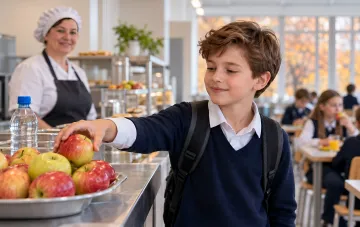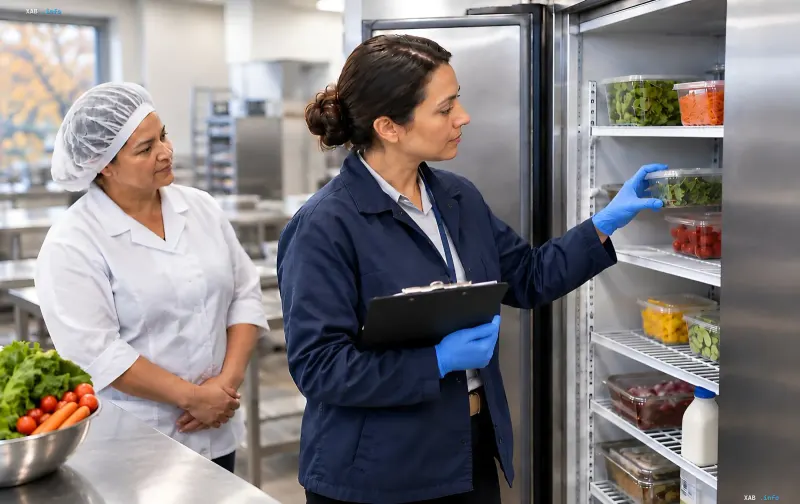
The State Service of Ukraine on Food Safety and Consumer Protection (State Prodspozhivsluzhba) has completed a large-scale monitoring of school catering units, covering nearly 8,000 educational institutions across the country. The inspections were carried out over two months in pursuance of the instruction of Prime Minister of Ukraine Serhiy Koretsky and aimed to evaluate daily food preparation and storage processes in schools under martial law. This was reported by RBC-Ukraine citing a publication by the agency's press service.
Half of Schools Need Process Improvements
Based on the analysis, agency specialists stated that 52% of the inspected schools have processes that need adjustment in accordance with food safety requirements. The State Prodspozhivsluzhba emphasized that such professional analysis made it possible to determine which elements of work are already functioning properly and where schools should strengthen their daily operations. "The results of such an analysis give schools a clearer understanding of where daily work should be strengthened," the agency noted, adding that under martial law, reliable professional support in children's nutrition is particularly important for schools.
Menu and Drinking Water Violations
A separate block of monitoring focused on compliance with the approved menu. Specialists recorded non-compliance with the approved menu in 706 schools, while remarks regarding the organization of the drinking water regime were identified in 199 educational institutions. In total, 9,069 seasonal menus were reviewed during the inspection, of which 367 were sent for revision so that institutions could take remarks into account and make necessary changes. The agency explained that such work helps align the planned menu with school nutrition requirements and provide children with the prescribed dishes.
Laboratory Tests: Nearly 19,600 Samples
The assessment of conditions in catering units was supplemented by laboratory tests. Specialists took nearly 19,600 samples and swabs, with deviations detected in 1,215 of them. The State Prodspozhivsluzhba clarified that these results make it possible to determine where additional changes and attention are needed. In cases involving products that could pose a threat to children, specialists took the necessary measures. Separately, the agency drew attention to the mandatory medical examinations undergone by canteen workers.
What's Next: Control Over Order Execution
The State Prodspozhivsluzhba stated that ahead lies the verification of the implementation of issued orders and subsequent work with schools. "Joint efforts will help timely eliminate shortcomings, support canteen workers, and provide children with safe and properly organized nutrition under martial law conditions," the agency summarized. Thus, the monitoring became not a one-time action, but the first stage of systematic work to raise school nutrition standards against the backdrop of ongoing wartime restrictions.