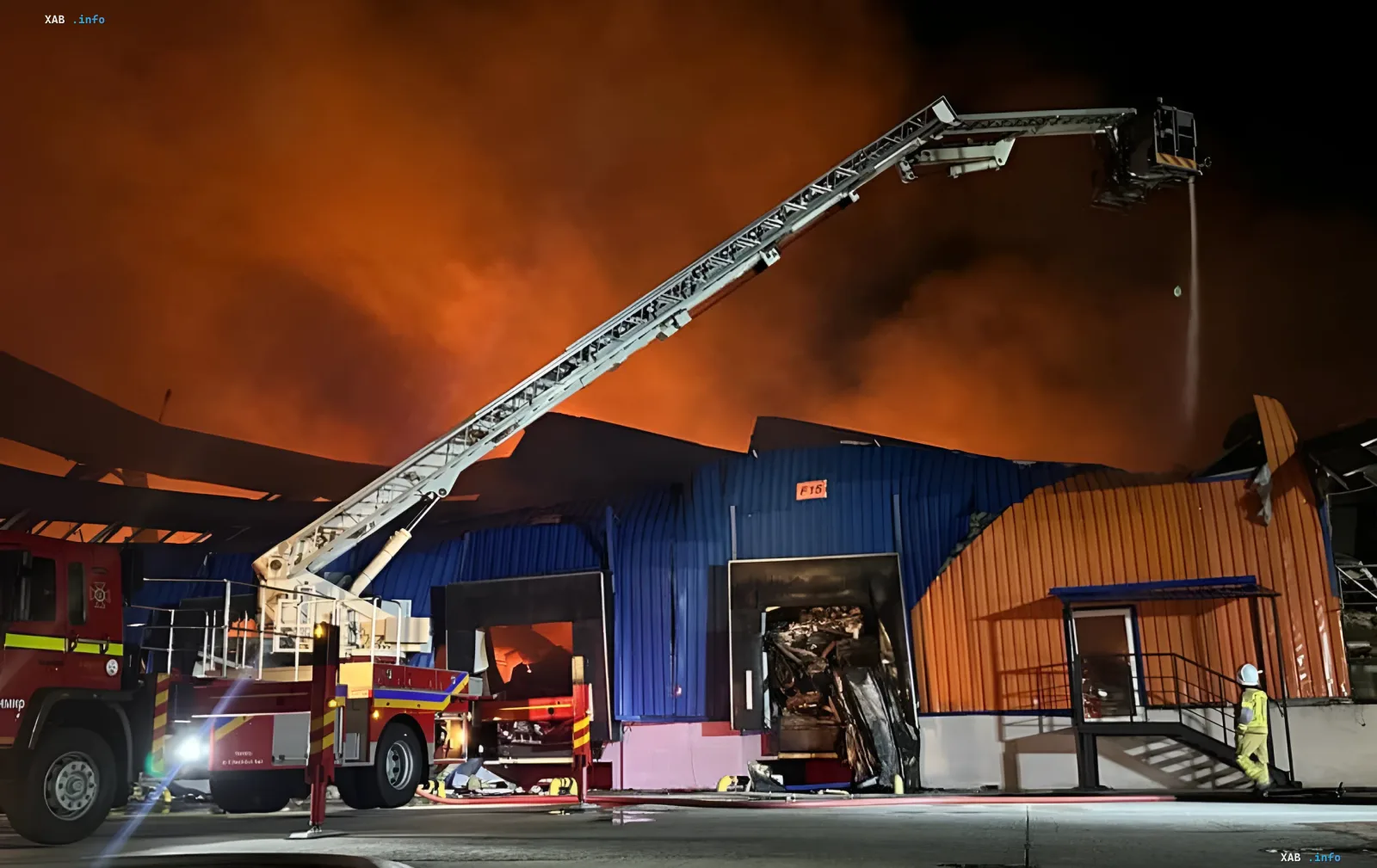
Amidst the ongoing war and regular missile attacks on Ukraine's logistics infrastructure, the state is taking emergency measures to support affected businesses. The State Property Fund of Ukraine (SPF) has launched a large-scale audit of warehouse facilities held by state-owned enterprises, with the aim of transferring them to companies whose facilities were destroyed or damaged as a result of Russian shelling.
Large-Scale Asset Inspection Across the Country
The head of the State Property Fund, Dmytro Natalukha, announced the start of the work during a meeting with the media. According to him, the audit was initiated directly by order of the government. Formally, the state has hundreds of thousands of square meters of warehouse space at its disposal. However, as Natalukha noted, "on paper it is one thing, but in reality, it may be quite different." Many facilities may be physically inaccessible, in a state of disrepair, or not meet the technical requirements for storing goods.
To avoid bureaucratic illusions, field inspections in the regions are scheduled for next week. SPF experts will personally check the condition of the assets, their actual suitability, and availability for prompt transfer to businesses. This will allow for the compilation of an accurate list of spaces that can truly save companies from halting operations.
Searching for a Legal Model: Auctions or Preferential Rent?
The key task now is not only finding space but also determining the legal model for its transfer. Dmytro Natalukha outlined several scenarios the fund is considering. One option is conducting auctions for the right to lease. The second is transferring assets to a specialized state company (conditionally for 1 hryvnia per month), which would then sublease them to affected businesses.
Special attention is being paid to minimizing corruption risks. "It is important not to create a space for corruption," emphasized the head of the fund. Currently, the SPF is developing legal mechanisms that will allow resources to be transferred quickly and transparently to those who need them most.
Consequences of Strikes: From "Epitsentr" to Puma
The need for such measures became evident after a massive attack carried out by Russia on August 5. As a result of the shelling using drones and ballistic missiles, warehouse and production facilities of the largest chain companies were damaged: "Epitsentr", Rozetka, "Nova Poshta", "Silpo". In particular, the operation of a ceramic tile production plant of the "Epitsentr" group was halted. Earlier, in June, logistics centers of the "ATB" chain, as well as facilities of the Puma and Intertop brands, were hit.
The company Puma has already warned of a possible shortage of certain goods. Market experts, in particular the head of the Association of Retailers of Ukraine, Andriy Zhuk, note that businesses will be forced to diversify storage locations and logistics routes. However, as the head of the "Ukrainian Council of Shopping Centers", Maksym Havryushyn, warned, changing logistics will inevitably lead to increased costs and, consequently, to price increases for the end consumer.
Contradictory Data
Although the government and the State Property Fund declare readiness to promptly transfer hundreds of thousands of square meters of space, there are doubts in the expert community regarding the real timelines and volumes of assistance. On the one hand, officials claim to have a significant reserve of warehouses. On the other hand, retailers fear that bureaucratic procedures for inspection and formalizing the transfer may take months, which is critical for businesses losing millions daily. Moreover, it is unclear whether state warehouses, which often have outdated infrastructure, can meet the high storage requirements for modern products of large chains.