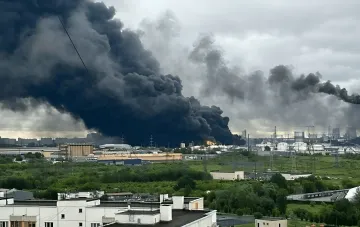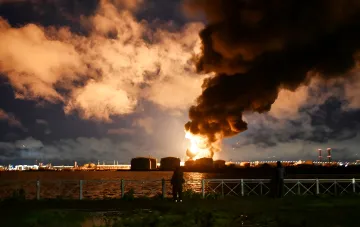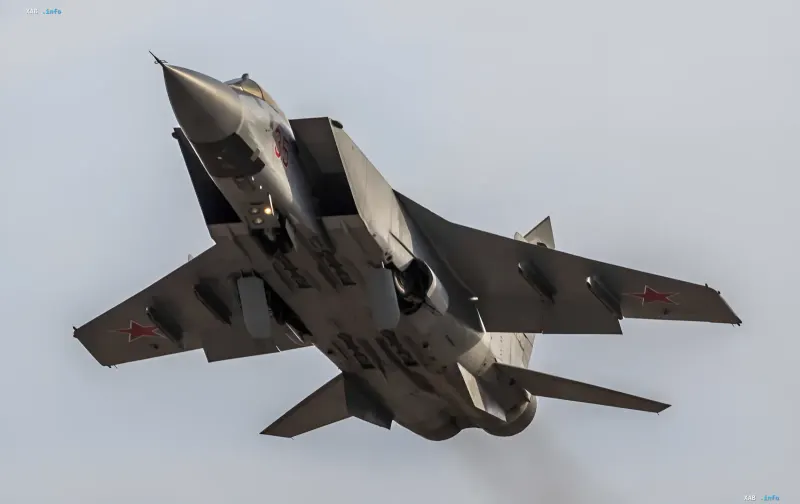
Ukraine's defense forces announced a strike on the Savasleyka military airbase in Russia's Nizhny Novgorod region, where, according to Kyiv, the aircraft carriers of the Kinzhal aeroballistic missiles are based. At the same time, as the Ukrainian Ministry of Defense reported, two Rosneft oil refineries in Samara region — the Syzran and Kuibyshev refineries — caught fire again. RBC-Ukraine reports this, citing the ministry.
Airbase 700 kilometers from the border
Preliminary data, cited by the outlet Telegraf with reference to Militarnyi, indicate that the strike on Savasleyka hit three MiG-31 fighters and two Su-34 bombers; as of publication, no official confirmation of these losses had been received from Russia. The airbase is located in the Kulebaki district of Nizhny Novgorod region, southeast of the village of the same name, approximately 700 kilometers from Ukraine's state border. Since late 2021, a MiG-31K regiment has been stationed at the base — it is precisely this modification that is used as the carrier of the Kh-47M2 Kinzhal missiles. The Ukrainian Ministry of Defense emphasized that since the start of the full-scale invasion, Russia has been using the airbase to strike Ukraine, and whenever a MiG-31K takes off, an air alert is declared across the entire country. "Hitting the airbase reduces the enemy's ability to terrorize our civilians," the ministry stated.
"Repaired them? Keep refining": strikes on refineries
The second direction of the attack was the oil refining capacity in Samara region. The Ukrainian Ministry of Defense commented on the situation with the phrase "Repaired them? Keep refining," referring to the Syzran and Kuibyshev Rosneft refineries. According to the ministry, the Syzran refinery has been hit at least the tenth time since August 2025, and the Kuibyshev refinery in Samara — the fifth. Both facilities were shut down following the September strikes, after which, Kyiv claims, they were repaired within approximately two months and once again caught fire.
Military significance of the refineries and consequences for refining
The combined capacity of the two refineries is estimated at more than 15 million tons of oil per year. The Syzran refinery, according to the Ukrainian Ministry of Defense, produces aviation kerosene for military aviation, while the Kuibyshev refinery supplies petroleum products to the central and southern military districts. "So these refineries are valuable military targets, and hitting them deprives the aggressor's army of the fuel it needs," the ministry noted. The Institute for the Study of War (ISW) had previously assessed the consequences of strikes on Russia's oil refining sector: according to analysts' calculations, since late October, refining volumes in Russia have fallen by approximately 30%, and in October gasoline imports reached a record level.
Moscow's reaction and the diplomatic context
Against the backdrop of ongoing attacks on fuel and energy infrastructure, Russian President Vladimir Putin, as RBC-Ukraine reported, declared an inevitable response to the strikes on the refineries. According to him, Ukraine, by the Kremlin's assessment, is not heeding US President Donald Trump's calls to stop the attacks on Russian fuel and energy facilities. Thus, the strikes on the airbase with Kinzhal carriers and on the refineries in Samara region fit into a broader cycle of mutual statements about retribution and into the debate over American calls to limit attacks on energy infrastructure.