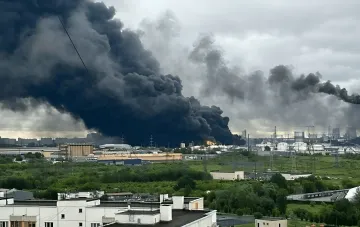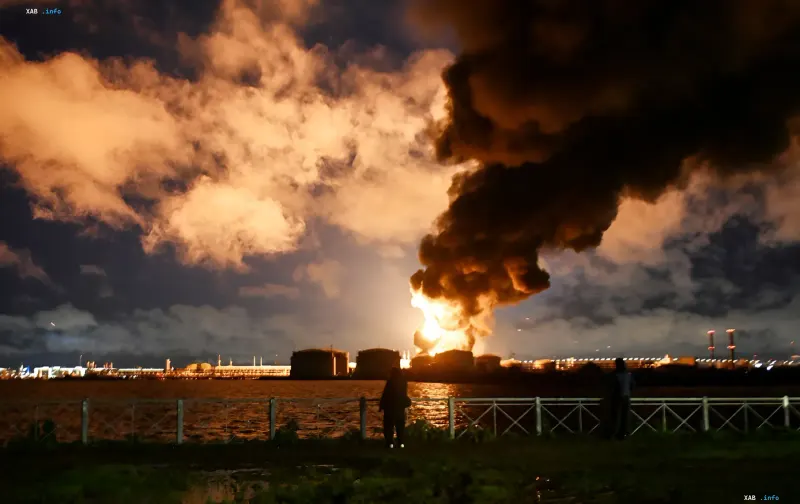
Between October 30 and November 11, 2026, the Ukrainian Defense Forces launched strikes against at least nine Russian oil refineries. According to Fire Point, the total nominal capacity of the affected enterprises exceeds 120 million tons of oil per year. RBC-Ukraine reported this on November 12, citing a statement from Fire Point analysts. Based on the company's calculations, facilities accounting for 36% of Russia's total oil refining potential—more than a third—were targeted in under two weeks.
Geography of Strikes: From the Volga Region to the Leningrad Oblast
According to the list provided by Fire Point, enterprises in various Russian regions came under attack during the specified period. The strikes covered facilities in the Volga region, central Russia, Krasnodar Krai, and the Leningrad Oblast. Such geographical dispersion indicates that the strikes targeted multiple industrial hubs simultaneously rather than a single cluster, complicating recovery logistics and the redistribution of raw material flows between plants.
Deployment of Fire Point Weapons
Fire Point explained that the Ukrainian Defense Forces used weapons developed and supplied by the company for these successful new attacks. Fire Point positions itself as a private company involved in the development and supply of weaponry for the Ukrainian armed forces. The claim linking specific refinery strikes to their products is part of the company's public communication and has not been confirmed by independent technical assessments available at the time of publication.
Nominal Capacity Versus Actual Consequences
Fire Point analysts emphasize an important methodological point: the nominal capacity of the plants does not mean that the entire refining volume was lost as a result of the attacks. Real consequences for the fuel market and logistics chains depend on the nature of the damage, specific damaged units (primary processing, secondary cracking units, hydrotreating), and the duration of plant downtime. Thus, the figure of 120 million tons per year reflects the design potential of the affected facilities rather than the current actual loss of refining.
Context: A Series of Air Operations in November
The strikes on refining infrastructure were part of a broader series of air operations by the Ukrainian Defense Forces. RBC-Ukraine previously reported that a recent attack on St. Petersburg resulted in the deaths of Russian pilots. Additionally, a massive air raid by the Defense Forces on Russian territory was recorded on the night of November 11. The combination of these events points to a steady trend of strikes against fuel and energy sector facilities in recent weeks.
What This Means for the Market and Logistics
Hitting facilities that account for over a third of the country's refining capacity inevitably puts pressure on domestic fuel chains and export flows. However, as analysts note, assessing the actual impact requires monitoring actual refining volumes, repair schedules, and the operation of backup capacities. Under conditions where strikes are dispersed across multiple regions simultaneously, prompt restoration of the full refining cycle at each plant requires significant resources and time.