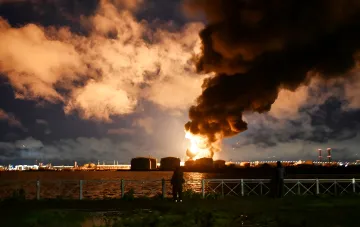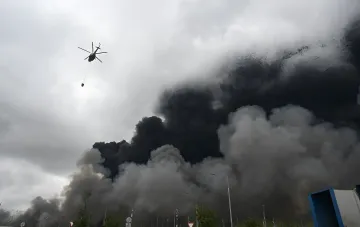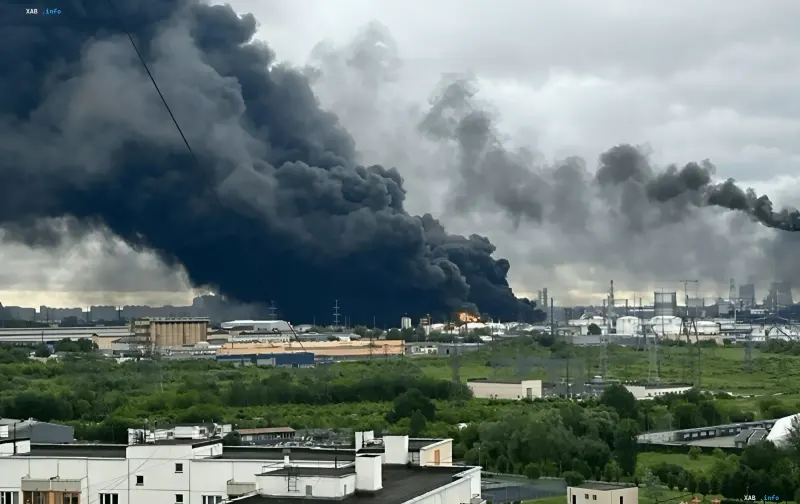
In the first days of November, Ukraine's Defense Forces launched a series of strikes on key enterprises of the Russian oil refining industry, according to RBC-Ukraine citing a report by the General Staff of the Armed Forces of Ukraine. The list of targeted facilities included five plants ranking among the top five largest in Russia: the Omsk, Kirishi, Ryazan, Nizhny Novgorod, and Yaroslavl refineries. In addition, the Ukrainian military reported successful attacks on the Novokuybyshevsk and Saratov oil refineries. Thus, within a matter of days, strikes hit facilities that account for a significant share of Russia's domestic fuel production.
Omsk Refinery: Fire 2,500 Kilometers from the Border
According to the Ukrainian side, one of the most large-scale strikes targeted the Omsk Refinery. The enterprise is located approximately 2,500 kilometers from the Ukrainian border, and on the night of November 11, a fire broke out at the facility after it was hit, according to the Armed Forces of Ukraine. The Omsk plant is considered one of the industry's key enterprises: its capacity exceeds 21 million tons of oil per year, and its refining depth of about 99% is among the highest in Russia. The General Staff of the Armed Forces of Ukraine asserts that the enterprise supplies fuel to the Russian military machine, among other things.
Kirishi and Saratov: Damage to Primary Processing Units
According to the Ukrainian command, the results of the attacks were also confirmed for both the Kirishi and Saratov refineries. On the night of November 9, the Armed Forces of Ukraine reported that the facilities of LLC KINEF (Kirishinefteorgsintez) in the Leningrad Oblast were hit; the plant is capable of refining about 20 million tons of oil annually, accounting for over 6% of Russia's total oil refining volume. Damage was reported to the atmospheric pipe distillation unit, the ELOU primary processing unit, and two cooling complexes. The Saratov Refinery, which refines about 7 million tons of oil per year, was attacked on November 7: according to the Armed Forces of Ukraine, the sole AVT-6 primary processing unit, two fuel hydrotreating units, pipelines, and a 10,000-cubic-meter reservoir that caught fire were damaged; the enterprise's operations were reportedly halted.
Strategic Consequences for Fuel and the Budget
As the Ukrainian military explains, damage to primary processing units directly affects the production volumes of petroleum products. In their assessment, this limits the capability to supply Russian troops with fuel and reduces the revenues that, according to the Armed Forces of Ukraine, the Kremlin channels to finance the war. The General Staff also notes that the geographical remoteness of the facilities no longer guarantees their security and emphasizes the intention to continue strikes on enterprises that, in its words, hold strategic significance for supporting Russian aggression.
Context: The Scale of Attacks on Oil Refining
This series of strikes fits into a broader context previously covered by RBC-Ukraine: available data indicates that Ukraine has attacked over a third of all Russian oil refining capacity in 13 days. Separately, the publication reported on the consequences of a massive air raid by the Defense Forces on Russia on the night of November 11. All the above data on the targeted facilities, their capacities, and the nature of the damage is based on the report of the General Staff of the Armed Forces of Ukraine published by RBC-Ukraine.