
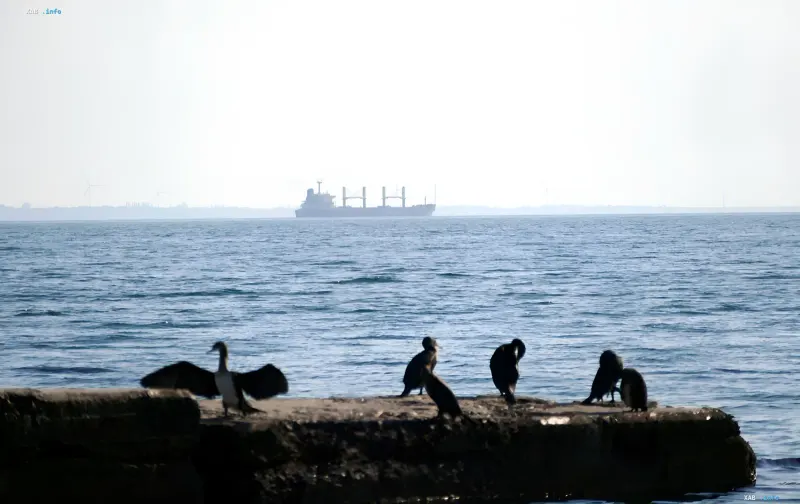
Russian strikes on civilian shipping and port infrastructure have sharply curtailed operations at the ports of Odesa, Chornomorsk, and Yuzhne. According to media reports, rising risks have led shipowners to mass-refuse entry into Ukrainian ports, which has already caused a sharp drop in exports and, by analysts' estimates, could cost Ukraine up to 1.5% of GDP by the end of 2026. Against the backdrop of reports of damaged port infrastructure in Odesa Oblast and fires following missile attacks, the industry warns: further blockade of the maritime corridor poses risks not only to the Ukrainian economy but also to the global market.
How Port Operations Have Changed
The scale of the contraction in shipping is clearly shown by statistics from the Ukrainian Ports Association. According to its president, Dmytro Barinov, between July 20 and August 20, 2026, an average of only one ship per day passed through the port of Odesa, whereas this figure had previously been seven to eight ships. The nature of the cargo flows has changed as well: shipowners who agree to operate on the Ukrainian route are trying to use smaller vessels and minimize crew size to reduce security risks. In effect, the port is functioning in a mode of forced degradation rather than normal operations.
Export Decline and Economic Losses
The economic consequences are already being recorded in the numbers. According to The Telegraph, in the first half of August 2026, Ukrainian grain exports were roughly 75% lower than a year earlier. Economic analysts cited by the publication estimate that possible losses from a prolonged restriction of maritime trade by the end of 2026 could reach up to 1.5% of GDP. The main cause of the decline is cited as systematic attacks on civilian vessels and port infrastructure: by the same data, more than 200 civilian ships have been attacked in the Black Sea since 2022, and the intensity of strikes on the Greater Odesa port area has recently increased.
Nature of the Attacks and Risks to Shipping
Industry participants emphasize that this is not a matter of isolated incidents but of systematic pressure on civilian shipping. Reports of damaged port infrastructure in Odesa Oblast and of fires in the port following missile attacks confirm that the strikes affect not only ships at sea but also onshore port infrastructure. It is precisely the combination of risk to vessels in the waters and risk to port terminals that leads insurers and shipowners to conclude that entry into Ukrainian ports is economically and in terms of insurance inadvisable.
Contradictory Data
Significantly different estimates of the scale of potential losses are circulating in the public domain, and it is important to distinguish between these versions. According to The Telegraph, possible losses from a prolonged restriction of maritime trade by the end of 2026 are estimated at up to 1.5% of GDP. At the same time, the Ukrainian National Committee of the International Chamber of Commerce (ICC) had previously stated a far more catastrophic scenario: if the maritime corridor does not resume operations, Ukraine could lose about 10% of GDP, $17 billion in export revenue, and a further $8.5 billion in tax receipts, while more than 30 million tons of agricultural products would fail to reach global markets. The difference in figures is explained by the difference in scenarios and time horizons: the first estimate refers to the current partial contraction of trade, the second to a hypothetical full and prolonged shutdown of the corridor. Both versions are presented as they are, without being reduced to a common denominator.
Kyiv's Position and Appeals to the International Community
The Ukrainian Navy notes that work to stabilize the maritime corridor is ongoing. The port industry is calling on international partners to become more actively involved in ensuring the safety of civilian shipping in the Black Sea, since, according to a warning from the Ukrainian Ports Association, further blockade of the corridor poses risks not only to the Ukrainian economy but also to the global market. The issue thus goes beyond national boundaries: the functioning of the ports of Greater Odesa underpins part of the global supply chains for agricultural products.