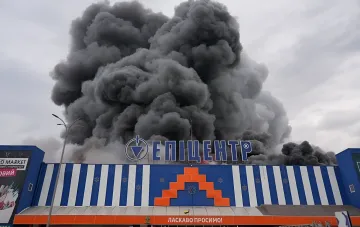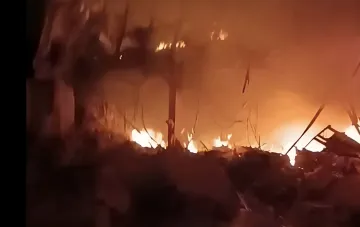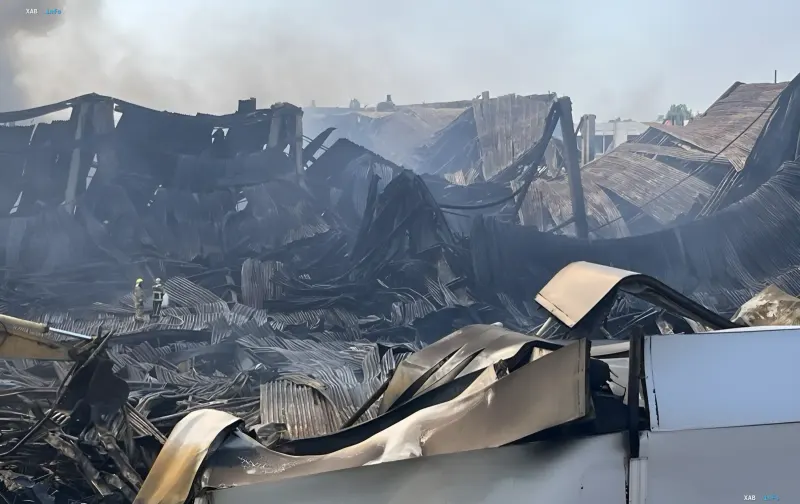
Massive Russian attacks on Ukraine's logistics infrastructure, which took place between August 1 and 5, caused significant damage to key market players. Objects belonging to giants such as Rozetka, Epicentr, Fozzy Group, Nova Poshta, Novus, and Intertop Ukraine were hit. However, despite the extensive destruction, experts and retail representatives do not predict a critical shortage of goods on store shelves.
Adaptability of Ukrainian retail
According to RBC-Ukraine, Ukrainian business has developed mechanisms of high adaptability over the years of full-scale war. Maxim Gavrishin, head of the "Ukrainian Council of Shopping Centers" (UCSC), notes that large networks have alternative supply routes and action scenarios in case of the loss of individual logistics nodes.
"Right now, I would not expect a shortage of goods. Our business can adapt very quickly. Large networks have alternative supply routes and options for action in case of the loss of individual logistics facilities," Gavrishin stated.
Alexander Keba, Director of Sales and Operations at METRO Ukraine, confirms this point of view. According to him, the company is already working out crisis scenarios and will use flexible mechanisms to replace goods through alternative suppliers and trade brands.
Risks for consumers: prices and timelines
Although empty shelves are not expected, experts warn of inevitable economic consequences. Changes in logistics chains entail additional costs, which may lead to an increase in the price of goods and a slowdown in delivery times.
"Despite the destruction of warehouse facilities and shopping centers, and the lack of human, financial, and logistical resources, Ukrainian business every time implements incredibly fast adaptation solutions," Alexander Keba summarizes.
Protection instead of money: what business expects from the state
The issue of state support under current conditions remains controversial. The UCSC notes that, despite many options for assistance — from tax incentives to direct compensation — state budget resources are limited.
"There are many options for assistance, but the state currently lacks the resources to support large businesses," explains Maxim Gavrishin.
However, the key need of the market now is not financial injections, but the physical protection of infrastructure. Experts agree that the priority should be the strengthening of air defense.
"The main thing now is strengthening the protection of the sky. The efforts of the state should be focused on this. Without this, any other assistance will not make much sense," emphasized the head of the UCSC.
Scale of damage
Between August 1 and 5, 2026, logistics complexes with goods from brands Puma and Toyota were destroyed or damaged, as well as a shopping center of the "Velmart" chain in Kyiv. Russian attacks directed at transport hubs and warehouses continue to remain the main risk factor for the country's economic stability.