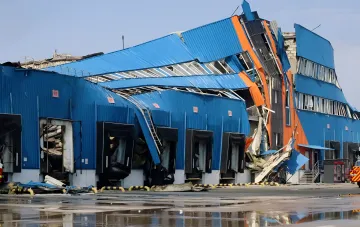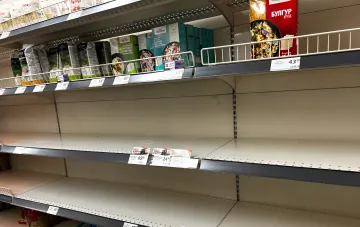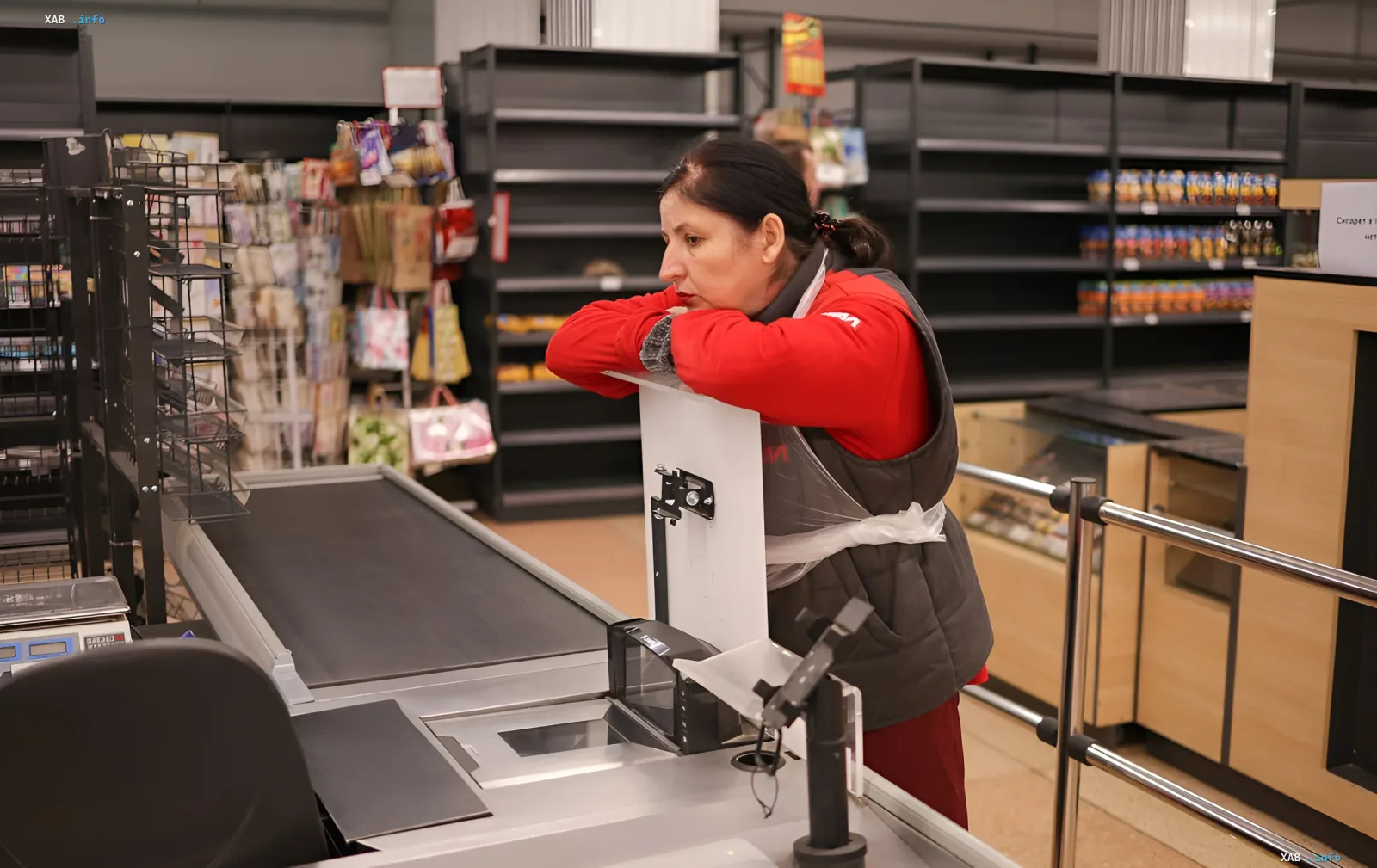
Massive Russian attacks on the logistics hubs and distribution centres of Ukraine's largest retail chains have triggered a new wave of consumer anxiety. The destruction of warehouse capacity in Kyiv, Dnipro, Kharkiv and Odesa has led to temporary delays in deliveries and forced retailers to urgently restructure their supply chains. On social media, panic has flared up again over "empty shelves" and the possible sharp spike in prices for basic food items. However, according to industry experts, the country faces no physical food shortage: domestic production far exceeds consumption. Nevertheless, the complicating logistics and rising energy costs will inevitably be reflected in prices and product ranges already during the autumn period.
The scale of the destruction: Dragon Capital figures
According to investment house Dragon Capital, within just a few weeks of strikes on Kyiv and the Kyiv region, around 400,000 square metres of Class A warehouse real estate were rendered out of service. Across Ukraine as a whole, the total volume of destroyed or damaged space of this class reached approximately 500,000 square metres, accounting for nearly 30% of the overall stock of similar warehouses. The second most vulnerable area became the Dnipropetrovsk and Zaporizhzhia regions: the ATB chain's distribution centre in Dnipro, destroyed in June 2026, supplied more than 300 stores across two regions at once. The company managed to reroute its logistics, but this case clearly demonstrates how vast a territory can depend on a single logistics node. In addition, the chain's distribution centres in Kharkiv and Odesa were damaged or destroyed.
"There will be no physical shortage": what experts are saying
Maxim Hopska, head of the analytical department at UKAB, told RBC-Ukraine that existing production capacity is sufficient to fully meet domestic consumption, a position confirmed by the Ministry of Agrarian Policy. Dmytro Marchuk, Deputy Chairman of the All-Ukrainian Agrarian Council, added that the structure of agricultural production in Ukraine is decentralised: in fact, every district concentrates a large number of production and processing facilities capable of supplying the settlement in which they are based, even under the most difficult conditions. "If we look at the entire territory of Ukraine, we can produce significantly more than we consume, so we will not physically observe a shortage," Marchuk stated. In his words, current conditions and regular Russian strikes carry no signs of a systemic food crisis; the main problem lies in logistics.
Logistical shift: from 24–72 hours to a week
Dmytro Marchuk explains that when infrastructure capable of sustaining a major city for several weeks is destroyed in a short period, it takes time and resources to diversify risks and redistribute the next batches of goods. "The Ministry of Agrarian Policy is saying clear and correct things about the fact that we cannot have a physical food problem. But there is a physical problem with logistics, and what used to take 24–72 hours can today take up to a week," the expert notes. In response to the destruction of warehouses, many retail chains are moving from a model of working through distribution centres to direct cooperation between stores and producers: a store signs a contract with a producer of bread, eggs or dairy products, and the latter is obliged to deliver the goods directly to the point of sale. This approach, however, significantly increases logistics costs, which are ultimately built into the final price of the product.
Who is at risk: vulnerable regions and autumn forecasts
Maxim Hopska identifies several zones of heightened vulnerability. Kyiv and the Kyiv region remain the most prone to disruptions, since a significant share of large warehouse capacity was concentrated here. The Dnipropetrovsk and Zaporizhzhia regions are living with the aftermath of the destruction of the key ATB hub. A separate risk group comprises the frontline eastern and southern regions, where the risk of damage to logistics infrastructure is compounded by longer routes, security restrictions and regular power outages. "Even if the goods physically exist in Ukraine, delivering them to a specific store on time can be more difficult," Hopska summarises. It is precisely these factors, analysts believe, will become the main driver of rising price tags and a temporary reduction in shelf range this very autumn.
Contradictory data
In the public space there is a noticeable gap between the mood on social media and the assessments of industry experts. On the one hand, users are mass-reporting the disappearance of certain items from shelves and interpreting this as the beginning of a systemic shortage. On the other hand, both UKAB and the All-Ukrainian Agrarian Council unanimously state that there is no structural food crisis and none is expected: production exceeds consumption, and the observed disruptions are of a temporary logistical nature. The difference, therefore, lies not in the facts but in the scale and duration of the effect: experts speak of short-term disruptions and price increases, whereas public discourse tends to extrapolate isolated supply failures into a scenario of chronic scarcity. Neither side disputes the fact of warehouse destruction and the lengthening of supply chains — the disagreement concerns only whether this is a sign of a crisis or a manageable logistical risk.