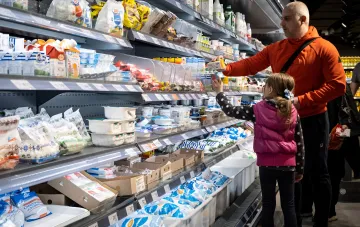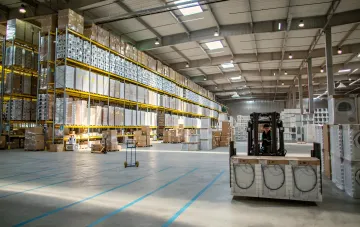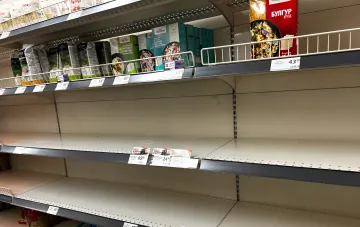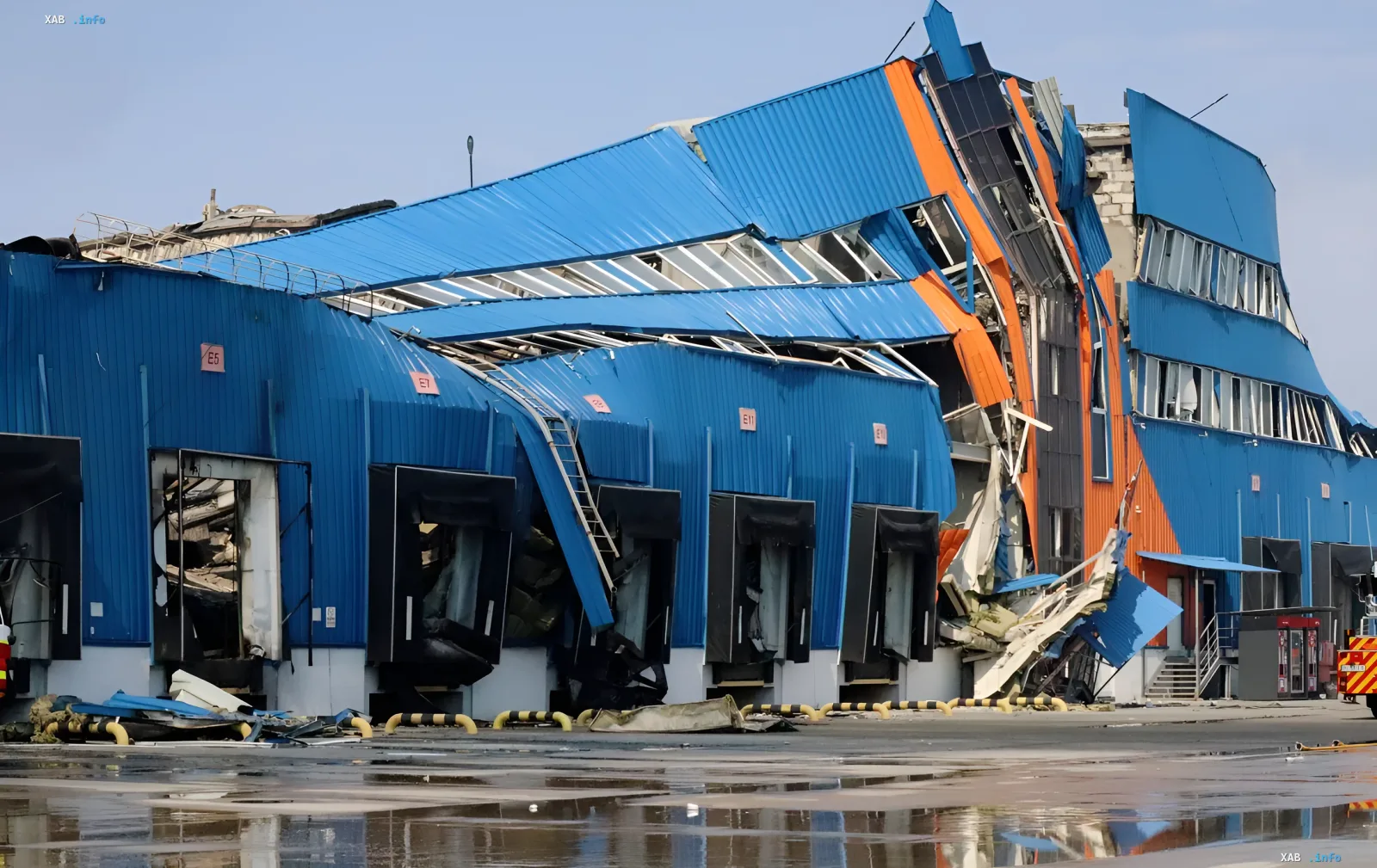
In the summer of 2026, massive shelling of logistics infrastructure by Russia became a severe test for Ukrainian retail and distribution. The enemy deliberately destroyed major distribution centers in the Kyiv region and across the oblasts, striking the food segment, non-food, e-commerce and fuel retail, as well as manufacturers. A systemic shortage on shelves was avoided, but rebuilding supply chains requires substantial resources and is already reflected in the cost structure. According to information gathered by RBC-Ukraine, the estimated aggregate direct damage to individual players alone exceeds 24.7 billion hryvnias — roughly $553 million at the average summer 2026 exchange rate, or $594 million at the 2025 rate. It is important to note that this estimate covers not only retailers but also manufacturers, importers and distributors, so the share of retail proper within it may be smaller.
Scale of Destruction and the 'Cold Chain' Blow
The chilled products sector is bearing the heaviest load. According to Alexander Bondarenko, CEO of the Bureau of Investment Programs, 80,000–100,000 square meters of cold storage have been destroyed in the Kyiv region — a critical loss for categories where temperature control is a condition for product integrity. Indirect losses to the warehousing sector from the summer strikes, according to Pro-Consulting, reach nearly $6 billion. This figure covers the entire sector — retailers, manufacturers, importers and logistics operators — and includes a broader range of consequences, so it cannot be directly added to the direct losses of individual companies.
The 'War Surcharge' on Prices and Its Limits
Decentralization of the warehouse network — the shift from a few large hubs to numerous distributed points — objectively raises logistics costs. UTG estimates that delivery of chilled goods may become 35–50% more expensive, potentially adding 7–12% to the final price of certain categories. However, experts do not expect a mass price increase across the entire range: retailers have a 'circuit breaker' in the form of low purchasing power. According to Deloitte Ukraine, 73% of Ukrainians are saving on food and clothing, and NielsenIQ records that more than 50% of receipts are issued with a discount. Therefore, chains cannot fully pass costs on to the consumer.
How the Industry Is Offsetting Losses
Retailers are adapting through data-driven flexible pricing, margin reviews and the development of private labels, which can be 20–40% cheaper. It is precisely these tools, rather than direct price hikes across the entire range, that are becoming the main mechanism for absorbing logistics costs. Thus, the consequences of the summer strikes manifest not in sharp price spikes but in the structural rebuilding of supply chains and the gradual redistribution of margin between suppliers and retail.
Contradictory Data
When reading the estimates, it is important not to mix two different scopes. On the one hand, 24.7 billion hryvnias is the estimated amount of direct damage to individual companies (retailers, manufacturers, importers, distributors), gathered by RBC-Ukraine. On the other hand, nearly $6 billion is Pro-Consulting's estimate of indirect losses across the entire warehousing sector, which includes a broader range of consequences. These figures are not alternative versions of the same fact and are not summed: the first characterizes the direct losses of part of the players, the second — the systemic indirect losses of the industry. Moreover, the dollar equivalent of 24.7 billion hryvnias varies depending on the exchange rate: about $553 million at the average summer 2026 rate versus $594 million at the 2025 rate, which also creates an appearance of 'inconsistency' upon superficial comparison.