A new path for the birth of worlds: from dust to stars in accretion disks
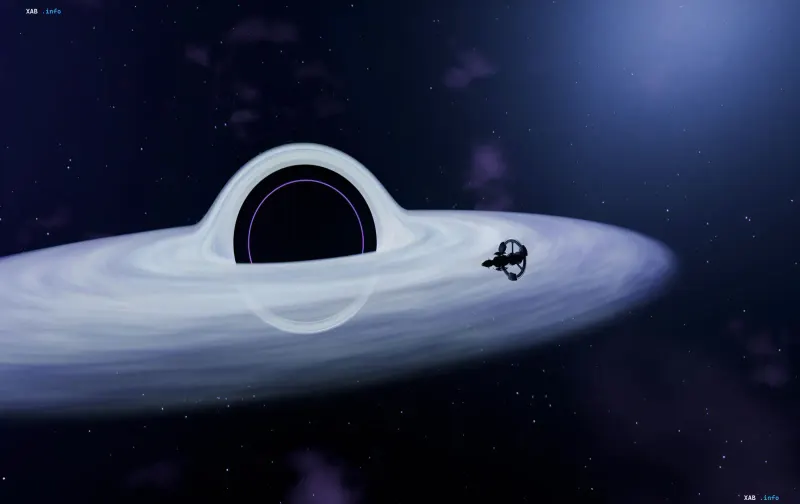
In August 2026, the astrophysical community received confirmation of one of the boldest hypotheses of modern cosmology: supermassive black holes at the centers of galaxies may not only be "devourers" of matter but also "factories" of planets and even stars. Computer modeling conducted by an international group of researchers showed that dusty disks around active galactic nuclei (AGN) create unique conditions for the formation of entire populations of planetary-mass objects — from nanometer-sized particles to bodies thousands of times more massive than Earth.
The key mechanism of this process is the so-called "streaming instability." Dust particles entering a strongly magnetized accretion disk from the interstellar medium begin to gather into dense clumps. These clumps then accumulate gas and continue to grow over 1–10 million years — the period of galactic nucleus activity. The result is the formation of objects that may approach solar mass but consist primarily of dust and gas, rather than solid matter like classical planets.
"Bottom-up": a revolution in star formation theory
This discovery, named the "active galactic nuclei channel," represents a fundamentally new path for star formation — "bottom-up." Unlike the traditional model of gravitational collapse of huge gas clouds ("top-down"), here the building blocks are formed first — dusty embryos that gradually accumulate mass and turn into full-fledged stars. These stars, orbiting the central supermassive black hole, behave like planetary embryos but on a scale inaccessible to classical protoplanetary disks.
Researcher Bhupendra Mishra, one of the authors of the model, notes that the movement of such giant objects toward the center of the galaxy will generate a powerful gravitational wave signal. According to forecasts, this signal could be detected by the LISA (Laser Interferometer Space Antenna) space observatory of the European Space Agency, scheduled for launch in the mid-2030s. Thus, the theoretical model already has a practical tool for verification.
Contradictory data
Despite the persuasiveness of the model, there are disagreements within the scientific community regarding the interpretation of the results. Some experts point out that the term "planets" in this context may be misleading: objects forming in AGN accretion disks differ radically in composition and origin from the planets of the Solar System. Other researchers emphasize that the process may be less universal than assumed and depend on specific parameters of the magnetic field and disk density. Furthermore, there is a risk of confusion with other hypotheses, for example, about the transformation of giant planets into black holes under the influence of dark matter (see sources ID 2–4), which is a completely different physical mechanism.
Observation prospects and the role of LISA
The launch of the LISA observatory will be a decisive stage in testing this theory. Gravitational wave signals from the migration of massive objects in accretion disks will have a unique frequency signature that cannot be confused with other sources. If LISA detects such signals, it will be the first direct evidence of the existence of "active galactic nuclei channels" and will open a new era in the study of star formation under extreme conditions. Scientists are already preparing data analysis algorithms to immediately identify potential candidates after the mission begins.
Significance for cosmology and astrophysics
Confirmation of this hypothesis will radically change our understanding of galaxy evolution. It will show that supermassive black holes are not just passive centers of gravity but active participants in the formation of stellar populations. This may also explain the origin of some anomalous objects in the centers of galaxies that previously did not fit into standard models. Moreover, the discovery highlights the importance of an interdisciplinary approach: combining computer modeling, gravitational wave theory, and observational astrophysics allows solving problems that seemed insoluble just a decade ago.