Summer 2026 has been generous with young sweet corn — juicy, sweet, and perfect for boiling and immediate consumption. But what to do if the harvest turns out to be too abundant? Don't rush to throw away the excess or sell it for a song. There is a simple yet effective way to preserve corn for the winter — canning with a minimal set of ingredients: salt, sugar, vinegar, and water. The result is not just a salty side dish, but a refined snack with a slight tang that perfectly complements a festive table or an everyday dinner.
Choosing raw materials: why the youth of the corn matters
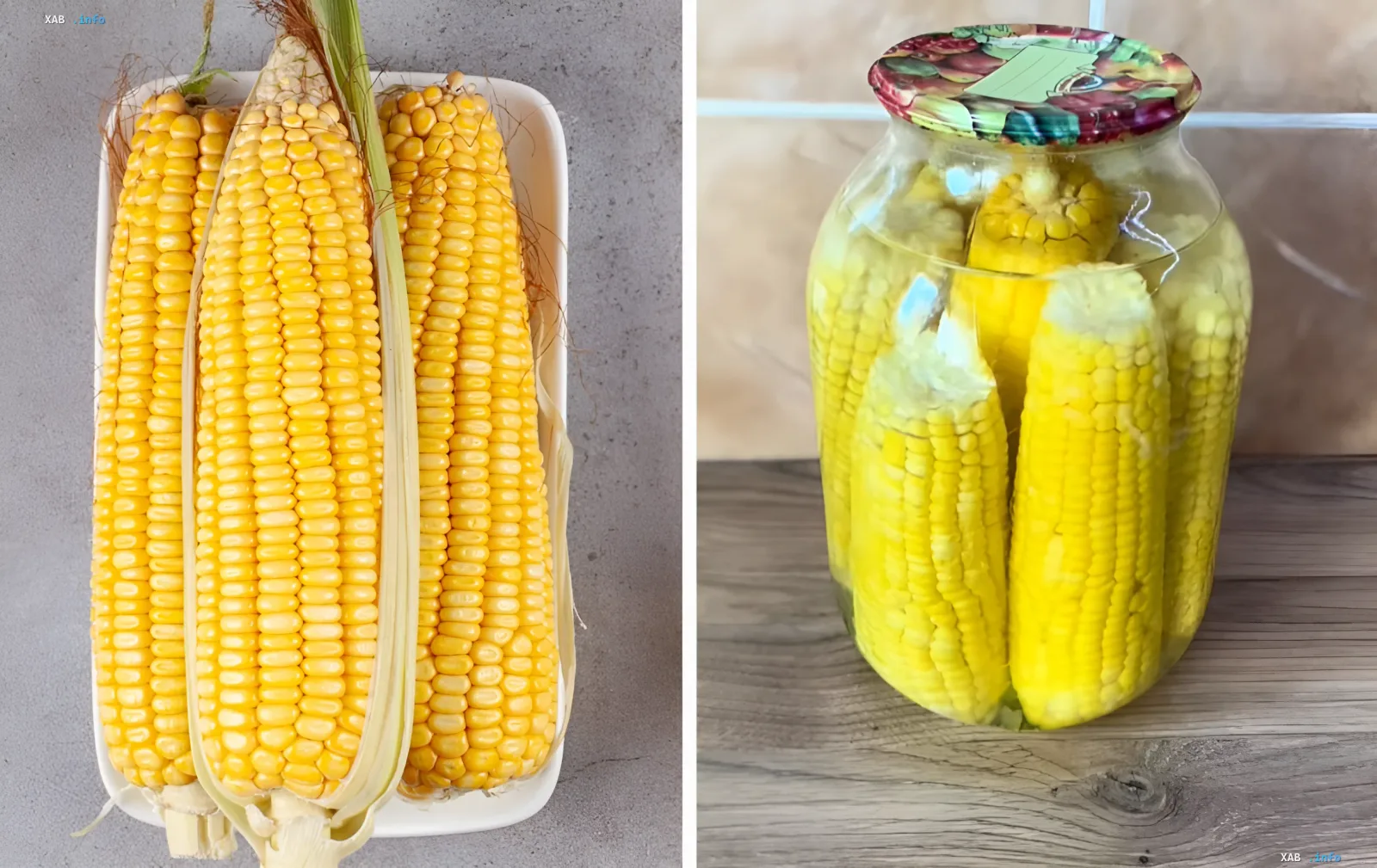
The key to success is the correct selection of cobs. Only young, fresh cobs of sweet corn without damage, rot, or spoiled grains are suitable for canning. The younger the cob, the more tender and juicy the grains will be after canning. Overripe cobs may become tough, and their grains — dry and less tasty. The ideal option is those very cobs that you want to eat right after boiling in summer. If the cobs are small, it is better to leave them whole — this is not only aesthetic but also allows you to preserve the maximum volume of pulp.
Step-by-step recipe: from cleaning to sterilization
The canning process is simple and accessible even to beginners. First, the cobs are cleaned of leaves and "hairs", thoroughly washed under running water. Then, 1 tablespoon of salt and 100 g of sugar are poured into a clean 3-liter jar. The prepared cobs are tightly packed inside. The jar is filled with water — you can use boiled and cooled water. After that, the jar is covered with a lid and placed in a pot for sterilization: the water level in the pot should reach approximately the shoulders of the jar. After sterilization, the jar is carefully removed, 3 tablespoons of 9% vinegar are added, and it is immediately rolled up with a sterile lid. Then the jar is turned upside down, covered with a towel, and left until completely cooled.
Taste and application: more than just a side dish
The finished canned corn has a unique balance of flavors: sweetness from sugar, a slight tang from vinegar, and saltiness from salt. This makes it a versatile product: it can serve as a standalone snack, a side dish for meat or fish, as well as an ingredient for salads and sandwiches. Especially valuable is that such a product preserves the summer aroma and texture, which is particularly relevant in the cold season when fresh vegetables and fruits are expensive or unavailable.
Contradictory data
Although the recipe from Styler (RBC-Ukraine project) is described in detail and confirmed by practice, there are alternative approaches to corn canning. Some sources recommend adding spices (bay leaf, peppercorns, cloves) to enhance the aroma, others — using hot brine instead of cold water. There are also opinions that vinegar can be replaced with citric acid for a softer taste. However, in this case, we adhere to the original recipe from Styler, as it is proven and recommended by the editorial board as optimal for home use.
Context and relevance: why this is important in 2026
In conditions of economic instability and rising food prices, homemade preparations become not just a tradition, but a necessity. Canning corn is a way to save money, preserve a seasonal product, and ensure the family with quality food all year round. Moreover, this approach corresponds to the trend of conscious consumption and support for local producers. In 2026, when many are looking for ways to optimize their budget, recipes like this become especially in demand.