A sharp diplomatic exchange has unfolded between the Russian and Ukrainian Foreign Ministries, triggered by an interview given by Russian Foreign Minister Sergey Lavrov for the project "Our Baptism. The Primate." In the interview, the Russian minister stated that "the south-east of Ukraine and a large part of central Ukraine, including Kyiv, are undoubtedly primordial Russian lands" inhabited by a people who "were baptized in the same baptismal font" as Russians. Lavrov also named as one of Russia's main tasks "defeating the caveman Russophobia being planted in Ukraine," linking this goal to the objectives of the so-called special military operation.
Sybiha's Response: A List of Territories Inside Russia
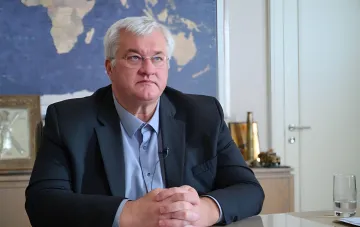
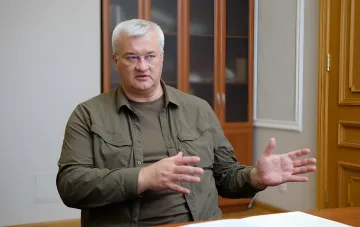
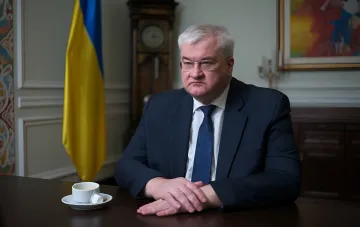
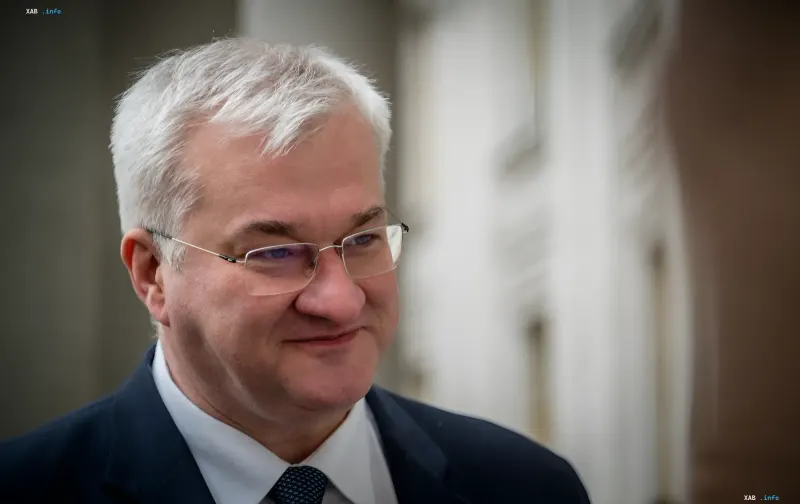
Ukrainian Foreign Minister Andrii Sybiha responded to Lavrov on the social media platform X. He recalled territories within modern Russia whose inhabitants spoke Ukrainian and considered themselves Ukrainian for centuries. "Residents of Kuban, Starodubshchyna, Northern and Eastern Slobozhanshchyna — within the current Krasnodar Krai, Belgorod, Bryansk, Voronezh, Kursk, and Rostov Oblasts — spoke Ukrainian for centuries and considered themselves Ukrainian," the Ukrainian Foreign Minister wrote. Reacting ironically to the thesis about "primordial lands," he asked: "So should we also demand the return of these primordial Ukrainian lands?"
"Wedges" and the Border Argument
In the same post, Sybiha mentioned the Yellow, Grey, and Green Wedges — territories in the Volga region, southern Siberia, and the Far East historically settled by Ukrainians. At the same time, he emphasized that internationally recognized borders are determined not by historical narratives, but by international law and the UN Charter. "That is why internationally recognized borders exist in the world. They are determined not by historical delirium, but by international law and the UN Charter — concepts that the Russian Foreign Minister should know well, but openly despises," the Ukrainian minister concluded.
Context: From Social Media to the UN Security Council Hall
The interaction between the two ministers is not limited to social media exchanges. According to TASS, on the sidelines of the UN General Assembly high-level week in New York, Sybiha was present in the Security Council hall during Lavrov's speech on the Ukrainian crisis; after the speech, the Russian Foreign Minister left the hall, and the Ukrainian minister briefly followed him out before returning to the session, in which Ukraine participated as an invited party. During the same week, reports indicated that Lavrov and US Secretary of State Marco Rubio discussed the Ukrainian settlement and bilateral relations.
Beyond Ukraine: Moscow's Claims and Europe's Position
As noted in the context of this exchange, Russia's appetites regarding foreign territories, according to Kyiv's statements, are not limited to Ukraine. Ukrainian President Volodymyr Zelenskyy has stated that Vladimir Putin aims to redraw European borders, and that Finland, Sweden, and the Baltic states could be under threat. European countries, in turn, insist that Russia must first stop the war against Ukraine, and only then can its security claims on the continent be discussed.