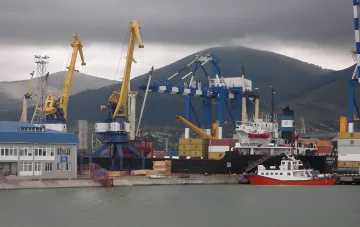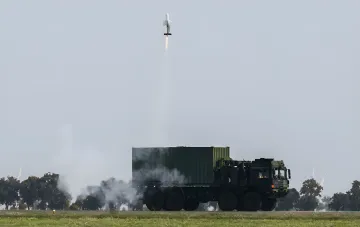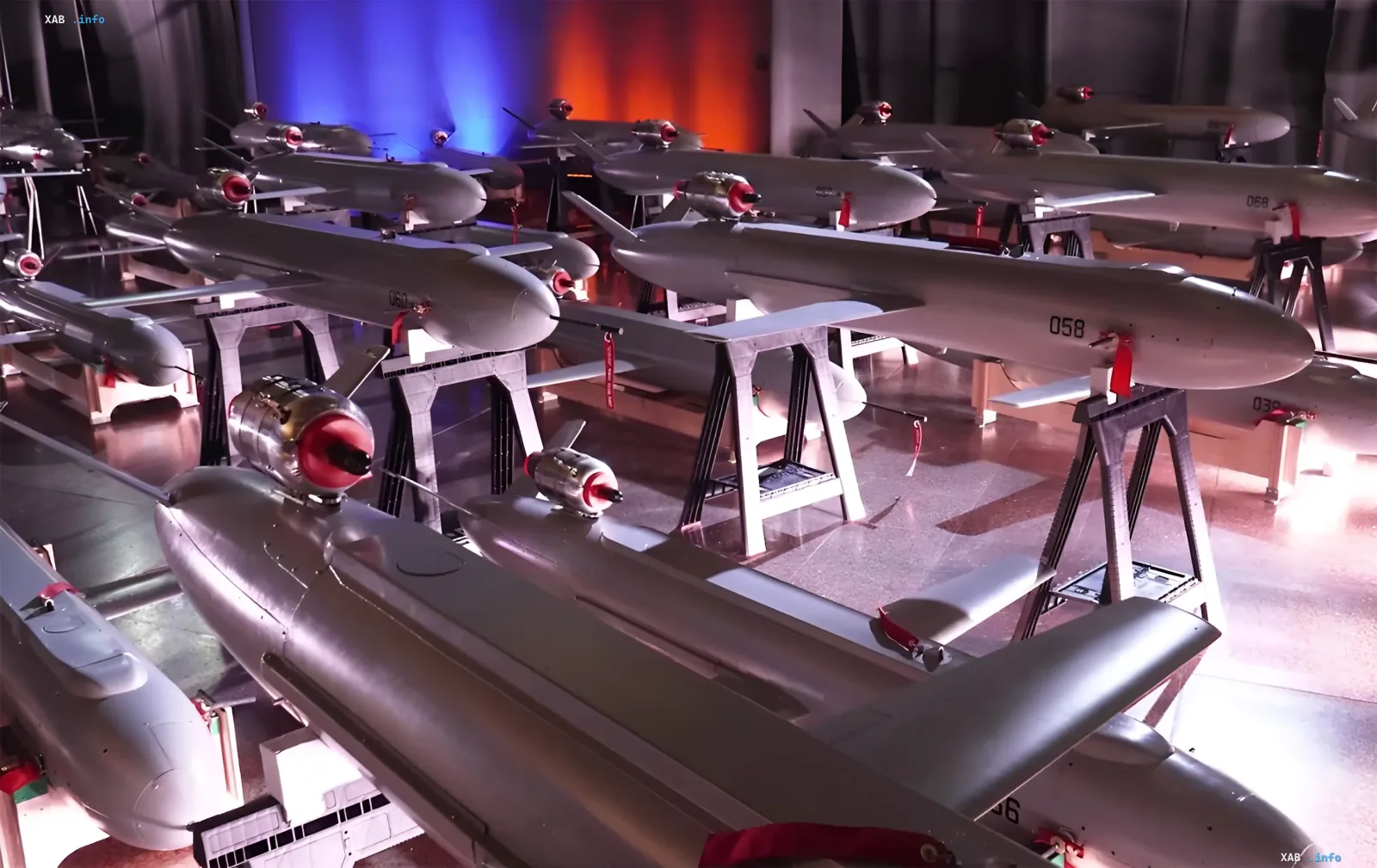
On the night of August 12, 2026, the Russian naval base in Novorossiysk became the target of a massive attack, during which Ukrainian long-range drone missiles «Palyntsa» and «Peklo» were used for the first time in a single operation. The Ukrainian Defense Forces demonstrated the ability to coordinate the use of several types of high-tech weaponry to strike strategic objects at distances of up to 700 km. President Volodymyr Zelenskyy confirmed that four types of missiles were used during the operation: «Palyntsa», «Peklo», «Bars», and «Long Neptune», as well as strike drones and unmanned boats.
Technical Specifications and Tactics
The «Palyntsa» drone missile, first deployed in August 2024, is a hybrid between a strike drone and a cruise missile. The weapon weighs 320 kg, with up to 100 kg allocated to the warhead. The missile is 3.5 m long with a wingspan of 1.7 m. It is equipped with a single-shaft turbojet engine providing a cruising speed of up to 900 km/h and a combined INS+GPS guidance system. Launch is carried out from a ground launcher using a solid-fuel booster.
«Peklo», developed from scratch over a year, also belongs to the class of drone missiles. According to former Minister for Strategic Industries Herman Smetanin, the product reaches speeds of 700 km/h and has a range of up to 700 km. Both weapons are capable of striking targets at altitudes from 15 to 500 m, allowing them to effectively bypass air defense systems.
Strategic Significance of the Operation
Novorossiysk, being the last major stronghold of the Russian fleet in the Black Sea, became a target not only due to its military significance but also due to economic vulnerability. As a result of the attack, the grain terminal in the city suspended operations; up to a third of Russia's grain exports pass through it. President Zelenskyy called this operation a manifestation of "long-range sanctions" and stated that Ukraine would continue to use long- and medium-range weapons to urge Russia towards peace.
During the strike, several Russian Navy ships were hit, including the frigates «Admiral Essen» and «Admiral Makarov». This confirms the effectiveness of the new class of weaponry, which combines high speed, accuracy, and the ability for mass deployment.
Contradictory Data
While Ukrainian sources confirm the successful use of «Palyntsa» and «Peklo» in the operation, official Russian statements regarding this strike remain vague. Some experts point out that data on the damage to specific ships may be exaggerated or not fully confirmed by independent sources. At the same time, Russian media reports the interception of some drones but does not provide detailed information on the scale of the damage.
Furthermore, there is a discrepancy in estimates of the «Peklo» range: Ukrainian sources indicate 700 km, while some Western analysts suggest that the actual range may be somewhat lower due to trajectory specifics and flight conditions.
Conceptual Analogues and Prospects
In Russia, the direct conceptual analogue to Ukrainian drone missiles is considered to be the S8000 «Banderyol» cruise missile, which, according to the GUR of the Ministry of Defense of Ukraine, is produced by the sanctioned enterprise «Kronstadt». Aviation expert Konstantin Krivolap notes that the main advantage of such munitions is the speed, which allows them to bypass air defenses for pinpoint strikes. However, the need for an aerial carrier and high cost (three times more expensive than «Shahed») limit the potential for mass deployment of «Banderyol».
Ukrainian developments, such as «Palyntsa» and «Peklo», demonstrate higher autonomy and efficiency in ground launches, making them promising for further operations against enemy strategic objects.