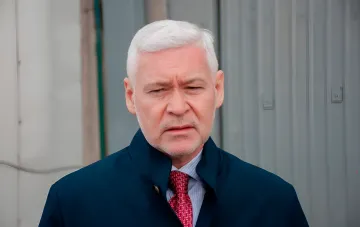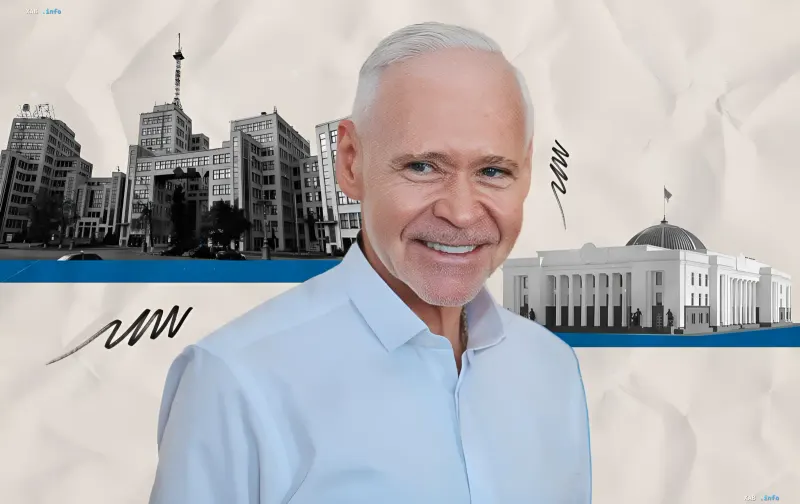
Amidst the prolonged war and the absence of regular elections, the political map of Ukraine is undergoing unprecedented changes. Traditional mechanisms of political careers, where regional leaders "grow" to a national scale, have long been functioning with interruptions. However, 2026 became a turning point when Kharkiv Mayor Ihor Terekhov, previously known primarily in a regional context, emerged as a leader in national trust ratings, surpassing many federal politicians.
Sociological Poll Results: Leadership in Trust
Data from sociological studies conducted in the first half of 2026 indicate an unprecedented rise in the popularity of the Kharkiv mayor. A poll by the Kyiv International Institute of Sociology (KIIS), conducted in May-June of the current year, showed that Ihor Terekhov holds first place in the balance of trust versus distrust among all figures proposed in the survey. 52% of respondents are on his side, while the level of distrust is only 19%. Compared to January figures, these numbers demonstrate a steady positive trend.
An additional poll conducted by the sociological company "SOCIS" in March 2026 modeled the results of future parliamentary elections. In this scenario, a hypothetical political project led by Terekhov would take a confident third place, receiving 13.7% of the vote among those who have made up their minds. In this hypothetical race, he would be surpassed only by projects associated with military leaders — hypothetical "parties" of Valeriy Zaluzhny and Kyrylo Budanov.
Key Success Factor: Effective Management in Crisis
The main reason for this surge in ratings, according to experts, is the successful management of the city during the extremely difficult winter of 2025-2026. While the capital of Ukraine, Kyiv, faced systemic problems due to Russian attacks on energy infrastructure and insufficient preparation for the crisis, Kharkiv demonstrated high resilience. The city, located just tens of kilometers from the front line, appeared more prepared for challenges than the rear-area Kyiv.
An involuntary comparison of the work of the Kyiv and Kharkiv administrations favored the latter. The successful work of the city administration under conditions of resource shortages and constant threat of attacks created an image of an effective manager capable of solving complex tasks in emergency situations. This quality became in demand at the national level, where there is a shortage of managers with proven crisis management experience.
Political Ambitions and "Casting" at the Presidential Office
The rise in Terekhov's popularity did not go unnoticed at the highest levels of power. During the summer reshuffle of the Cabinet of Ministers in 2026, after the announcement of Prime Minister Yulia Sviridenko's resignation, rumors about the possible involvement of the Kharkiv mayor in the central government intensified in the media space. President Volodymyr Zelenskyy held a series of demonstrative meetings with several figures, including Terekhov, which many interpreted as a sort of "casting" for the vacant position of head of government.
Analogues of such practices have already occurred: after the dismissal of the previous head of the President's Office, Kyrylo Budanov was invited to a meeting and subsequently took a high position. However, despite the rumors, Terekhov remained in Kharkiv. Experts link this to the lack of his own political support in the Verkhovna Rada, which makes a transition to a federal position risky without creating his own party or coalition.
Contradictory Data
There is heterogeneity in the assessment of Terekhov's prospects. On the one hand, polls show a high level of trust and voters' readiness to support his project (13.7% in parliamentary elections). On the other hand, analysts point to structural obstacles: the lack of his own party and the difficulty of moving out of the "eastern niche" to the national arena without the support of major political forces. Moreover, some experts doubt the ability of left-centrist projects, which Terekhov may lean towards, to find broad support in the current geopolitical situation.