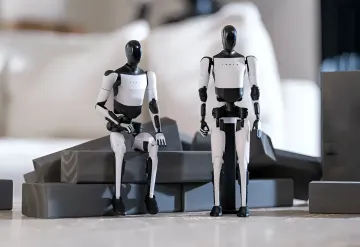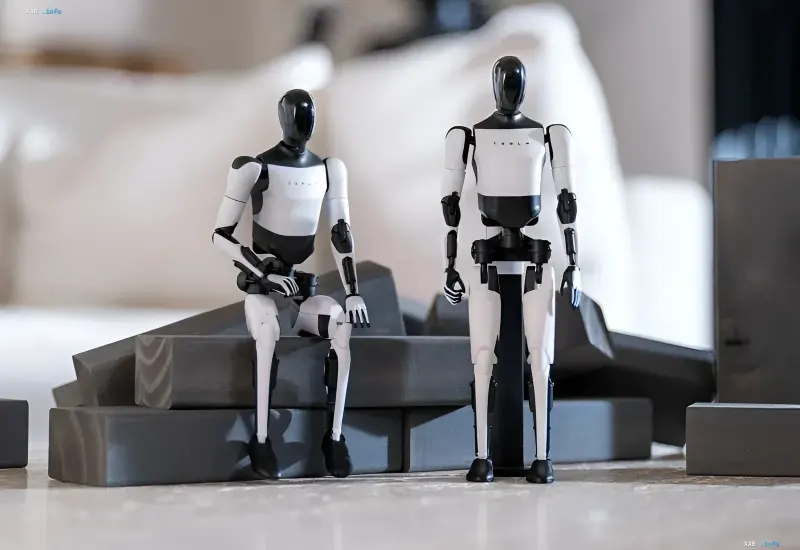
This week, Tesla held a meeting with JPMorgan analysts at its oldest car assembly plant in Fremont, California. Notably, it is precisely here, on the site where the brand's flagship vehicles have historically been built, that the Model S and Model X electric cars have already given way to the humanoid Optimus robots in terms of production organization. At the same time, third-party customers will begin receiving third-generation robots in series production at the earliest in a year, i.e. roughly by the end of 2027, as the manufacturer indicated. Thus, the demonstration at the plant is ahead of the product's actual commercialization timeline.
Fremont is being turned into a robot factory
In 2026, Tesla ended production of its flagship Model X and Model S electric vehicles to make room for humanoid robots at its California plant. In the future, Optimus units will also be assembled at the company's largest plant in Austin, Texas, which is also home to its new headquarters. The scale of the plans is impressive: if Fremont is set to produce up to 1 million such robots per year, the figure in Austin is expected to be ten times higher. This shows that robotics has become a central element of the company's production strategy, not a side experiment.
Ambitious promises versus reality
Tesla's chief, Elon Musk, had promised as early as last year to bring 5,000 Optimus robots to market, but in practice this has amounted to literally a handful of units for internal testing and training. Moreover, the company's management had to acknowledge that, in their current form, these robots are not doing any particularly useful work at the Austin plant. It had previously been assumed that they would be able to assemble one another and all the Tesla electric cars produced on the site, but that scenario has not yet materialized.
Contradictory data
There is a clear gap here between public statements and the actual state of affairs. On the one hand, the company declares multi-million-unit annual robot assembly volumes in Austin and the conversion of Fremont to robotics. On the other hand, the manufacturer itself admits that the working prototypes carry no practical production load, and the previously promised 5,000 commercial robots have never gone beyond a few test samples. In addition, the stated delivery timeline for the third generation of "at the earliest in a year" (the end of 2027) contrasts with the aggressive production plans, suggesting a possible timeline adjustment depending on the pace of software and hardware debugging and model training.
FSD and robotaxi progress
Incidentally, attendees learned about progress in the development of the FSD software. In October 2025, the FSD v14 version debuted, and in April 2026 Musk called the subsequent v14.3 version "the last piece of the puzzle" that would open the way to fully autonomous driving. The FSD v15 version is now being tested on Tesla's autonomous taxis, which are carrying passengers in Austin; the company describes feedback on the software's capabilities as "encouraging." Tesla's robotaxi fleet will begin scaling up actively from the end of 2026 into early 2027, but first the company must be confident in the safety of the driverless taxis, so it is not yet rushing to increase their numbers on the road.
Hardware and the autonomy horizon
According to company representatives, the capabilities of the HW4-generation onboard hardware should be sufficient not only for FSD v15 but also for future full autonomy. Nevertheless, Tesla is already preparing the AI4.5 processor, which is roughly 10% more powerful than its predecessor and has twice the memory. This lays a hardware foundation for the next generation of autonomous driving and, potentially, for more complex tasks, including interaction with robotic systems on production lines.