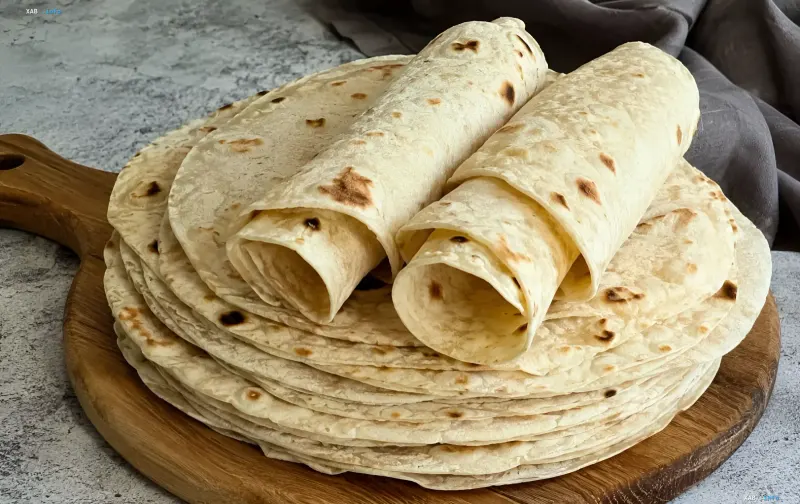
In the modern fast-paced lifestyle, where semi-finished products occupy more and more space in our refrigerators, the quality of simple products often leaves much to be desired. This is especially true for lavash: store-bought options often tear when wrapping fillings, become hard, or have a strange aftertaste. However, as experts from the Styler project have found, you can make the perfect flatbread yourself using the simplest ingredients and a regular frying pan.
Cooking Technology: Why Hot Water Changes Everything
The key difference between homemade lavash and store-bought is not only freshness but also the dough-kneading technology. The basis of the recipe popularized by blogger Vika Yavorska is the use of hot water. It is the high temperature of the liquid that promotes the rapid activation of gluten in the flour, making the dough more elastic and pliable. Combined with a small amount of vegetable oil and salt, this kneading method yields a soft dough that does not require long rising like yeast dough, yet it stretches excellently.
Secrets of Thinness and Elasticity
The main secret that beginners often overlook is the thickness of the rolling. To make the lavash tender and prevent it from tearing when rolled, each ball of dough must be rolled out as thinly as possible. This is a critically important stage: a flatbread that is too thick will be hard and dry, while one that is too thin may tear on the pan. The ideal balance is achieved by using moderate heat and quick frying on both sides. It is important not to dry out the product, as the moisture inside the layers provides that very softness we are looking for.
Storage and Freezing Rules
One of the main myths about homemade baking is that it goes stale quickly. In fact, if you follow the cooling technology, homemade lavash stays soft much longer than the store-bought version. Immediately after cooking, the flatbreads must be covered with a damp but well-squeezed towel. This creates a steam bath effect, preserving elasticity. If you have made lavash in advance, you can safely freeze it. After the flatbreads have cooled completely, they are separated into portions and sent to the freezer, where they can be stored for a long time while retaining their taste qualities.
Contradictory Data: Flour or Yogurt?
Although the main recipe from Styler and Vika Yavorska is based on the classic combination of "flour-water-oil," there are disagreements within the culinary community regarding the dough composition. Some sources, including publications on the Pravda.ru portal, offer an alternative recipe option with the addition of yogurt. Proponents of this method claim that the dairy product makes the dough more tender and helps it rise without using yeast. However, according to Styler data, the classic recipe with hot water is the most universal and fastest, not requiring additional ingredients that could alter the taste of the finished dish.
Versatility of Application
Homemade lavash prepared using this technology opens up wide possibilities for culinary experiments. Thanks to its elasticity, it is ideal for making shawarma, homemade rolls, tacos, and other dishes that require a reliable base for the filling. Unlike store-bought analogues, the homemade flatbread does not fall apart under the weight of ingredients and does not absorb excess moisture, preserving the structure of the dish. This makes it an indispensable product for both everyday meals and festive feasts.