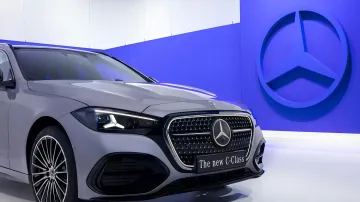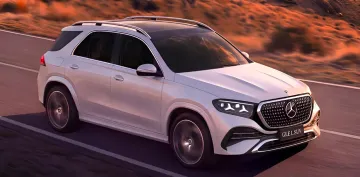
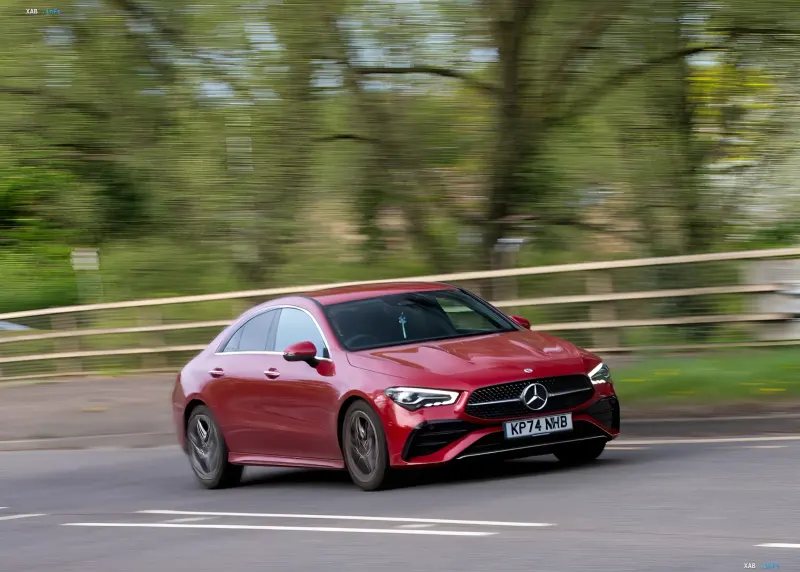
Against the backdrop of intensifying technological rivalry between Washington and Beijing, one of the pillars of the German automotive industry has come under the scrutiny of American legislation. Mercedes-Benz may face serious restrictions in the US market due to a new bill that effectively bans the sale of vehicles from companies with significant Chinese investments.
According to the publication Bild, the essence of the initiative is a ban on the import and sale of cars if the share of Chinese investors in the manufacturer's capital exceeds 15%. For the German conglomerate, this figure has sparked internal debate and a risk assessment, given its complex shareholder structure.
Risk Mathematics: 10% plus 10%
Mercedes-Benz's portfolio does indeed include Chinese investors. Approximately 10% of the company's shares are owned by the state-owned automaker BAIC, while another nearly 10% is controlled by businessman Li Shufu. However, Mercedes-Benz management confidently states that they do not fall under the scope of these restrictions. The company's lawyers argue their position by noting that no single Chinese shareholder owns more than 10% of the capital, which formally fits within safety parameters.
Nevertheless, the bill is currently under review by the US Senate Committee on Commerce, Science, and Transportation, and its final version could introduce corrections to the interpretation of these norms. Republican Senator Ted Cruz has already spoken against the 15% threshold, stating that such conditions could create artificial advantages for American automakers, specifically General Motors.
Economic Argument: 160,000 Jobs
In an attempt to secure its position in the US, Mercedes-Benz is betting on economic integration. The conglomerate emphasizes its critical importance to the American economy: the company's activities provide employment for approximately 160,000 people in the States. A significant portion of these jobs are concentrated at plants in the states of Alabama and South Carolina, where vehicles are assembled for both local and export markets.
The US remains the second-largest sales market for Mercedes-Benz, so any trade barriers could deal a significant blow to the brand's financial performance.
Plan B and the Circle of Suspects
The authors of the initiative, in turn, state that they do not intend to completely ban the sale of Mercedes-Benz cars. The text of the bill provides for the possibility of automakers appealing to the US Department of Commerce for special exemptions. This opens the door to a bureaucratic struggle for the right to be present in the market.
However, the risks extend beyond the German giant. Volkswagen and BMW could also fall under potential regulation. In their case, the threat comes less from direct investments and more from close cooperation with Chinese suppliers, which also falls within the focus of regulators.
It is worth noting that this is not the first time Mercedes-Benz has faced serious challenges in the US. Previously, the company reached an agreement with authorities regarding the case of manipulating harmful emission figures of diesel cars, agreeing to pay a fine of $149.6 million. Now, the German automotive giant faces a new task: to convince Congress that its business model does not threaten US national security.