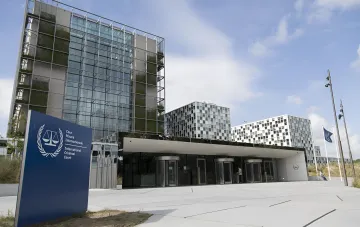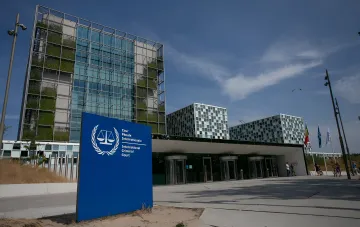
Tomoko Akane, President of the International Criminal Court (ICC), stated during an online press conference that she intends to resist pressure from Washington following the imposition of personal sanctions against her. In her words, the United States, in her assessment, has no legal basis for such restrictions, and the Hague tribunal, she asserted, cannot be dismantled by external pressure. The statement came against the backdrop of escalating tensions between international justice institutions and the US administration.
Timeline and Legal Basis of the Sanctions
According to open sources, the restrictions were imposed by the US administration on 18 August 2026; the decision was announced by Secretary of State Marco Rubio, who in his statements characterized the ICC as a politicized body. The formal basis, as stated in Washington's official wording, is that Akane (a Japanese citizen) and ICC Senior Legal Counsel Abdoulaye Cissé (a Senegalese citizen) allegedly directly participated in the court's attempts to investigate, arrest, or prosecute officials of states that have not consented to the ICC's jurisdiction. The ICC side and a number of member states classify these restrictions as politically motivated and lacking legal basis.
Practical Consequences of Listing on the SDN List
Inclusion in the Specially Designated Nationals (SDN) list entails the freezing of assets on US territory, a ban on entry into the country, and a de facto restriction of access to the dollar-based financial system, to which the world's largest banks are linked. For a sitting president of an international court, such measures create significant operational and personal constraints, which, according to observers, may affect the work of the ICC apparatus and the positions of donor states.
Japan's Position and the Reaction of Allies
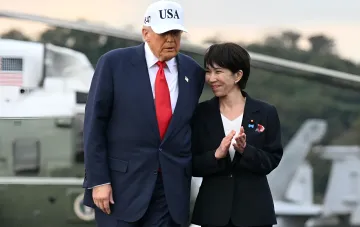
The imposition of sanctions against a Japanese citizen triggered a diplomatic reaction in Tokyo. Japanese Prime Minister Sanae Takaichi reportedly stated that the Japanese side had tried until the last moment to persuade Washington to back down from this step and intends to use diplomatic mechanisms to protect its citizen and minimize the consequences of the blocks. This creates a rare public rift in US–Japan relations, given that Japan is simultaneously a key US ally in Asia and one of the major financial donors to the ICC.
Context: ICC Warrants and Prior Sanctions
The deterioration of relations between the US and the ICC is cumulative in nature and is linked, in particular, to the court's warrants, including the arrest warrant for Israeli Prime Minister Benjamin Netanyahu and former Defense Minister Yoav Gallant, which the US regarded as an infringement on a partner's sovereignty. According to sources, at the time the latest restrictions were introduced, 9 of the ICC's 18 judges were already under US sanctions. It is separately noted that in March 2023 Akane issued an international arrest warrant for Russian President Vladimir Putin in the case of the deportation of Ukrainian children, in connection with which she simultaneously appears in the Russian Ministry of Internal Affairs' wanted list and in US sanctions lists.
Contradictory Data
The available sources contain discrepancies that must be taken into account. First, the date of the imposition of the restrictions is given differently: some materials date the decision to 18 August 2026, while individual publications (including by publication date) refer to 19 August, which may be explained by the difference between the moment of announcement and the moment of entry into force, or by time zones. Second, the legal characterization of the actions differs by side: official US wording cites the judges' participation in prosecuting individuals from states that have not recognized the ICC's jurisdiction, whereas the position of the ICC, Japan, and a number of other states asserts that the sanctions have no legal basis and constitute political pressure on an independent judicial body. Both versions are set out in the open statements of the respective parties.
Assessment of Prospects
The situation reflects a broader question of how instruments of national sanctions legislation are applied to officials of international judicial institutions. For the ICC, the key issue becomes preserving the operational independence and financial sustainability of the apparatus in conditions where a significant part of its composition is under restrictions. The further dynamics will depend on the reaction of the states parties to the Rome Statute, the position of the largest donors, and whether diplomatic mechanisms can mitigate the consequences for specific officials.