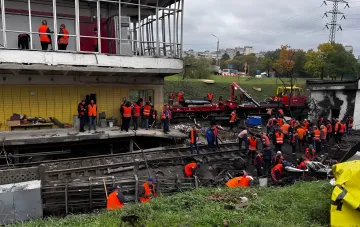
On the morning of October 22, Kyiv faced large-scale transport difficulties caused by overnight shelling and a prolonged air raid alert. Traffic on key highways in the capital was paralyzed, underground train operations were restricted, and taxi aggregators recorded a sharp surge in trip prices.
Underground Restrictions and Transport Blockade of the Left Bank
Due to infrastructure damage to the metro and the South Bridge, train operations on the Syretsko-Pecherska ("green") line were temporarily divided into two isolated sections. Rolling stock on the left branch is supported by trains that stayed overnight in tunnels, while intervals between trains have been significantly increased. Constant air raid alerts prevent utility services and repair teams from beginning full-scale restoration work.
Near the Osokorky metro station, where through-traffic to the right bank was cut off, a massive crowd of passengers has accumulated. Surface public transport is overloaded and unable to cope with the passenger flow, while multi-kilometer traffic jams have formed on approaches to the bridges toward the center. City authorities and municipal services recommend that residents allow extra travel time and account for temporary restrictions.
Surge in Taxi Prices and Pressure on the Road Network
Amid an acute deficit of public transport capacity and skyrocketing demand, taxi tariffs in Kyiv have increased sharply. Trips from the left bank to the right, in particular from Osokorky metro station to Independence Square, are costing residents speculative amounts. Drivers and dispatch services report a record number of simultaneous requests with a minimal number of available cars on the line.
The road situation is further complicated by the fact that due to regular siren signals, private vehicle drivers also seek to bypass potentially dangerous sections, creating traffic jams on secondary streets. A tense situation persists across all districts of the city, and infrastructural restrictions continue to exert serious pressure on the metropolis's logistics.
Implications for Infrastructure and Recovery Prospects
The events of October 22 highlight the vulnerability of the Ukrainian capital's urban transport network in the face of regular infrastructure damage. The lack of full communication between the left and right banks of the Dnipro creates a cascading effect, paralyzing the daily routines of hundreds of thousands of residents and paradoxically increasing the load on surviving crossings.
The further development of the situation directly depends on the safety of carrying out restoration work in the metro and bridge crossings. Under ongoing security threats, city authorities are forced to balance between the urgent need to repair critical facilities and ensuring passenger safety.