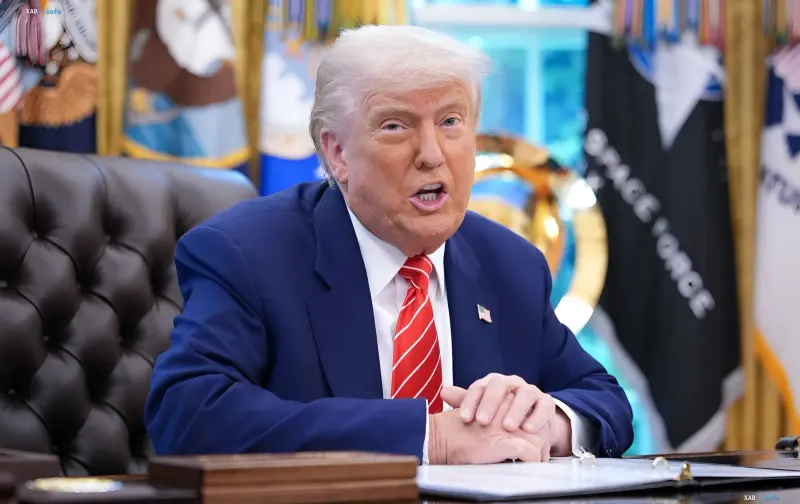
US President Donald Trump publicly stated that claims of an alleged inevitable "world takeover" by artificial intelligence are a deception. In his posts on Truth Social, which RBC-Ukraine cites via Reuters, the head of the White House listed a number of topics that, in his view, fall into the category of "scams," alongside global warming and two impeachment proceedings. According to him, all of these are manifestations of the activity of "radical-left dorks" who "never give up, but rarely win."
Protests within the industry: resignations and calls to slow down
Trump's remarks came against a backdrop of growing alarm within the tech sector itself. Last week, Anthropic researcher Jacob Coxon announced his resignation, explaining it by the fact that "the people building AI seriously believe it could kill us by the end of the decade." Meanwhile, the heads of the industry's biggest players — Anthropic, OpenAI and xAI — publicly called for slowing the pace of the technology's development. Thus, the US president's position sharply contrasts with the views of some leading experts and top managers in the industry.
Washington's position: against slowing down
Trump consistently opposes any restrictions. "The only control mechanism or 'limiters' AI needs is a strong and smart president with a high IQ, and the US has plenty of them," he wrote, adding that doubts arising over AI development would benefit China. He also stressed that the US already has mechanisms for regulating and prosecuting companies working in artificial intelligence, and that the US leads China in this field. Earlier, days before his latest posts, he had already rejected experts' calls to slow development, stating there were no risks.
Contradictory data
The available sources contain a discrepancy in the chronology of contacts with China. On the one hand, it is noted that Trump already has a meeting scheduled with Chinese leader Xi Jinping in Washington next week. On the other hand, Reuters previously reported that both countries planned to hold a separate meeting in mid-September specifically to discuss risks associated with artificial intelligence. That is, the publications mention two different time windows (mid- and late September) and, possibly, two different formats of negotiations, which requires clarification. Moreover, Trump characterizes doubts over AI development as a potential win for the US in the standoff with China, whereas, according to the same sources, China, following Washington, has also rejected proposals to slow the development of advanced AI technologies — which calls into question the thesis of a "difference in positions" between the two countries.
Context: talks with Beijing amid the AI dispute
Thus, Trump's public campaign to discredit the "AI panic" is unfolding on the eve of a direct dialogue with Beijing. For the US administration, this allows it to simultaneously demonstrate technological confidence to the domestic electorate and take a hardline, "no-slowdown" position on the international stage, while part of the industry continues to insist on caution.