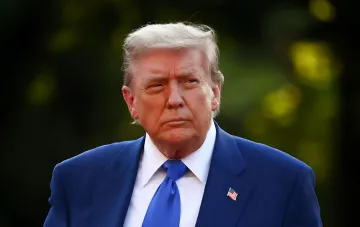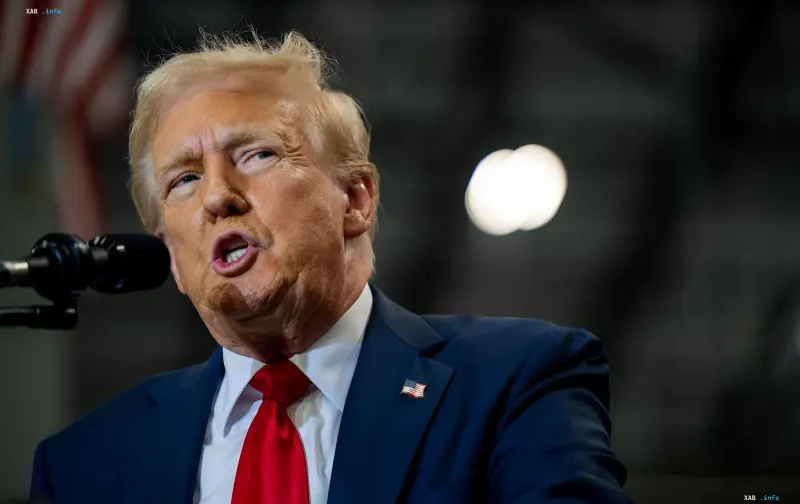
On September 14, 2026, US President Donald Trump stated that Ukraine and Russia had allegedly reached a mutual agreement to stop striking energy facilities. According to him, Kyiv agreed not to attack Russian energy infrastructure, while Moscow, in turn, committed to doing the same. The statement came amid an ongoing debate over the impact of hostilities on global fuel prices and was interpreted as an attempt by Washington to influence the tactics of both sides in the conflict.
Trump’s Statement on the “Energy Ceasefire”
“Ukraine agreed not to strike Russian energy facilities. Russia agreed to do the same,” Trump said, as reported by Ukrainian media citing his remarks. At the same time, he placed the blame for the rise in global diesel prices primarily on the war between Ukraine and the aggressor country, rather than on the situation around Iran. Earlier, on September 13, the American leader had claimed that it was precisely Ukrainian strikes on Russian refineries that were driving up fuel prices, and in this context he called on Ukrainian President Volodymyr Zelenskyy to halt such attacks, threatening a global diesel shortage otherwise.
Reaction from Kyiv and Moscow
The Kremlin reacted to the statement in a restrained-positive manner: Russian dictator’s spokesman Dmitry Peskov said that Moscow had positively received Trump’s call to stop Ukrainian strikes on Russian refineries. It is important to note, however, that the Kremlin commented on the call itself, not on the fact of a bilateral agreement being reached. On the Ukrainian side, the reaction was more evasive: Zelenskyy’s circle did not publicly confirm the existence of a coordinated “energy ceasefire,” leaving the key claim of Trump’s statement without unambiguous confirmation from either capital.
Context: Attacks on Refineries and the IEA Forecast
The statement came against the backdrop of Russian refineries experiencing the largest wave of attacks since the start of the war in August. Amid systematic strikes on critical infrastructure, analysts forecast a prolonged decline in Russian oil refining volumes. In particular, the International Energy Agency (IEA) lowered its forecast for Russian oil refining over the next year and a half to 4 million barrels per day — roughly 30% below the levels recorded before the start of Russia’s full-scale invasion of Ukraine.
Contradictory Data
There are notable discrepancies between the parties’ statements and fact-checking of sources. First, Trump declares a ready-made bilateral agreement, yet neither Kyiv nor Moscow has publicly confirmed the conclusion of such a deal: the Ukrainian side reacted evasively, while Peskov commented only on Trump’s “call,” not on the fact of an agreement. Thus, the “energy ceasefire” is, at this point, primarily a one-sided declaration by Washington. Second, a shift is traceable in Trump’s argumentation: if earlier he directly linked the rise in diesel prices to Ukrainian strikes on refineries, in his new statement he transfers responsibility for the price increase to the war as a whole, relegating Iran’s role to the background. These inconsistencies make the substance of the statement contentious and in need of further verification.
What This Means for the Fuel Market
Regardless of whether the declared agreement is a real political commitment, Washington’s rhetoric is aimed at reducing volatility in the oil market. If strikes on energy facilities are indeed curtailed, this could slow the decline in Russian refining forecast by the IEA and put downward pressure on diesel prices. However, until both sides officially confirm the agreement, the market and observers should treat the “energy ceasefire” as a declared but unconfirmed initiative.