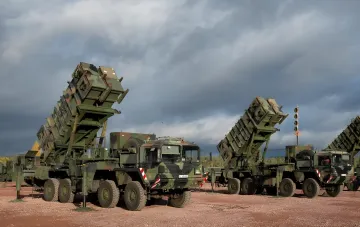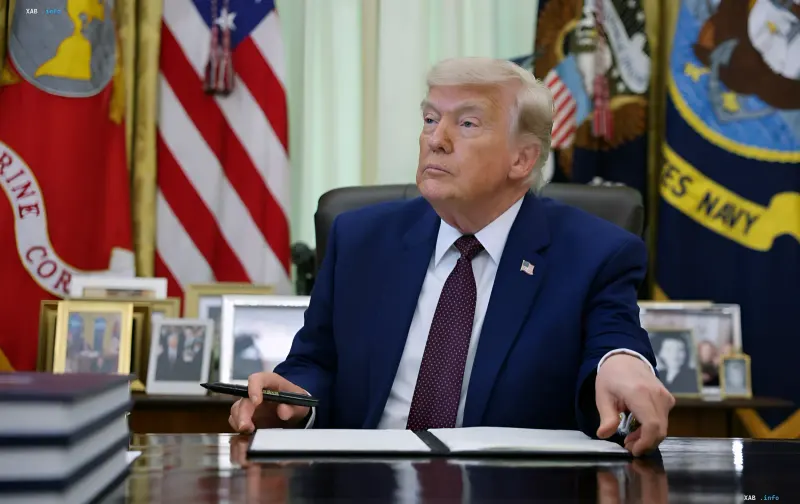
US President Donald Trump, while speaking with journalists, stated that Ukraine will receive a license to produce missiles for the Patriot air defense system. However, according to RBC-Ukraine, this refers exclusively to a less advanced version of the weapon, not the most sophisticated interceptors currently in the service of US and allied air defense forces. The White House chief did not specify a concrete timeline for the final decision on transferring the license.
Context of the statement: from negotiations to public confirmation
The question of licensing Patriot production for Ukraine has been one of the key issues in bilateral talks between Washington and Kyiv over the past several months. As early as September 2, US Secretary of State Marco Rubio publicly confirmed that the American side was holding active negotiations with Kyiv on providing licenses to produce missiles for Patriot systems. Thus, Trump's statement, made about two weeks after Rubio's remarks, can be seen as an escalation of Washington's position: from "we are negotiating" to "Ukraine will receive a license," albeit with a caveat about the version of the weapon.
Why the license transfer is stalling: the position of defense corporations
As early as August, former US special envoy for Ukraine Keith Kellogg explained the reasons for the delay. According to him, it is the defense companies themselves, primarily Lockheed Martin, that are opposed to transferring full licensing rights, fearing a loss of control over their own technologies. Kellogg named this factor, rather than geopolitical or diplomatic considerations, as the main obstacle to full licensing of Patriot production on Ukrainian territory.
The compromise option: PAC-3 ACE and PAC-2 GEM-T
In early September, Trump shared a publication from a US outlet that proposed a possible compromise scenario. The authors suggested allowing Ukraine to produce not the most modern version of the interceptors, but two alternative types of missiles. The first option — PAC-3 Adapted Capability Effector (ACE) — is a cheaper interceptor made by Lockheed Martin. The second — PAC-2 GEM-T — is the oldest missile produced by Raytheon, which, according to available data, has already been agreed to be manufactured for Ukraine at a factory in Germany. It is most likely one of these two types that Trump's statement about a "less modern version" refers to.
Contradictory data
There is a difference in wording among the various Ukrainian outlets that reported Trump's statement. RBC-Ukraine and NV.ua interpret the president's words as a direct confirmation: "Ukraine will receive a license." At the same time, the business outlet Delo.ua uses a more cautious construction in its headline — "Trump acknowledged the possibility of a transfer." Moreover, none of the sources provides an exact quote from Trump specifying the particular type of missile covered by the promised license. The absence of timeframes and a reference to a specific interceptor model leaves room for interpretation: is the statement a final political decision or an interim signal of Washington's readiness for a compromise.
Either way, the public confirmation by the sitting US president, even in a qualified form, marks a turning point in the discussion over localizing air defense production on Ukrainian territory. The final parameters of the license — the type of missile, the volume of production, and intellectual property terms — as of September 14, 2026, remain the subject of closed negotiations between Washington, Kyiv, and the interested defense contractors.