US President Donald Trump stated that Ukraine will receive a license to produce missiles for the Patriot air defense system, though, in his words, this concerns a "less modern version" of the weapon. Based on the body of previously published reports and data that the White House chief himself cited, the most likely candidate for the licensed product is the PAC-2 missile, specifically its most widely used modern modification, the GEM-T (Guidance Enhanced Missile-Tactical). It is precisely these interceptors that are already protecting the Ukrainian sky, which makes the licensing topic especially sensitive against the backdrop of preparations for winter and the intensifying debate over air defense supply.
What is PAC-2 and how does it work
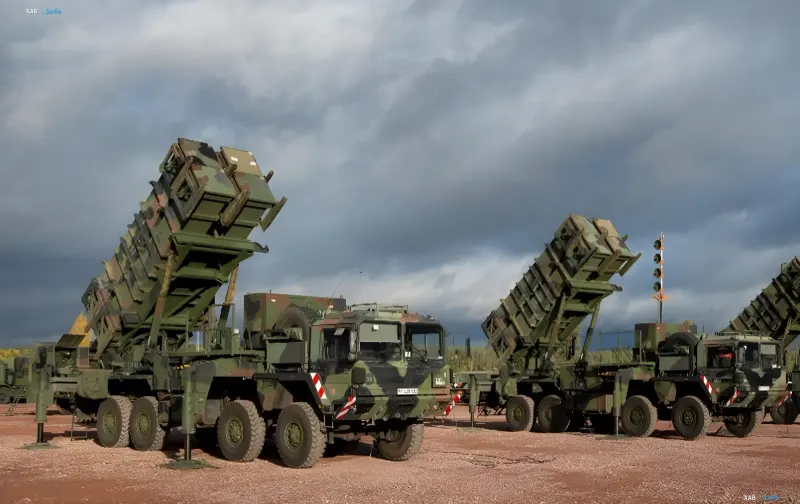
PAC-2 is a family of surface-to-air guided missiles for the Patriot system. The US defense contractor L3Harris describes it as a single-stage, solid-fuel, ground-based interceptor. The missile was first used during the Persian Gulf War and is capable of engaging tactical ballistic missiles, cruise missiles, and aircraft using a conventional fragmentation-warhead warhead. The GEM-T modification made it possible to more effectively detect targets with a small radar cross-section and to detonate more precisely in the vicinity of ballistic targets. The next generation, PAC-3, starting with the CRI version, increased interception effectiveness through the hit-to-kill technology, which replaced the classic fragmentation-warhead kill mechanism. Thus, PAC-2 and PAC-3 solve different tasks: the former is optimized for aerodynamic targets, the latter for ballistic ones.
Production: US facilities and a German plant
The PAC-2 GEM-T missiles are produced by the US company Raytheon, a division of the RTX corporation. The main production facilities are located in the United States: in July 2026, the US Army ordered a new batch of PAC-2 GEM-T for the first time in 30 years to compensate for the expenditure of ammunition during combat operations against Iran. In Europe, Germany has held the right to produce this missile since 2022 — at the COMLOG joint venture of Raytheon and MBDA Deutschland in Schrobenhausen, Bavaria. In April 2026, Raytheon signed a $3.7 billion contract for the supply of PAC-2 GEM-T missiles to Ukraine, part of which will be produced at this German plant and part in the US. This makes Germany a key link in the potential licensing chain for Kyiv.
The role of PAC-2 in Ukraine's air defense
The PAC-2 GEM-T is designed to engage aerodynamic targets — aircraft, helicopters, cruise missiles, and drones — at a range of up to 160 km. According to Defence Express, it was precisely these missiles that were used in 2023–2024 to counter Russian aviation at a considerable distance from the front line as part of the "roaming" Patriot tactic. Against ballistic and aeroballistic missiles, by contrast, PAC-3 missiles remain effective, while the capabilities of PAC-2 in this segment are limited. The first Patriot system arrived in Ukraine in April 2023 — the systems were supplied from Germany, the US, and the Netherlands, which laid the foundation for the current discussion on localizing the production of ammunition.
Why Washington is slowing the license down
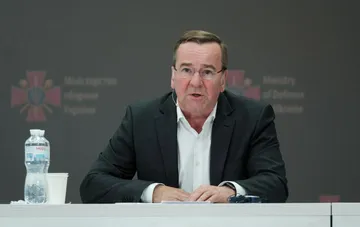
The question of producing and supplying missiles for the Patriot has become acute in Ukraine against the backdrop of winter preparations and Trump's announcement of a possible license. According to the US president, this concerns only a "less modern version" of the weapon — and, according to reports that had previously circulated his statements, this could be either the PAC-2 GEM-T or a new, cheaper version of PAC-3 called the Adapted Capability Effector. As early as August, former US presidential special envoy for Ukraine, Keith Kellogg, explained why Washington was holding back on transferring the license: the defense companies themselves, in particular Lockheed Martin, are opposed, fearing they would lose control over their own technologies. In parallel with the licensing debate, Germany announced on September 8 at the Ramstein-format Ukraine Defense Contact Group meeting the urgent transfer of PAC-2 interceptor missiles to Ukraine directly from Bundeswehr stockpiles. German Defense Minister Boris Pistorius explained this by the need to strengthen Ukraine's air defense, after which Poland announced it was preparing its own aid package in the wake of Berlin's decision.
Contradictory data
The parties' versions do not coincide on two key questions. First — the fate of the license itself: while Trump publicly announces its transfer, a number of sources and experts doubt its implementation. Thus, according to an assessment cited in materials on the topic, Ukraine "will never produce missiles for the Patriot" due to the resistance of defense conglomerates and the risk of technology leakage; German-language media directly raise the question of whether a license will be granted at all. Second — the specific modification: while Trump's statements point to the "less modern" PAC-2, individual publications note that, against the backdrop of these discussions, Kyiv has already deployed PAC-3 interceptor missiles, and a cheaper version of PAC-3 (the Adapted Capability Effector) is also among the possible licensed products. Thus, neither the version of the weapon nor the very fact of formalizing the license is unambiguously confirmed at this time.