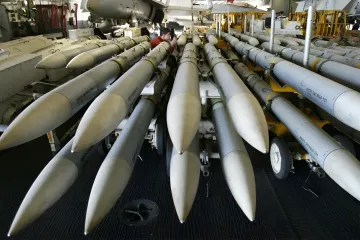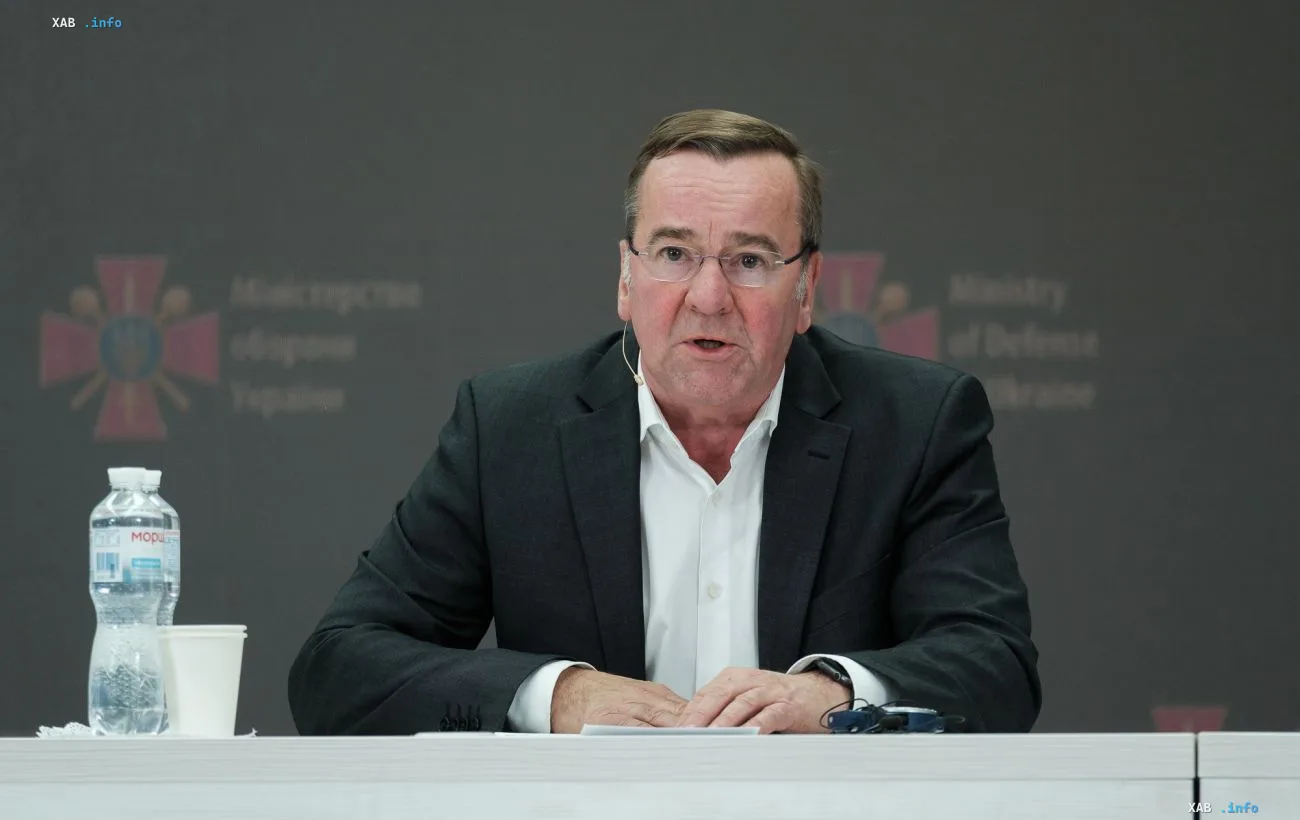
Germany has stepped up diplomatic pressure on Washington to obtain permission to localize the production of PAC-3 interceptor missiles — a key component of the Patriot air defense system. This was stated by German Defense Minister Boris Pistorius, commenting on the outcome of his meeting with his American counterpart Pete Hegseth in Washington. According to Pistorius, Berlin has "made it clear" that it is ready to help meet the enormous demand for US air defense systems by establishing its own production lines in Europe and, above all, in Germany. The minister's statement came against the backdrop of a growing shortage of interceptors, which are being consumed in huge quantities during the fighting in Ukraine.
Framework Agreement and Its Limits
During the same meeting, Pistorius and Hegseth signed a statement of intent concerning the joint production of US weapons systems on European territory. Pistorius clarified that PAC-3 missiles fall under the scope of this document "in broad terms." However, he explicitly noted that this does not mean an automatic authorization for assembly: further multilateral negotiations are required. The minister named three key obstacles — the issue of intellectual property, coordination with the Pentagon and the White House, and the position of the manufacturer itself, Raytheon. Pistorius expressed hope for a positive outcome but did not specify any concrete timelines.
Tomahawk and Strike Capability from German Territory
In addition to the defensive component, Germany is conducting parallel negotiations to obtain a license for the production of long-range Tomahawk cruise missiles on its own territory. Berlin has already concluded an agreement with Washington to purchase these missiles, which effectively opens up the possibility of striking Russian targets from German soil. However, as Pistorius notes, there is a "long waiting list" for the supply of this scarce weaponry, and localizing production in Europe would be a logical way to shorten the timelines. Thus, Germany is simultaneously developing both a defensive (PAC-3) and an offensive (Tomahawk) vector of military integration with the US.
Ukrainian Context: Patriot License and Raytheon's Position
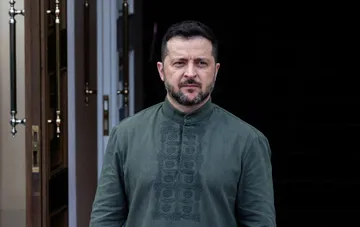
The German negotiations are not taking place in a vacuum. Earlier, on the sidelines of the 81st session of the UN General Assembly in New York, the leaders of Ukraine and the US recorded certain progress on the issue of granting Kyiv a license to produce missiles for the Patriot system. Ukrainian President Volodymyr Zelensky stated that the US corporation Raytheon is ready for Patriot interceptors to be produced directly in Ukraine. This creates an interesting precedent: if the license is granted to Kyiv, Berlin's argument for "European production" of PAC-3 gains additional weight, as it will involve creating a unified European production ecosystem for US air defense systems.
Contradictory Data
The statements of the parties contain a significant degree of uncertainty regarding the status of PAC-3 under the signed agreement. On the one hand, Pistorius claims that the interceptors fall under the framework document "in broad terms," which could be interpreted as being close to a decision. On the other hand, he himself emphasizes that "further negotiations" are needed on intellectual property and coordination with the Pentagon, the White House, and Raytheon. In effect, this means that at present there is no formal authorization for PAC-3 production in Europe, and the signed statement of intent is of a framework rather than binding nature. The difference between "falls under in broad terms" and "authorized for production" could amount to months or even years of diplomatic and legal procedures.
Strategic Significance for European Security
If the negotiations are successful, Germany will become the first European country to obtain the right to mass-produce US interceptors. This will fundamentally change the balance of the EU's defensive capabilities: instead of years-long dependence on US supplies and long waiting lists, European countries will be able to build up their own PAC-3 stockpiles in the shortest possible time. In the context of ongoing fighting and the depletion of air defense arsenals, this is not only a strategic but also a purely operational issue. At the same time, the success of the German initiative will likely open the way for similar programs in other NATO countries, which in the long term could restructure the entire architecture of defense production on the continent.