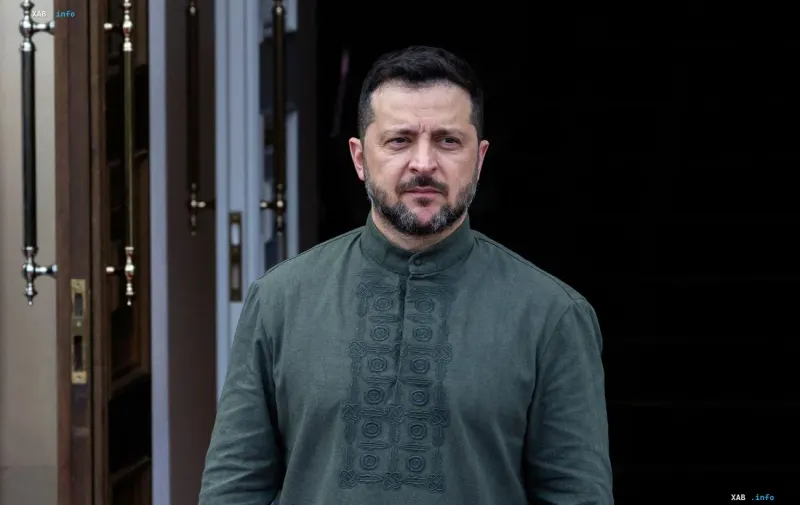
Ukrainian President Volodymyr Zelensky, during a meeting with representatives of the Ukrainian diaspora in the United States, announced that an agreement had been reached on a new package of missiles for Patriot air defense systems. “Today we reached an agreement — I won’t say with whom — on a package of missiles for Patriot systems. This is an important decision,” the head of state emphasized, deliberately withholding the partner’s name. The statement came against the backdrop of ongoing diplomatic negotiations between Kyiv and Washington, as well as the fact that the United States has still not approved a license for the production of Patriot missiles directly on Ukrainian territory.
“Gathering One or Two at a Time”: The Scale Problem
At a briefing in New York, Zelensky characterized the current situation with interceptor deliveries as fragmented: Ukraine, in his words, is “gathering a hundred missiles one or two at a time directly from state leaders.” The president explicitly named the United States as the only country capable of providing help at scale. This argument, it seems, was the key factor in shaping the new package: the issue is not a one-off gesture but a systemic solution that must close the deficit accumulated over months of intense aerial combat.
Contradictory Data
Meanwhile, a number of inconsistencies can be traced in the statements of the parties involved. On the one hand, Zelensky notes the fact of an agreement already reached — “we reached an agreement today.” On the other hand, the U.S. State Department confirms only that “diplomatic negotiations are ongoing,” and a license for the production of Patriot missiles in Ukraine has still not been issued. Moreover, German Defense Minister Boris Pistorius stated that Berlin is able to cover the shortfall of PAC-3 missiles for Patriot, but for production to be deployed in Europe, an official authorization and license from Washington are required. Thus, if the partner in the “new package” is Germany or another European country, its capabilities remain legally dependent on the United States. If, however, the United States is meant, then the wording “we reached an agreement” is at odds with the State Department’s position, which does not confirm the conclusion of negotiations. Zelensky did not name the specific partner, leaving room for various interpretations.
Raytheon and the Question of Production Localization
A separate layer of the discussion concerns the American conglomerate Raytheon, which, according to Zelensky, is ready to organize the manufacture of Patriot missiles directly in Ukraine. Kyiv, as the president noted, has asked Washington to expedite this process. The localization of production is of strategic importance: it eliminates dependence on logistics chains, shortens the time to replenish the air defense system’s ammunition, and allows output to be scaled to the actual needs of air defense. However, without a license issued by the Pentagon and the State Department, this scenario remains on paper.
The European Dimension and Berlin’s Role
Pistorius’s statement about Germany’s readiness to cover the PAC-3 shortfall adds a European dimension to the picture. PAC-3 (Patriot Advanced Capability-3) missiles are precisely the interceptors that engage ballistic and cruise missiles, and their shortage is one of the main vulnerabilities of Ukraine’s air defense. The fact that Berlin publicly confirms its ability to produce or supply these missiles strengthens Kyiv’s negotiating position: Ukraine gains an alternative channel, even if it formally depends on a U.S. license. Nevertheless, as Pistorius himself emphasizes, without Washington’s consent, European production cannot be deployed in full.
What Next: From Announcement to Ammunition
Zelensky’s announcement is a political signal, not a logistical act. Between the statement “we reached an agreement” and the actual arrival of missiles at Patriot positions, anything from several weeks to months may pass, depending on the stage of license negotiations, production volumes, and logistics routes. For the Ukrainian side, it is critically important that the “important decision” does not remain in the realm of public promises but is transformed into concrete contracts, delivery schedules and, in the longer term, a working Raytheon plant on Ukrainian soil. The coming weeks will most likely show how quickly the diplomatic track is converted into combat missiles.