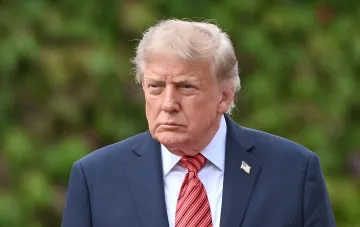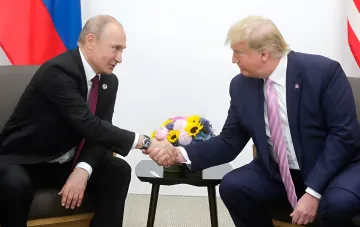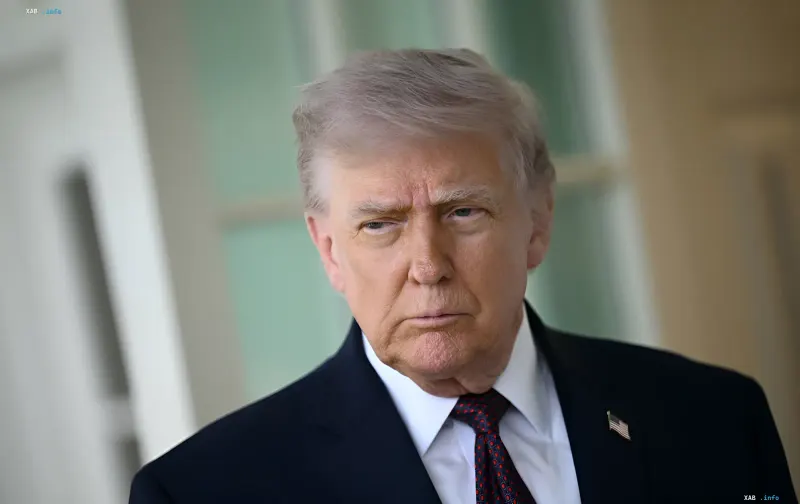
The administration of U.S. President Donald Trump is exploring the possibility of lifting sanctions against the Russian Direct Investment Fund (RDIF). This was reported by RBC-Ukraine citing The New York Times. According to the publication, the issue is being considered as part of broader negotiations between Washington and Moscow, and a U.S. official confirmed that the fund's application is being evaluated under the established procedure. No final decision on lifting the restrictions has been made at the time of publication.
History of Sanctions Against the Fund
The Russian Direct Investment Fund is a state structure that invests in Russian companies and joint projects with foreign partners. The fund was placed under U.S. sanctions in 2022 by decision of Joe Biden's administration, which called it Vladimir Putin's "slush fund" and an instrument for spreading Russian influence abroad. Since then, the restrictions have become one of the elements of sanctions pressure on Moscow.
Diesel Agreement as a Reason for Review
The review of the fund's application is taking place against the backdrop of agreements on the supply of Russian diesel fuel. Following the agreement between Donald Trump and Vladimir Putin on October 9, the U.S. Treasury Department temporarily authorized transactions involving Russian diesel fuel loaded onto tankers during the specified period. This authorization made supplies possible, but does not mean the automatic lifting of all restrictions on the fund. Currently, the structure headed by Kirill Dmitriev is helping organize diesel fuel supplies and participating in resolving financial issues and making payments. According to the Russian side, the U.S. Treasury Department asked to involve the fund in the diesel agreement; at the same time, the fund independently applied in parallel to lift sanctions directly against itself.
Procedure and Conditions for Lifting Restrictions
U.S. officials and sources familiar with the progress of the negotiations told the NYT that Washington is reviewing the fund's application to lift sanctions as part of broader talks with Moscow. The reason is cited as "the desire to improve relations with Russia and facilitate the end of the war." To lift the restrictions, the fund must prove that the circumstances for which the sanctions were imposed no longer exist. As of the time of publication, no final decision has been made.
Reaction and Broader Context
Critics note that the Kremlin is receiving economic benefits without abandoning its demands regarding Ukraine. Former U.S. National Security Council official Eric Green emphasized that lifting sanctions will signal Washington's retreat from the position of maintaining economic pressure on Russia until the war is settled. The Russian side itself called the diesel agreement an example of renewed cooperation, and Kirill Dmitriev has opposed legislative restrictions for joint projects. Separately, Trump allows for further easing of sanctions against Russia and is considering the possibility of concessions to Moscow regarding the export of Russian fertilizers; according to The Atlantic, a plan to soften the sanctions regime linked to the release of certain prisoners is being worked out and is in its initial stages.