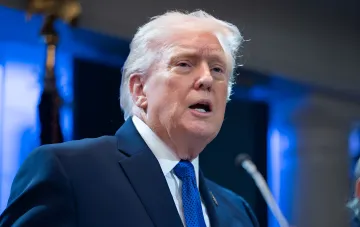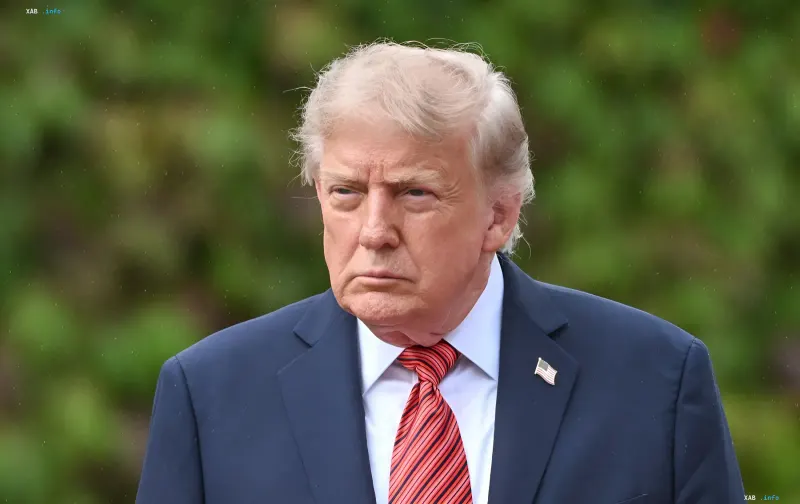
US President Donald Trump stated that he does not intend to increase sanction pressure on Russia, because, according to him, Washington and Moscow have never been closer to an agreement on Ukraine. This was reported by RBC-Ukraine, citing the US leader's responses to journalists at the White House. The statement came against the backdrop of the freezing of a previously adopted sanctions bill against the Russian Federation and active diplomatic activity aimed at finding conditions to end hostilities.
“We are closer than ever”: Trump's statement at the White House
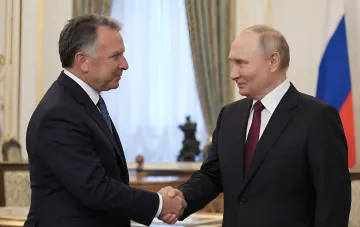
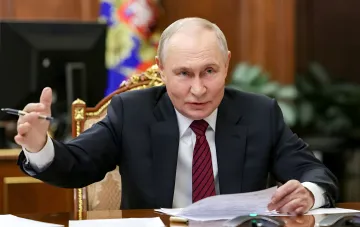
Answering questions from the press, Trump reported that he recently held a conversation with Russian President Vladimir Putin regarding the end of the war with Ukraine and expressed confidence that the parties are approaching a solution. “I think we are getting close. Maybe we are closer right now than we have ever been before,” he stated. According to him, it is this proximity to a potential agreement and the “sensitive” nature of the negotiations that make the introduction of new restrictions undesirable at this moment: “And when you are close to a deal and you are in very sensitive negotiations, you don't put on new sanctions,” the US President explained.
Freezing of the “Graham Act” and the retained threat of new restrictions
The decision not to increase pressure fits into a broader context: last week, Trump froze the sanctions bill against Russia, explaining the step by his reluctance to alienate Moscow from negotiations. Earlier, on October 17, according to RFI, he signed a decree lifting the sanctions stipulated by the so-called “Graham Act,” one of the key provisions of which, according to Kommersant, included tariffs of up to 500% on imported goods from the Russian Federation and up to 100% on five major banks. At the same time, Trump emphasized that he retains the right to impose new restrictions against Russia at any time, though he did not specify under what exact conditions this would happen.
The G20 scenario and the issue of pressure on negotiating positions
According to media reports, Trump expects Volodymyr Zelenskyy and Vladimir Putin to sign a peace agreement at the G20 summit, expected to take place in December in Florida. Publications emphasize that the negotiation process may be accompanied by pressure on Ukraine. Concurrently, Moscow is reportedly showing readiness to return to negotiations with Ukraine and the US: Trump's special envoy Steve Witkoff, after a meeting with Putin, announced the presence of prerequisites for a ceasefire and reportedly brought relevant documents to Moscow. At the same time, Ukraine, the US, and Europe held trilateral consultations in Norway, where new peace initiatives were reportedly developed.
Reaction from Kyiv and Brussels
In Kyiv, the reaction to Washington's steps was assessed critically: President Volodymyr Zelenskyy stated that the US actions look like an attempt to coerce Ukraine into capitulation. In Europe, by contrast, the course towards maintaining the sanctions regime was confirmed: according to Gazeta.ua, the European Union does not plan to ease sanctions against Russia despite Trump's decision to ease sanction pressure, and European leaders emphasized the necessity of maintaining restrictions. Thus, Washington's position on being “close to peace” and refusing new sanctions does not yet coincide with the approaches of Kyiv and Brussels, maintaining discrepancies in assessing the prospects of negotiations.