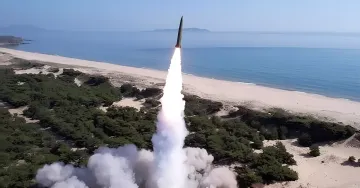
On Saturday, August 17, 2026, the diplomatic situation on the Korean Peninsula intensified again following a sharp statement from the administration of US President Donald Trump. The Office of the President of South Korea officially responded to the Pentagon directive regarding a "significant reduction" in the scale of joint military exercises between Washington and Seoul. This decision, announced during the annual "Ulchi Freedom Shield" maneuvers, came as a shock to military analysts and political scientists accustomed to hard rhetoric towards Pyongyang.
Diplomatic response from Seoul: caution and hope
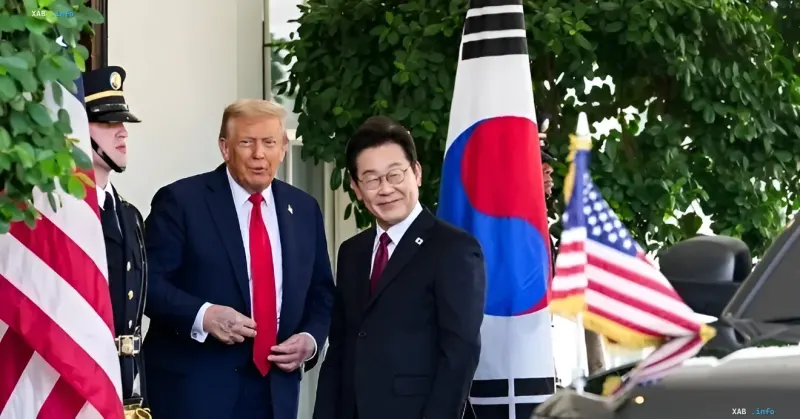
In its official comment, transmitted by the Yonhap News Agency, the South Korean administration stated that it had taken President Trump's message "on record." The statement contains a nuanced diplomatic formulation: Seoul "expects that the friendly relations between the leaders of North Korea and the United States will lead to substantive dialogue." Thus, South Korea is trying to save face and avoid open conflict with an ally, while simultaneously expressing hope that the reduction of exercises will become a catalyst for peace talks rather than a concession to threats.
Strategic pivot: from Korea to the Middle East
Despite the reduction in activity on the Korean Peninsula, Seoul does not intend to lower its global profile. The statement emphasizes that South Korea will continue to work closely with Washington to maintain a strong common defense posture. However, the focus is shifting to other regions. The document specifically highlights Seoul's active participation in international discussions on a ceasefire in Iran and efforts to restore freedom of navigation in the Strait of Hormuz. The President's Office explicitly stated consultations with the US on practical ways to provide support in the Middle East, including possible military contributions, signaling a redistribution of resources in the face of a new geopolitical reality.
Washington's motives: savings and "personal diplomacy"
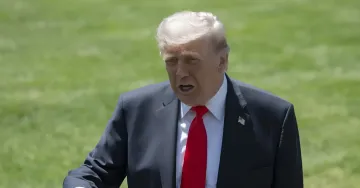
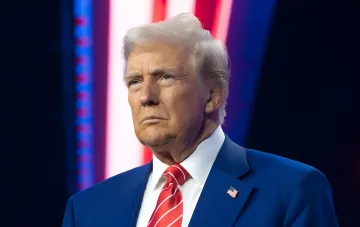
Earlier, President Trump ordered Defense Minister Pete Hegseth to cut the exercises, citing two key reasons. The first is economic: Washington considers the current scale of exercises too costly. The second, more political reason, lies in the personal dynamic between Trump and the leader of North Korea, Kim Jong Un. The US President has repeatedly stated his readiness to dialogue with Pyongyang "without any preconditions." Observers agree that the reduction of the "Ulchi Freedom Shield" maneuvers is viewed as a gesture of goodwill intended to create a favorable environment for a new meeting of leaders and the easing of tensions.
Contradictory data
Various narratives have already begun to form around this incident. On the one hand, the official position of Seoul sounds like restrained approval of Trump's initiative for the sake of peace. On the other hand, military experts and opposition circles in South Korea express deep concern. They point out that the sudden reduction of exercises in the midst of their conduct could be perceived by Pyongyang not as a gesture of goodwill, but as a sign of weakness of the US-South Korea alliance. Furthermore, there are discrepancies in the interpretation of the phrase "significant reduction": it is not yet clear whether this will refer to the complete cancellation of maneuvers or merely a reduction in their intensity, which is critical for assessing the real threat to regional security.