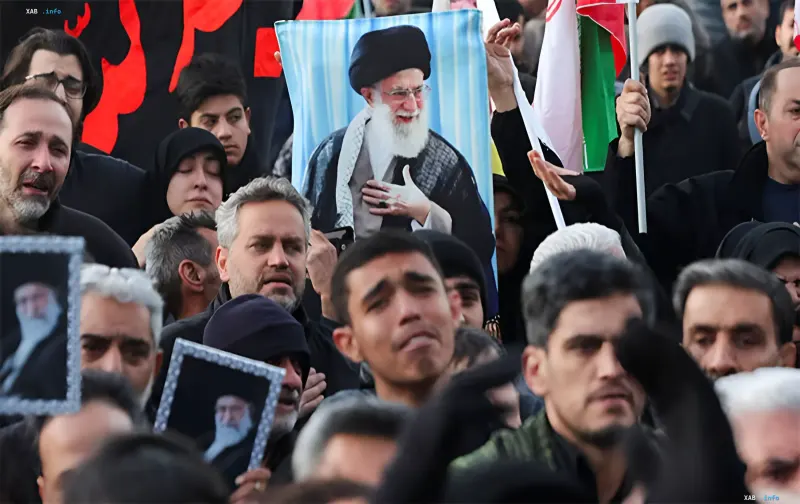
The administration of U.S. President Donald Trump is holding internal discussions regarding the possibility of conducting an operation to eliminate Iran's top leadership. According to sources from NBC News, cited by RBC-Ukraine, proponents of such a scenario in Washington believe that the liquidation of hardline members of the Iranian regime could serve as a tool to end the war, which has been ongoing for nine months. The U.S. President has not yet made a final decision on carrying out such an operation.
Strategic Logic and Arguments of Proponents
According to NBC News, proponents of the operation to eliminate Iranian leaders argue that such a step would demonstrate to Tehran the United States' ability to locate and destroy members of the Iranian leadership at any moment. In their view, this would increase pressure on the regime and provide Trump with an opportunity to declare victory and conclude the military campaign. The idea of eliminating Iranian leaders is not new, according to the network: it has previously been proposed to the U.S. president, but discussions have noticeably intensified in recent weeks.
Risks and Arguments of Opponents
Opponents of the elimination scenario warn of several serious risks. Specifically, they point out that removing Iranian leaders could force those remaining in power to adopt a tougher stance, complicating upcoming peace talks and undermining trust in the U.S. as a potential partner in diplomatic resolution. Some U.S. military leaders, according to NBC News, fear that such strikes would provoke a massive response from Tehran and threaten the safety of American officials. To illustrate these fears, it is noted that U.S. Treasury Secretary Scott Bessent recently relocated to a military base in the Washington area due to threats from Iran.
Alternative Scenarios and Infrastructure Targets
In addition to the elimination scenario, Washington is considering other escalation options: the resumption of large-scale military operations against Iran, as well as strikes against the country's oil, energy, and nuclear infrastructure. Potential targets, according to NBC News, include oil facilities on Kharg Island, the energy infrastructure of Qeshm Island, and uranium enrichment facilities in the Payekoh Mountain area. Meanwhile, Trump hinted last week that large-scale military action against Iran could be postponed until early next year if the parties do not reach an agreement in the near term.
Intelligence Component and Tehran's Position
To carry out an operation against the Iranian leadership, according to NBC News, Washington will require exceptionally precise intelligence data. The U.S. is reportedly utilizing not only its own intelligence but also information from Israeli special services. Meanwhile, Tehran shows no readiness for concessions. On November 24, Iranian Parliament Speaker and chief negotiator Mohammad-Bagher Ghalibaf stated that the country will not agree to negotiations with the United States until seven demands from the Iranian side are met. Among the previously voiced conditions are a cessation of hostilities on all fronts, the lifting of American sanctions, the end of the naval blockade of Iranian ports, and the unfreezing of assets. Ghalibaf also warned that Iran is ready to expand the geography of the confrontation in the event of hostile actions by the U.S.