The White House has officially confirmed that US President Donald Trump intends to sign a bill tightening sanctions against Russia, which was adopted by the House of Representatives by a vote of 262 to 159. This is reported by RBC-Ukraine, citing The Wall Street Journal. The document, authored by the late Senator Lindsey Graham, empowers the imposition of tariffs of up to 100% on countries purchasing Russian oil and gas, and also extends the existing sanctions against Iran until 2031. On Thursday, September 17, the House of Representatives finally passed the law, and it is now being sent to the head of state for signature.
Pressure mechanism: tariffs as a tool against energy exports
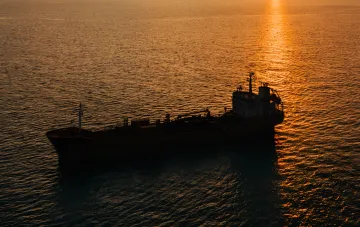
The key innovation of the bill is granting the president broad tariff powers over the largest importers of Russian fossil fuels. According to Senator Jean Shain, the highest-ranking Democrat on the Senate Foreign Relations Committee, among the five largest importers, China accounts for 51% of Moscow's revenue from hydrocarbon exports. This means that potential tariffs of up to 100% could affect not only direct buyers but also the entire resale chain, including transit countries. Representative Michael McCaul, who spearheaded the promotion of the document in the House of Representatives, emphasized that passing the law ahead of the winter months is critically important: "This will hit them where it really hurts and provide the leverage needed to get Putin to the negotiating table. It also pressures China to force Putin to sit down at the table, because they will also suffer from these tariffs."
Contradictory data
At the same time, diverging assessments of the effectiveness of the adopted document are being voiced in Congress. Gregory Meeks, the highest-ranking Democrat on the House Foreign Affairs Committee, expressed doubt that the law will achieve its stated goals. "It gives President Trump broad new tariff powers and allows him to revoke the very sanctions that are supposedly being introduced — sanctions he could have imposed already today but has not done so in the past 19 months," Meeks stated. Thus, the Republican side views the document as a new tool of pressure on Moscow and Beijing, while the Democratic part of Congress points out that the formal expansion of powers does not create fundamentally new restrictions that could not have been applied without the signing of this law. The disagreements also concern whether the threat of tariffs can really change Moscow's behavior in a situation where, according to McCaul, Russia may begin targeting civilian infrastructure — access to light and water.
Reactions from the parties and the political context
The adoption of the law triggered a strong reaction among its authors and supporters. Senator Richard Blumenthal, who led the promotion of the document in the Senate, addressed the people of Ukraine: "The people of Ukraine, you are not alone." Addressing the president of Russia, he added: "Your economy is faltering. We will strangle your war machine." The White House spokesperson confirmed Trump's intention to sign the bill, which effectively removes the question of a veto. In the House of Representatives, debates on Graham's "hellish sanctions" draft began immediately after the procedural vote and proceeded in a lively discussion. Notably, the bill bears the name of the late Senator Lindsey Graham, which gives the document additional political weight and symbolic significance in the context of the ongoing struggle over US sanctions policy.
What's next: timelines and potential consequences
After being signed by the president, the law will take effect, and the White House will receive the authority to determine specific countries and the scope of tariffs. Experts draw attention to the fact that the "up to 100%" mechanism implies significant discretion: the president may impose tariffs selectively, using them as a negotiating tool, or apply them in full. Extending the sanctions against Iran until 2031 widens the temporal horizon of the restrictions and complicates Tehran's ability to circumvent the energy embargo. For transit countries and intermediaries in oil trade — including a number of Central Asian and Middle Eastern states — the new law creates additional risks of secondary sanctions. The outcome of the signing and the first tariff decisions, if they follow, will determine whether the Graham-Blumenthal bill becomes a real tool of pressure or, as Meeks warns, an "illusion of pressure" not backed by practical actions.