
On August 19, the UAE Ministry of Foreign Affairs announced the full suspension of all commercial, trade, and financial operations with Iran "until further notice." In its official statement, the decision was justified by "escalating actions that undermine peace and security in the region." In effect, Abu Dhabi has imposed an indefinite trade embargo, marking the sharpest diplomatic and economic rupture between the two Persian Gulf states at this stage of the months-long conflict.
The Indefinite Embargo and Its Wording
According to the text of the UAE MFA statement, "all commercial operations, trade exchanges, and financial transactions with Iran are suspended until further notice." The phrasing, which sets no expiration date, means the restrictions could remain in place indefinitely and be lifted only by a separate decision. This move comes against the backdrop of an ongoing U.S. naval blockade of Iranian ports, making the UAE embargo yet another tool of economic pressure on Tehran.
Missiles Over Territorial Waters
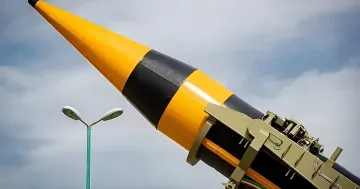
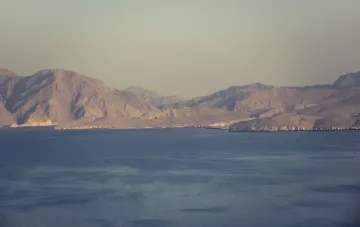
Abu Dhabi's step followed shortly after the UAE Ministry of Defense confirmed that its air defense system detected two ballistic missiles launched from Iranian territory. According to the ministry, one missile landed outside the country's territorial waters, while the other fell within them. In a subsequent statement, the UAE MoD noted that the missiles "were aimed at maritime shipping" and pledged to "resolutely counter any attempts to undermine national security or maritime security in the region." The August 18 attack was the first strike on the UAE since May and came just days after Abu Dhabi accused Tehran of attacking two vessels belonging to the Abu Dhabi National Oil Company (ADNOC) in the Strait of Hormuz; Iran did not claim responsibility for those incidents.
Tehran's Reaction: The "False Flag" Version
The Iranian Ministry of Foreign Affairs immediately rejected the accusations, calling them "baseless." The ministry's spokesperson, Esmaeil Baghaei, hinted that the incident could be a "false flag operation" in the context of a war that, in his words, was unleashed by the United States and Israel against Iran. Baghaei warned that the UAE's claims "contradict the principle of good neighborliness," urged all regional parties to refrain from baseless accusations against Tehran, and stressed that any honest assessment of the situation must take into account the "malicious actions" of the United States and Israel.
Contradictory Data
The parties' positions on the factual circumstances of the incident diverge. The UAE states that two ballistic missiles launched from Iran and aimed at maritime shipping were detected, and on that basis it is imposing the embargo. Iran categorically denies any involvement, calling the accusations "baseless" and offering an alternative version — a "false flag operation" for which it shifts responsibility onto the United States and Israel. Moreover, earlier, according to several agencies, Iran and the UAE had already resumed trade operations, which underscores the sharpness and suddenness of the current rupture: the country moved from resuming trade to a full indefinite embargo in a matter of days amid the sixth month of the conflict. Thus, the question of who exactly launched the missiles on August 18 and whether the embargo is justified remains a matter of public dispute without independent confirmation.
Economic Pressure Instead of Military
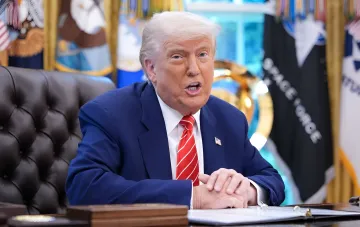
The August 18 attack came just one day after the expiration of the 60-day deadline for peace talks between the United States and Iran, which yielded no breakthrough and extended the conflict into its sixth month. For a sense of scale: in the first six weeks of the conflict, Iran reportedly fired more than 530 ballistic missiles, dozens of cruise missiles, and over 2,200 drones at the UAE, targeting facilities that Tehran described as American. Against this backdrop, U.S. President Donald Trump signaled that the emphasis is shifting from direct military pressure to economic pressure, in order to force Tehran to accept Washington's demands. The UAE embargo fits precisely into this logic: a U.S. ally is tightening the financial-trade ring around Iran, turning the trade rupture into an instrument of coercion.