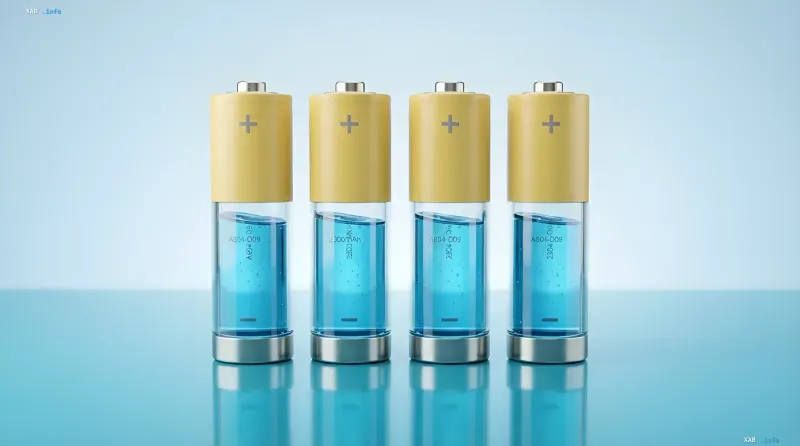
Researchers at University College London (UCL) have unveiled a new aqueous zinc-iodine battery that retains its original capacity even after several thousand charge and discharge cycles. According to the authors, this development could potentially become an alternative to lithium-ion batteries in energy storage systems, where durability and fire safety are critical. Unlike lithium-ion solutions, which are prone to thermal runaway, aqueous chemistry based on zinc and iodine does not contain flammable components, making it attractive for large-scale energy facilities.
Four electrons instead of two
The key feature of the technology is a new electrolyte formulation that allows for more efficient use of iodine as an energy storage material. In classical iodine chemistry, two electrons are involved in charging and discharging, whereas the new development allows for the use of four. This increases the amount of energy that can be extracted from the same volume of active material, thereby increasing the energy density of the cell without increasing its dimensions.
Taming active iodine
This approach, however, has a significant problem: during operation, chemically active forms of iodine are formed, which can enter into undesirable reactions with water and destroy the battery's operating system. Previously, researchers tried to solve this task using highly concentrated electrolytes with halogens. They did indeed stabilize the iodine, but they turned out to be too expensive and corrosive for practical use, which limited their implementation in real devices.
A new electrolyte recipe
The UCL team took a different path and changed the chemical composition of the electrolyte. Some molecules in it prevent contact between water and iodine, while others bind its active forms and prevent unwanted reactions. Thanks to this, it was possible to increase the efficiency of iodine use without employing the previous concentrated and corrosive solutions, which simplifies production and reduces housing material requirements.
Durability testing
The functionality of the new chemistry was verified on two types of cells — flat pouch batteries and small coin-format batteries. In separate durability tests, the zinc-iodine cells retained almost all of their initial capacity after thousands of charge and discharge cycles. Such characteristics are especially important for large energy storage systems that must operate for years with minimal degradation.
Path to commercialization
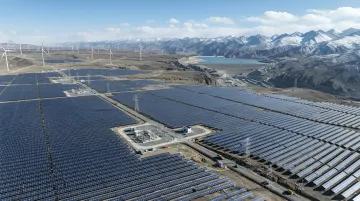
The new batteries are capable of storing excess electricity generated by solar and wind power plants and discharging it into the grid when generation decreases. In addition, the proposed electrolyte composition can potentially be adapted for aluminum-iodine batteries, which will expand the spectrum of applicable systems. However, commercial application of the technology is still far off: currently, the results have been obtained under laboratory conditions, and researchers have yet to test the batteries in larger systems and under loads approximating real-world operation at energy facilities.