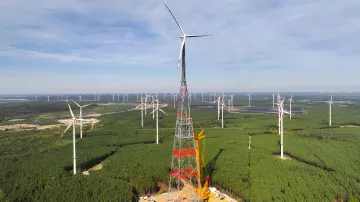
In the western part of Uzbekistan, within the autonomous republic of Karakalpakstan, one of the region's most notable energy projects is nearing completion: the Nukus 2 wind farm with an integrated large-scale electricity storage system. According to the Asian Development Bank (ADB), this is the first facility of its kind in Central Asia—a combination of wind generation and an industrial battery station designed to solve the challenge of grid balancing as the share of "green" energy grows. As of October 26, the construction progress stood at 94.2%.
The First in the Region: 200 MW of Wind and 100 MWh in Batteries
The facility is being built by the Saudi energy company ACWA through its local subsidiary, ACWA Beruniy Wind. It consists of a 200-megawatt wind farm and a battery system capable of storing 100 megawatt-hours of electricity. The total cost of the project is estimated at approximately €232 million ($260 million). At the time of publication, 25 out of 26 wind turbines were already generating electricity—output, according to project director Sardorbek Makhmudov, began in August. The battery system is undergoing commissioning tests, which are being conducted in phases due to additional safety and fire protection requirements. Upon reaching full capacity, the facility will be able to provide electricity to more than 300,000 people.
Why the Grid Needs Batteries
Wind and solar energy generation depend on weather conditions, while consumer demand follows its own logic. Batteries allow for electricity to be stored during periods of excess generation and released into the grid during peak consumption hours or low-wind periods, reducing the risk of outages. At Nukus 2, the system is designed for short-term grid support: Makhmudov estimated the discharge duration from the batteries to be "three to four hours," depending on the power draw. To connect the facility to Uzbekistan's national power grid, a new 44-kilometer transmission line has been provided, along with the modernization of existing electrical infrastructure.
Financial Structure: A Consortium of Creditors and a 25-Year Agreement
The project is being implemented through a 25-year power purchase agreement signed in March 2024 following a competitive tender: the national power grid operator of Uzbekistan acts as the guaranteed buyer of the energy produced. In September 2025, the ADB and the fund it manages signed a loan package with an estimated value of about €46 million ($51 million), and the ADB additionally provided a credit guarantee with government support to mitigate financial risks. Other creditors include the Asian Infrastructure Investment Bank (AIIB), the Dutch development bank FMO, Standard Chartered, and Saudi EXIM; the AIIB separately approved financing of approximately €67 million ($75 million). ADB project portfolio manager Abdulatif Matkarimov noted that the bank has been supporting renewable energy in Uzbekistan since an earlier project in Navoi and that about ten projects are currently being implemented in the wind and solar generation sector.
Global Context: The Storage Boom
The growing role of storage systems extends far beyond Central Asia. According to the International Energy Agency (IEA), 108 gigawatts of new battery energy storage capacity were commissioned globally in 2025—40% more than the previous year. In Europe, where the total volume of new installations across all categories slightly declined, the commissioning of large-scale storage systems more than doubled, reaching approximately 4.6 gigawatts. In this context, Nukus 2 is becoming part of a general trend toward "wind + storage" combinations.
Local Impact: Jobs and Skills
Construction created new jobs in Karakalpakstan: at the peak period, 750 to 800 people worked on the project, including more than 400 local workers and specialists. According to Makhmudov, local specialists are already taking on management roles in the project, which indicates the transfer of competencies and the formation of a local talent base for the renewable energy industry.