In August 2026, the UK government announced a major financial initiative aimed at supporting the national automotive industry. To accelerate the transition to electric vehicle production and the creation of next-generation cars, £130 million has been allocated. This program is designed to strengthen the country's position as a key player in the global automotive market, despite growing competition from China and Europe.
Funding structure and key beneficiaries
The uniqueness of this program lies in its co-financing model: exactly half of the amount (£65 million) will be covered by the state budget, while the remaining part will be provided by the industry companies themselves. This condition is intended to stimulate companies to make real investments in modernization, rather than simply collecting subsidies. Funds are distributed between industry giants and promising startups. Among the largest recipients of investment are the luxury brand Bentley, the Japanese automotive giant Nissan, and electric motor manufacturer YASA. In addition, financial support will be provided to a number of small and medium-sized enterprises specializing in components and technologies.
Job preservation and export potential
The economic goal of the initiative goes beyond technological updates. According to government representatives, the implementation of the program will help preserve and support more than 1,800 jobs in the sector. This is critically important for regions where the automotive industry is a major employer. Cars remain the UK's most valuable export commodity: in the year ending April 2026, their total value amounted to £47.7 billion. Industry Minister Blair McDougall emphasized that the UK, being the birthplace of the modern automotive industry, intends to ensure the design and assembly of future vehicles on its own territory.
Technological breakthroughs: from batteries to automation
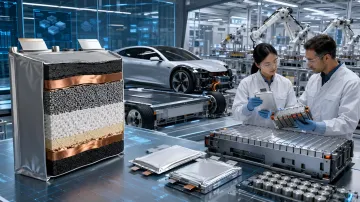
Investments are directed at specific technological projects. Bentley, in collaboration with the startup Ionetec, is working on the localization of battery cell and battery pack production, which is a key step towards independence from component imports. The second group of projects, led by wiring harness manufacturer K5D Technologies, includes JLR, Artefact Interior Systems, and the University of Warwick. Their project, called AutoLum, aims to implement on an industrial scale a technology that will replace the manual assembly of automotive wiring harnesses with a fully automated process based on computer-aided design. Additionally, nine projects in the field of connected and automated mobility have received funding.