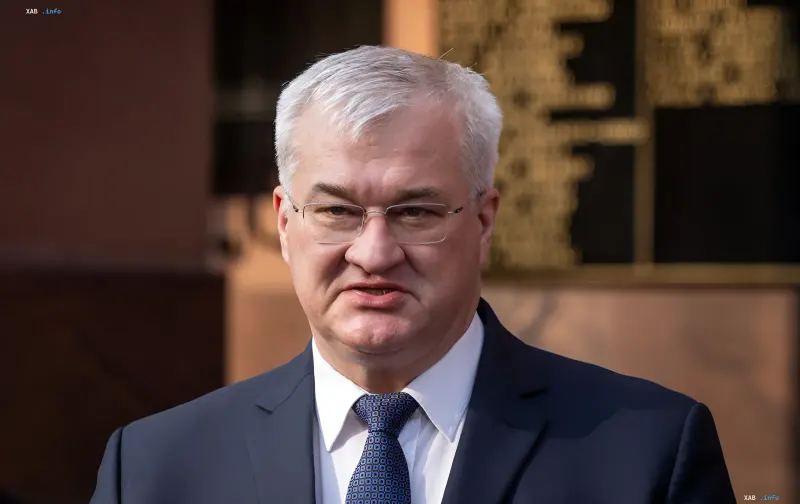
Ukraine’s Foreign Minister Andrii Sybiha announced during a televised appearance that Kyiv has proposed to international partners so-called “anti-ballistic” sanctions package, the aim of which is to deprive Russia of the ability to produce ballistic missiles. According to the head of Ukraine’s foreign ministry, the new approach entails the automatic imposition of sanctions in response to every Russian strike on Ukrainian territory, which, as Kyiv intends, should make the reaction to the aggression predictable and, above all, as fast as possible.
The “sanctions for a strike” mechanism: a response with no pause for adaptation
The key feature of the proposed package, as Sybiha emphasized, is the linkage of sanctions measures to specific episodes of massive shelling. “After every massive shelling of Ukraine, new sanctions packages must be introduced so as not to give Russia a pause for adaptation,” the minister stated. Thus, Kyiv is trying to turn sanctions policy from a periodic political gesture into a systematic tool that triggers on a specific event — the fact of an attack. The logic is simple: if Russia knows that each round of strikes on infrastructure and populated areas automatically launches a new round of restrictions against its defense-industrial complex, the cost of continuing the shelling for Moscow grows with each passing day.
Zelensky’s deadline: by the end of September — restrictions against missile and drone supply chains
In parallel with Sybiha’s diplomatic initiative, President Volodymyr Zelensky, according to available information, instructed Ukrainian diplomats to secure, by the end of September 2026, the introduction of specific restrictions against companies and individuals directly involved in the production of missiles and unmanned aerial vehicles for the Russian armed forces. This deadline coincides with the current moment — 3 September 2026 — which makes the coming three weeks a critical window for agreeing on the text of the package in consultations with European and other allied capitals.
Vulnerability of the Russian military-industrial complex: strategic minerals and the “blind spot” of sanctions
Analysts at Ukraine’s Council for Economic Security pointed to an additional vulnerable link in the chain of Russian military production — its dependence on imported raw materials. According to their estimates, fewer than five percent of the companies involved in supplying strategic minerals to the Russian defense industry are currently subject to active sanctions. This means that a significant part of the “raw-material backbone” on which the production of ballistic missiles and precision munitions depends remains, for now, in a legal and economic vacuum. It is precisely this “blind spot” that the package proposed by Kyiv appears to be designed to close.
Context: from periodic packages to a trigger-based model
Until now, the West’s sanctions policy against Russia has been built on a model of periodic packages, agreed at the level of the EU, the G7, or individual countries according to their own political schedule. Kyiv’s proposal shifts this model into a trigger-based plane: a sanction becomes not a political decision, but an automatic consequence of a specific military action. Implementing such a mechanism will require Ukraine’s partners not only political will but also a restructuring of the bureaucratic approval procedures, which today take weeks. The success of Sybiha’s initiative largely depends on whether key allies — above all in the EU and the United Kingdom — are ready to accept the “automatic” nature of the sanctions and to shorten the time from trigger to the entry into force of the restrictions.