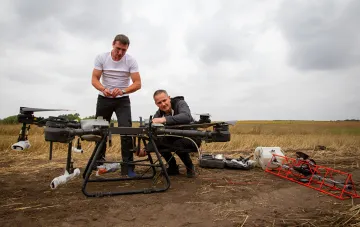
Ukraine's defense-industrial complex is shifting its focus on artificial intelligence development from unmanned aviation to missile systems. This was stated by Andriy Hrytsenyuk, CEO of Brave1, in a conversation reported by RBC-Ukraine citing Business Insider. According to him, AI was initially applied on a large scale precisely in the drone segment, however for missiles, which require substantially higher reaction and guidance speeds, the existing capabilities of the algorithms proved insufficient. "Artificial intelligence is now increasingly being integrated into missile systems as well," emphasized the head of Brave1, adding that development in this direction has not yet reached the scale already achieved in the unmanned vehicles sector.
AI moves from drones to missiles
The key point of Hrytsenyuk's statement is that the maturity of AI solutions in missile development still lags behind the maturity of similar solutions in unmanned aviation. If in drones artificial intelligence already operates "on a large scale" and, according to the head of Brave1, its current data-processing speed is sufficient for autonomous piloting tasks, then missile systems need algorithms capable of making decisions orders of magnitude faster. This defines the nature of the current engineering work: it is not about copying drone solutions, but about creating specialized AII modules designed for the ballistics and high flight speeds of a missile.
Over 200 companies in a single process
The scale of the involved industry, according to the same source, exceeds 200 Ukrainian companies that develop artificial-intelligence-based components for missiles, drones, radars and other systems. This indicates the formation of a distributed ecosystem in which AI developments for weapons are distributed among numerous contractors rather than concentrated in a single enterprise. This approach, characteristic of the Ukrainian defense model in recent years, allows several directions to be developed in parallel — from autonomous guidance to radar data processing.
Context: Fire Point and strike range
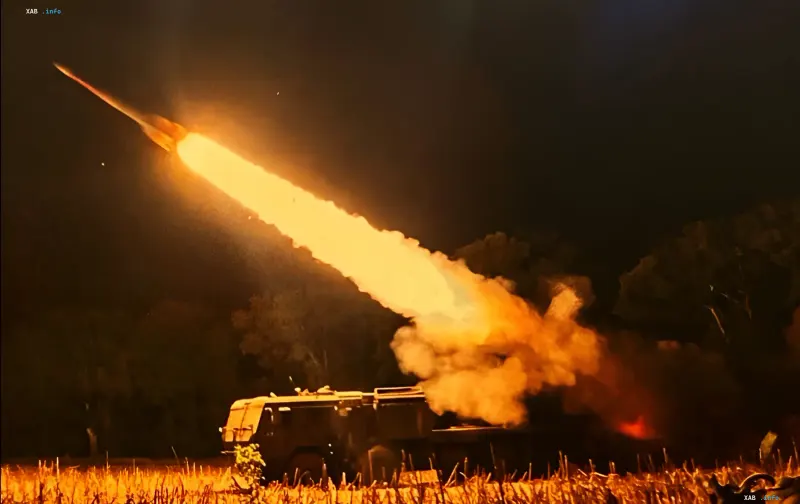
The statements about AI development in missile systems come against the backdrop of public demonstrations of domestic missile developments. In late July 2026, Denis Shtilerman from Fire Point published a photograph of a nighttime launch of a Ukrainian missile, explaining that the FP-7 is a budget version of the American ATACMS system with a range of up to 200 km, while the more powerful FP-9 modification is capable of striking targets at a distance of 800–850 km. It was also reported at that time that the combat use of the FP-7 could take place as early as this year, and that the company's ballistic missiles are in the final stages of testing. The integration of AI into such systems, by the logic of the industry, is intended to improve accuracy and guidance autonomy at these ranges.
Its own turbojet engine for the "Flamingo"
An additional element of the overall picture was a report from early August 2026 that Fire Point had developed its own turbojet engine, which can be used for the "Flamingo" cruise missile. According to the company's CEO, Irina Terekh, creating the engine turned out to be a more complex engineering challenge than developing the missile itself. The combination of these facts — from AI guidance to its own power unit — points to the Ukrainian missile industry's move toward greater technological autonomy in key weapon components.