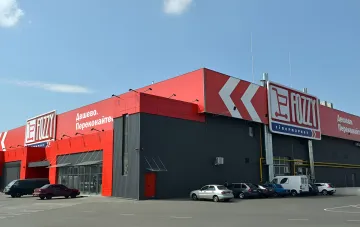
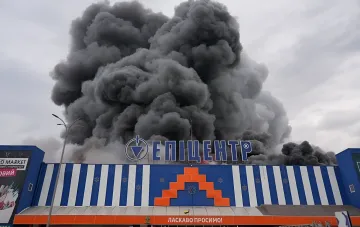
Russian strikes on Ukraine's food infrastructure are forcing market participants to radically change their accustomed supply model. According to the Ministry of Agrarian Policy and Food, up to 90% of food storage capacity has been destroyed in certain regions, making it impossible to continue relying on large centralized warehouses. At the same time, the ministry emphasizes that the country retains sufficient food stocks for the domestic market, and the issue is not one of shortage but of rebuilding supply chains under the pressure of military risks.
Decentralization as the main response to warehouse strikes
According to Taras Vysotsky, Ukraine's Minister of Agrarian Policy and Food, the key solution has been the decentralization of the supply system. Products are now planned to be stored and delivered in small batches, with direct deliveries from the producer straight to the point of sale. This approach is designed to reduce the risk of large volumes of goods being destroyed at once and to ensure stores receive the necessary items without interruptions, even if individual logistics nodes are knocked out.
What this means for retail chains and shelves
The logistics overhaul is already affecting retail operations. Stores may see a reduction in certain items; however, as Vysotsky emphasized, this does not mean a general food shortage. Changing the supply model requires additional transportation costs and may affect the cost of warehousing services, which is inevitably factored into the cost price of goods. The ministry does not expect a sharp spike in prices and estimates the possible increase in food prices at a maximum of 2.5%.
Contradictory data
Here, the ministry's and the business forecasts diverge noticeably. The Ministry of Agrarian Policy, represented by Taras Vysotsky, puts the upper limit of the price increase at 2.5%, citing additional transportation and warehousing costs. Market participants assess the risks much higher. UTG director Yevheniia Loktionova forecasts that logistics for dry goods will rise by 15–25%, and for chilled goods by 35–50%, which will translate into retail price increases of 3–5% for dry goods and 7–12% for chilled items. RetailPro co-owner Artem Retin estimated the rise in storage and delivery costs at 10–15%, and on certain routes being rerouted around damaged distribution centers — by 2–3 times, adding an average of 1–5% to final prices. Thus, the gap between the official estimate (up to 2.5%) and market forecasts (up to 12% for certain categories) remains open and depends on the dynamics of the strikes and the restoration of infrastructure.
Scale of the damage and outlook
In summary, it can be stated that the strikes on warehouses have already dealt serious damage to food logistics, and the shift to a decentralized model has become a forced but necessary measure. In the short term, consumers should expect not a shortage but a moderate price increase; however, its exact size will depend on how quickly the damaged capacity can be restored and how resilient the new supply chain proves to be. The discrepancy in estimates between the Ministry of Agrarian Policy and the business indicates that the final price for the consumer is not yet settled and may be adjusted as the situation develops.