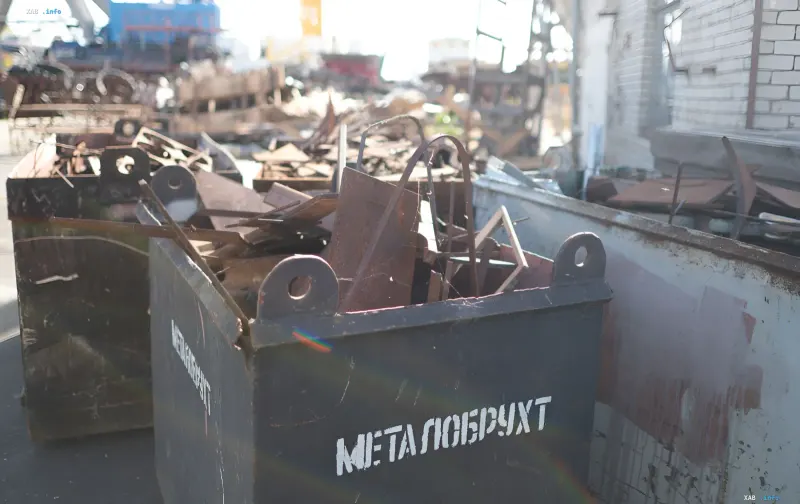
A sharp discussion has flared up in Ukraine's metallurgical industry regarding the possible lifting of the zero quota on scrap metal exports. In recent months, scrap collection companies have been actively lobbying for the opening of exports — claiming, according to their own statements, that it would go primarily to European Union countries. However, metallurgists and founders are categorically against this: they call scrap metal a strategic and exhaustible raw material, without which the recovery of the steel industry and the development of electrometallurgy with lower emissions are impossible. Talk of “overstocked warehouses” and “conserved reserves,” according to industry experts, does not reflect the real market situation.
“No mountains of scrap exist”
Stanislav Zinchenko, Director of the GMK Center analytical agency, stated directly in a commentary for Ekonomichna Pravda (published by RBC-Ukraine) that the shutdown of metallurgical plants following Russian strikes is temporary and does not mean the country no longer needs scrap metal. “There are no mountains of scrap metal that exporters speak of. And the existing reserves will vanish instantly,” he emphasized. According to him, the 60,000 tons that collectors refer to as “conserved reserves” are an insignificant volume on the scale of the industry. For comparison: before the war, Ukraine collected about four million tons of scrap per year, and Interpipe alone consumes between one and 1.5 million tons in normal operating mode. “If we lift the quotas and export the raw material, the recovery of the steel industry will become impossible,” Zinchenko summarized.
Decline in collection: figures for the first seven months of 2026
The key problem pointed out by the industry is not a surplus, but a systematic decline in scrap metal collection itself. Historically, up to 80% of this resource was formed in the industrial regions of southeastern Ukraine, which have been under shelling or partially occupied throughout the conflict. According to metallurgical plants, in the first seven months of 2026, they purchased about 900,000 tons of scrap — practically the same as in the same period last year. At the same time, the collection volume decreased by approximately 25%. Thus, demand from processors remains stable while supply is narrowing, making the export of a surplus objectively impossible.
How the ban was born: zero quota and lost billions
The zero quota on scrap metal exports was introduced following a sharp surge in exports in 2025 — by 53%, to nearly 500,000 tons. A significant portion of shipments went through Poland to third countries, primarily Turkey, without paying Ukrainian export duties. According to industry estimates, in 2025 alone, the state budget lost more than 2 billion hryvnias due to this model. Meanwhile, only 104 hryvnias in taxes per ton of exported raw material returned to Ukraine. This exact scheme — re-exporting through neighboring countries with minimal tax impact — became the trigger for introducing a full ban.
Compromise mechanisms: what market participants are offering
The industry acknowledges that a total ban does not necessarily have to be permanent. A compromise could be allowing the export of only a verified surplus of raw material on the condition that the state receives revenues from it. Among the mechanisms being discussed are transparent quotas or export licenses distributed via auctions on the Prozorro platform, as well as export duties levied regardless of the destination country. The foundry industry emphasizes that before talking about exports, it is necessary to clearly determine the balance: how much scrap is generated, how much metallurgists and founders need, and what volume should remain as a strategic reserve. Only after this, according to market participants, can the export of a real surplus be discussed.
The position of scrap collectors and the bet on the EU market
Representatives of the scrap collection industry, in turn, insist on opening exports, but emphasize the destination of the supplies: according to their statements, scrap metal should go specifically to European Union countries. This positioning contrasts with the pre-crisis model, when the main flow went through Poland to Turkey. Nevertheless, the metallurgical sector remains adamant: given a 25% drop in collection and a dependence on raw materials 80% of which were formed in the southeast, any outflow of scrap abroad will undermine production recovery. The discussion on the format and timeline for a possible review of quotas will likely continue throughout 2026–2027.