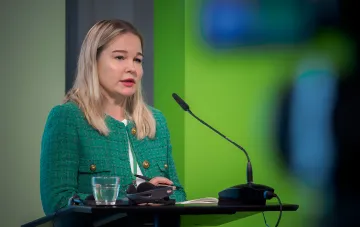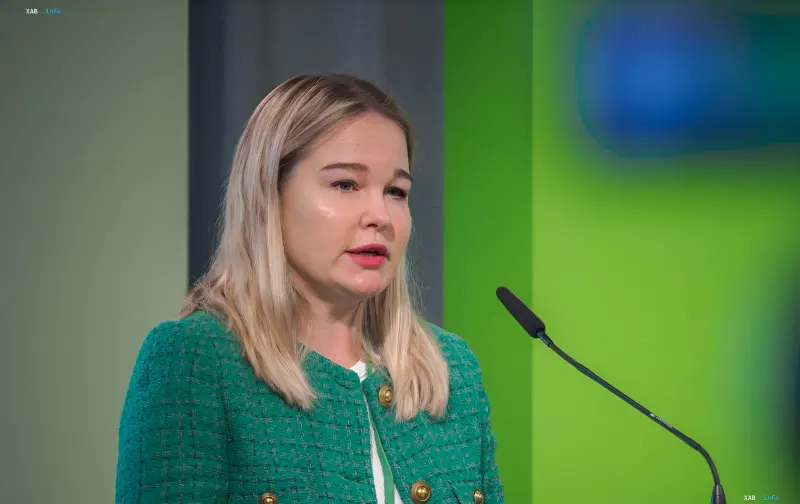
Alena Hetmanchuk, Head of the Mission of Ukraine to NATO, told RBK-Ukraine in an interview that the Alliance's member states, for the first time at the leaders' level, have enshrined in the declaration Ukraine's status as a common contributor to Euro-Atlantic security. In her words, this decision opens up new opportunities for support from allies and changes the very logic of Kyiv's relationship with the Alliance: Ukraine is no longer viewed exclusively as a recipient of aid but begins to appear as a party whose efforts directly strengthen the defense of NATO members themselves.
A "Mental Break" in the Attitude Toward Ukraine
Hetmanchuk described what has happened as a "mental break" currently taking place within NATO regarding Ukraine's role in ensuring Euro-Atlantic security. The diplomat explained that such recognition creates a political basis for encouraging Alliance countries to provide more support and make larger contributions to Ukraine's defense. The emphasis, she said, is shifting from the simple transfer of Western weapons to financial contributions — either to specific types of weapons or to Ukraine's own defense production.
Support for Ukraine as an Investment in NATO's Defense
The key argument Hetmanchuk makes is that recognizing Ukraine as a security contributor "automatically turns all contributions to supporting Ukraine into investments in Euro-Atlantic security, into investments in the defense of NATO member states themselves." She called this decision a logical continuation of the agreements reached at last year's Hague Summit, which, in her assessment, have been made effective: any military support or investment in Ukraine's defense production is credited to the NATO member state toward its own defense spending. It is worth recalling that at the Hague Summit, Alliance countries committed to reaching a level of 5% of defense spending by 2035.
Context: Hybrid Attacks and Europe's Readiness
The statement came against the backdrop of an intensifying debate on security in Europe. The U.S. Ambassador to NATO, Matthew Witkiewicz, stated that the United States is ready to support allies in the event of hybrid attacks by Russia, in particular following the drone attack attempt on Leipzig/Halle Airport in Germany, which Berlin linked to Moscow. In his words, the next target of such attacks could be critical infrastructure, including energy facilities. Meanwhile, the publication The Guardian reported that military planners working with NATO are concerned that Europe will not yet be able to withstand a protracted war of attrition with Russia due to insufficient combat readiness.
Contradictory Data
Available sources differ on what stage the recognition of Ukraine's new role is at. Hetmanchuk frames it as an already accomplished fact: the leaders "enshrined in the declaration" the status of contributor. At the same time, other outlets (UNIAN, DW) present the topic in terms of expectation and intent — "Ukraine wants NATO to recognize its new role" and "Ukraine awaits NATO's recognition of its new role in security." The exact date and name of the summit at which, according to the ambassador, the new leaders' decision was adopted, are not specified in the original text, so it cannot be unambiguously matched with earlier declarations. Moreover, different figures from different events should not be conflated: the commitment to reach 5% of defense spending by 2035 relates to the Hague Summit, whereas the mention of a minimum of 40 billion in aid in 2025 appears in the context of the 2024 declaration. These indicators describe different decisions and different timeframes.
Either way, the diplomatic shift that Kyiv speaks of is aimed at institutionalizing Ukraine's contribution to the Alliance's security and turning support for Kyiv into an instrument that is formally accounted for in the defense budgets of NATO member states themselves.