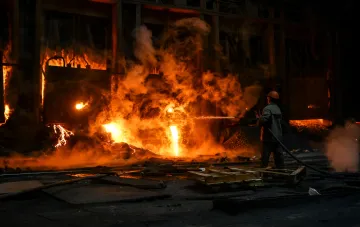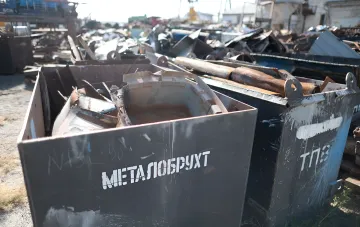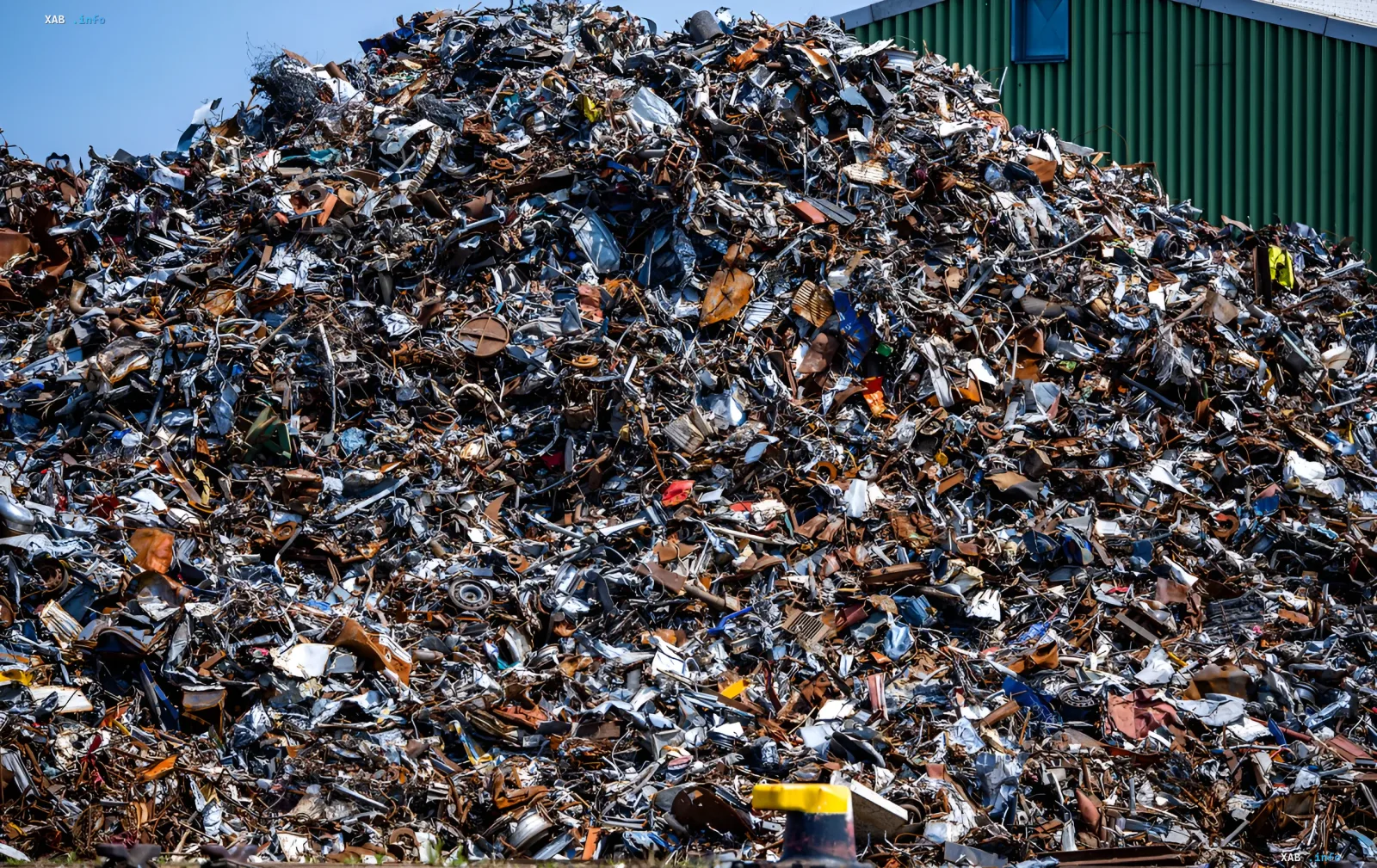
In 2026, Ukraine is operating under a complete zero quota on scrap metal exports — a decision adopted by the Cabinet of Ministers back on 31 December 2025. Against this backdrop, representatives of the ferroalloy industry are calling for a move beyond prohibitive measures toward a systematic policy of protecting the domestic market using WTO mechanisms. The key point made in a statement by Serhiy Kudriavtsev, a representative of the ferroalloy industry, is that the state should have an interest in creating added value within the country, rather than in the simple resale of raw materials abroad.
Zero quota and "grey" schemes: how the budget lost billions
Before the ban was introduced, scrap metal exports from Ukraine were steadily growing. Formally, the export duty on scrap stood at 180 euros per tonne, yet a significant share of volumes was moving through Polish border crossings with a zero duty and then being redirected to Turkey and other countries. By estimates, it was precisely these "grey" export schemes that cost the state budget more than 3 billion hryvnias. Cabinet Resolution No. 1795 of 31 December 2025, which set a zero quota for the entire year of 2026, was a direct response to this problem. The National Association (NADPU) had previously noted that the ban on scrap metal exports helps Ukraine preserve the competitiveness of domestic producers.
The case for domestic processing: added value
Serhiy Kudriavtsev emphasises that, prior to the full-scale war, Ukrainian metallurgical enterprises met significant domestic demand for scrap metal, including for the development of modern production lines. Under such conditions, it was more economically sensible to process the raw material within the country than to export scrap metal and then import it at different prices. "The state should have an interest in production, in creating added value in Ukraine, and in earning foreign-currency revenue from finished goods, not only from scrap metal operations," he stated. In his words, in wartime conditions the priority of state policy should remain the support of domestic processing and the production of goods with higher added value.
WTO mechanisms and the question of application to the EU
Kudriavtsev notes that Ukrainian producers are already facing tariff, environmental, and quota restrictions on the European market. In this context, Ukraine, as a member of the World Trade Organization, has the right to use the domestic-market protection mechanisms provided for under WTO rules. At the same time, in his words, if the state establishes quotas or other restrictions, they must operate under clear and transparent rules for all export destinations, including EU countries. In the view of the industry representative, such an approach could be applied not only to scrap metal but also to certain types of products from third countries, if imports create problems for Ukrainian producers.
Logistical pressure on land border crossings
A separate argument in favour of restricting scrap exports, Kudriavtsev pointed to the strain on logistics. The large-scale reduction or shutdown of some industrial capacity in wartime conditions has created a temporary surplus of scrap metal on the domestic market. The active redirection of this surplus toward exports places additional pressure on the limited land border crossings with Poland, Romania, Hungary, and Moldova, through which finished Ukrainian products are already being transported. In a situation where border throughput is already constrained, priority use of transport corridors should be given to products with high added value.
From a ban to a systematic policy: what comes next
The zero quota for 2026 is, in essence, a temporary measure that solves the problem of "grey" exports but does not build a long-term market architecture. Kudriavtsev's statement points to the need to move from prohibitive tools to more flexible, WTO-compatible mechanisms: tariffs, quotas with transparent criteria, safeguard duties. For the metallurgical and ferroalloy sectors, this means that the domestic scrap market should become a stable resource for processing, rather than an object of speculative export. In conditions where industrial capacity is recovering unevenly, the balance between protecting the domestic market and honouring obligations to the WTO and EU partners will become one of the key issues of Ukraine's economic policy in the coming years.