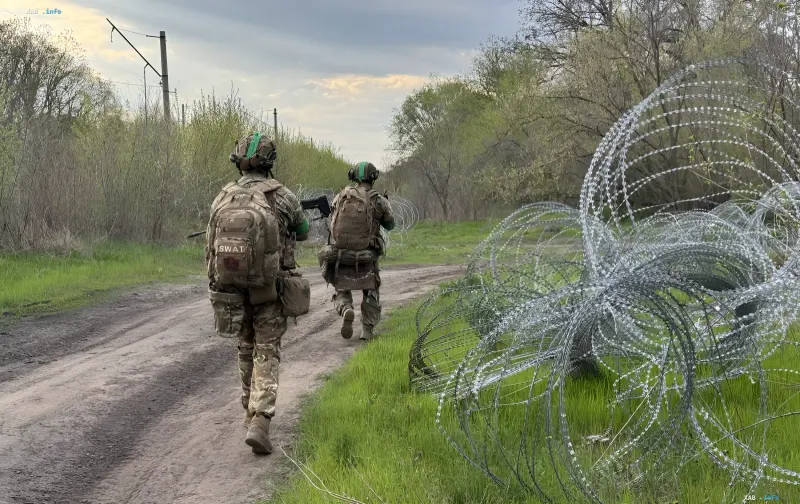
On August 17, 2026, the Cabinet of Ministers of Ukraine adopted Resolution No. 1049, which amended point 2-1 of the Cabinet Resolution No. 1147 of July 27, 1998. The document, which entered into force immediately upon adoption, introduces a special border regime along the state border with the Russian Federation and the Republic of Belarus. This is reported by RBC-Ukraine, citing the Government portal. The restrictions apply to all land plots within a one-kilometer-wide strip along the state border line and remain in effect for the entire duration of martial law.
What Is Prohibited in the One-Kilometer Border Strip
Within the established one-kilometer zone, a number of prohibitions have been introduced, aimed at limiting the presence of civilians and unauthorized activity. According to specialized media outlets, in particular profile.ru, among the key restrictions is the ban on civilians residing in the one-kilometer strip along the borders with Russia and Belarus. State border protection authorities have already begun the practical implementation of the new rules. As emphasized in the explanatory notes to the resolution, all established prohibitions are temporary and will be lifted immediately after martial law on the territory of Ukraine ends.
Rationale: Defense and Protection of Citizens
The government explains the introduction of the special regime as necessary to strengthen the country's defense capabilities amid the full-scale war with the Russian Federation. Particular note is made of the risk of Belarusian territory being used for sabotage and provocative actions in the border area. The new rules are also intended to protect civilians from direct danger and to prevent their accidental or unauthorized presence in a potentially hazardous zone. Thus, the regime serves a dual function — military (control of the border area) and civilian (minimizing risks for the population).
Contradictory Data
Assessments of the threat from Belarus vary across sources. Ukraine's Main Directorate of Intelligence (HUR) has stated that, at present, there are no signs of Belarus preparing to enter the war against Ukraine. However, according to open-source data, Russia has deployed units of the 101st Missile Brigade on the territory of the Republic of Belarus, which is equipped with the "Oreshnik" ballistic missile. In addition, Belarusian opposition leader Sviatlana Tsikhanouskaya has publicly warned that Russia may use Belarusian territory to escalate tensions and carry out provocations not only against Ukraine but also against NATO countries. Thus, while no formal entry of Minsk into the conflict has been recorded, the Russian military infrastructure on Belarusian territory creates an additional risk factor, which is presumably taken into account in introducing the border regime.
Context and Outlook
The introduction of a special border regime in the one-kilometer strip is a logical continuation of the measures being taken by the Ukrainian government under martial law. Resolution No. 1049 does not create a new legal mechanism from scratch but amends the existing point 2-1 of the basic 1998 resolution, adapting it to the current military situation. For residents of border areas, this means that the new restrictions must be taken into account when planning their stay in the zone. The termination of the regime is tied to one clear condition — the end of martial law — which makes its duration unpredictable and dependent on the course of hostilities.