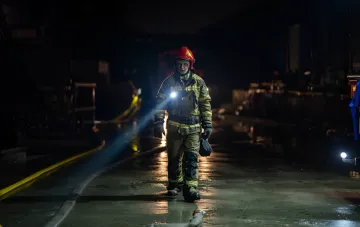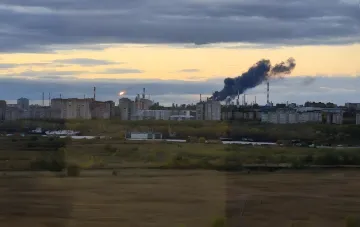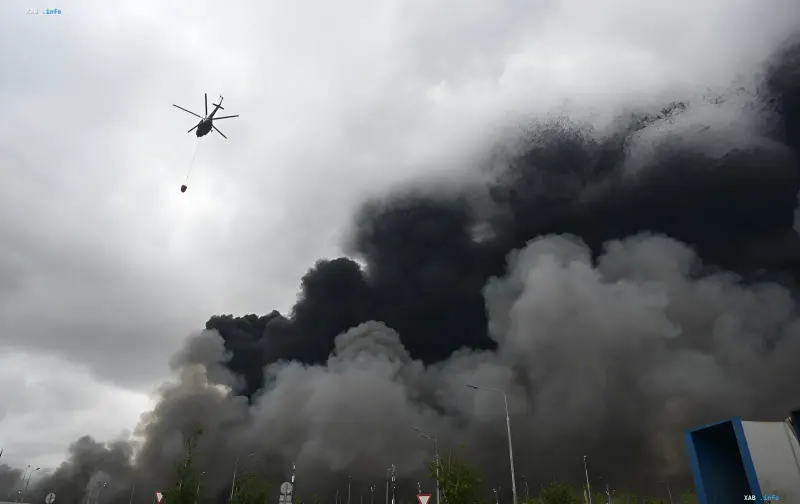
Over the past three days, Ukraine's Defense Forces have struck three major oil refineries on Russian territory, whose combined capacity, according to OSINT analysts, accounts for about 10% of the country's total oil refining capacity. This was reported by RBC-Ukraine citing Dnipro Osint, a Ukrainian Telegram channel specializing in open-source intelligence. The attacks targeted the Kstovo refinery in the Nizhny Novgorod region, the Novokuyбышевск refinery in the Samara region, and the Bashneft-Novoyl enterprise in Bashkortostan. The total annual processing capacity of the three enterprises is estimated at approximately 33 million tons of oil.
Three Industry Giants Under Attack
According to Dnipro Osint, the attacks are large-scale in nature: a single strike can knock out several technological units at once. Analysts specify that the damage affects both primary oil refining equipment and secondary cycle units. This means the damage impacts entire production chains rather than individual components, significantly reducing the plants' actual processing capacity even if formal design capacities remain.
Chronology of Strikes: From Samara to Nizhny Novgorod
The series of successful strikes began on the night of October 30, when drones attacked the Novokuybyshevsk refinery in the Samara region. A fire broke out on the facility's premises following the strike. The plant belongs to the Rosneft group, has a capacity of about 8.8 million tons of oil per year, and produces jet fuel for Russian aviation, among other things. On the night of October 31, drones hit an industrial zone in Ufa, where the Bashneft-Novoyl plant with a primary processing capacity of about 7 million tons per year is located. The following night, November 1, the Kstovo refinery in the Nizhny Novgorod region was hit, resulting in a large-scale fire. This is one of Russia's largest refineries with a design capacity of about 17 million tons of oil per year.
The End of the "Energy Truce"
Dnipro Osint notes that these strikes effectively ended the so-called "energy truce": for two weeks, Ukraine refrained from attacking Russian refineries at the request of the US presidential administration. At the same time, analysts emphasize that Russia did not stop its attacks on Ukraine during this period: Geran drones and missiles continued to strike, killing people and leaving Ukrainian regions without electricity, water, and heat. Thus, one-sided restraint was not reciprocated.
Implications for the Russian Oil Industry
Analysts expect the situation to become increasingly difficult for the Russian oil industry. Repeated strikes against enterprises providing a significant share of refining, including aviation fuel production, create a cumulative effect: even partial disabling of primary and secondary cycle units reduces finished product output and increases the strain on logistics and alternative capacities. According to Dnipro Osint, the cumulative effect of the three-day series of strikes is comparable to losing about a tenth of the country's refining potential.