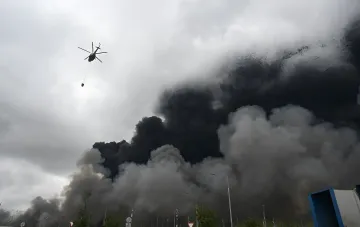
On the night of November 18, the Defense Forces of Ukraine struck two major oil refineries in Russia's Krasnodar Krai — the Ilsky and Afipsky refineries. This was announced by the General Staff of the Armed Forces of Ukraine, and the information was confirmed by Ukrainian monitoring resources and local residents who posted videos from the scene showing drone flybys and the operation of Russian air defense systems.
The Course of the Attack
According to the General Staff of the Armed Forces of Ukraine, explosions, smoke, and damage to storage tanks were recorded in the area of the Ilsky refinery. Almost simultaneously, an air raid alert was announced near the Afipsky plant, where an oil processing unit was reportedly hit. The monitoring channel "Oko Gora" specifies that the Ilsky refinery is located approximately 390 km from the combat contact line, and the Afipsky plant is 380 km away, emphasizing the depth of the strikes on rear infrastructure.
Scale of the Targeted Enterprises
Both plants are among the largest in southern Russia. The design capacity of the Ilsky refinery is about 6.6 million tons of oil per year, and the Afipsky plant is about 6.25 million tons, accounting for more than 2% of all oil refining in Russia. Combined, the enterprises process about 13 million tons of oil annually. According to available data, the products of both plants are used, among other things, to supply fuel to the Russian armed forces.
Repeated Strikes and Campaign Context
These are not the first attacks on these facilities. The Ilsky refinery was hit on the night of November 16, when atmospheric oil distillation units AT-4, AT-5, AT-6 and a motor gasoline production complex were targeted. The Afipsky plant was attacked on November 6, after which a fire also broke out on its territory. Overall, in the first days of November, the Defense Forces struck five major oil refineries simultaneously; on November 9, the Kinef (Kirishi) refinery and the Morozov plant in the Leningrad Oblast were hit.
Strategic Effect
The location of both refineries in the south of the country provides the shortest route for fuel supplies to the combat zone. As Ukrainian sources note, each such incident reduces the volumes of diesel fuel and gasoline available to the Russian army, as well as decreases the financial resources that Russia directs toward purchasing missiles and drones.
The operational headquarters of Krasnodar Krai commented on the situation, but full details of the damage from the Russian authorities have not been disclosed in open sources at the time of publication. The Ukrainian side, conversely, records the strike as confirmed and continues its campaign to target energy and oil refining infrastructure.