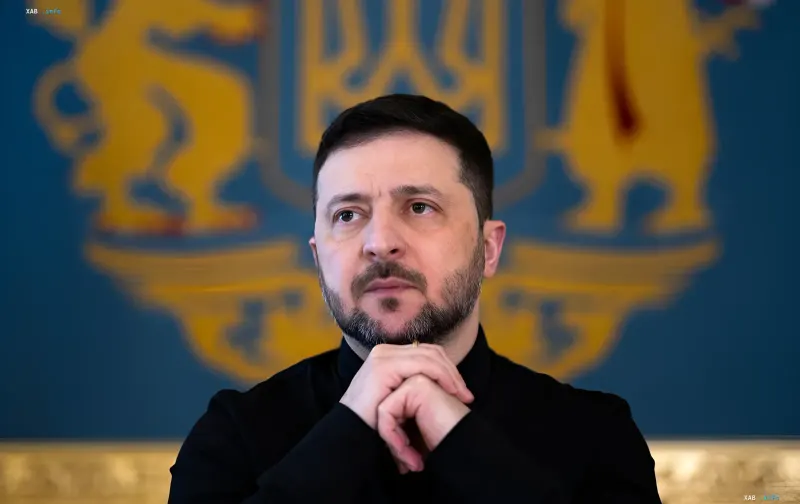
On November 6, Ukrainian President Volodymyr Zelenskyy stated that Kyiv has already determined the next retaliatory measures against ongoing Russian attacks on the country's energy infrastructure. According to the head of state, Ukrainian power plants, power grids, heat supply facilities, water supply systems, and civilian logistics remain under constant fire from Shahed drones and missiles. "Our long-range sanctions, our mid-strikes, and all the pressure from partners against Russia for this war are what create the motivation for real negotiations," Zelenskyy stressed in an address published on social media and transmitted by RBC-Ukraine.
Rejection of De-escalation and Escalation of Strikes
Zelenskyy noted that the aggressor country has completely rejected the de-escalation steps discussed by partners and is not changing the nature of its aggressive activity. According to him, Moscow is counting on further strikes against Ukrainian infrastructure, which forces Kyiv to increase systematic retaliatory attacks. The president thanked the involved units for the accuracy of the long-range strikes and emphasized that Ukraine does not need to be convinced of the necessity of peace — the state strives for it as soon as possible. At the same time, in his assessment, the leadership of Russia must independently realize that the resources for waging war are exhausted.
Strike on Afipsky Oil Refinery and Operations in Occupied Territories
On the night of November 6, unmanned aerial vehicles attacked the Afipsky oil refinery in Russia's Krasnodar Krai. As a result of the strike, a fire broke out on the enterprise's territory, and a thick column of smoke rose over the industrial zone. In addition, on the night of November 5, the Defense Forces of Ukraine launched strikes against several military facilities of the Russian army located in the temporarily occupied territories. These actions, according to Zelenskyy, are part of a systematic operation against the Russian oil refining industry, carried out in response to the shelling of Ukraine's energy facilities.
Context: From Suspension to Resumption of Strikes
The decision to continue and expand strikes against refineries became a logical continuation of the president's previous statements. As early as October 15, Zelenskyy confirmed in an interview with the Financial Times that the ban on attacks against oil refineries had been lifted, noting: "Enough is enough." At the same time, he said that Ukraine had refrained from striking energy facilities in Russia for three days at Washington's request, but during this period Moscow continued to launch strikes on Ukrainian infrastructure, resulting in the deaths of over 100 civilians. The president also pointed out that after the suspension of attacks, Kyiv did not receive the promised American warnings about Russian ballistic missile launches, and the operation of Starlink terminals was restricted.
Oleshky as a Precedent: "Silence Is Possible If There Is a Decision"
Concluding his address, Zelenskyy referred to the experience of the humanitarian operation in Oleshky, which, according to him, showed that silence can come if there is a decision by the Russian leadership. Thus, the president indicated that the initiative to stop shelling lies exclusively with Moscow, while Ukraine for its part continues to demonstrate readiness for negotiations provided that attacks cease. The statement came against the backdrop of ongoing mutual strikes and fruitless attempts by partners to achieve de-escalation.