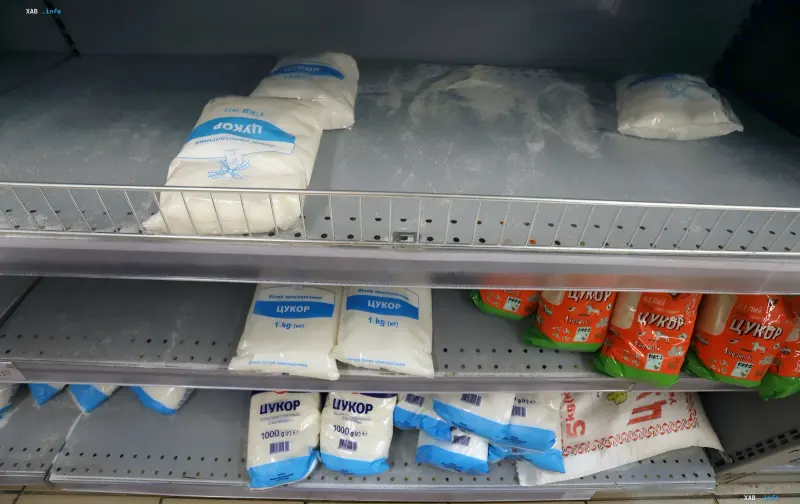
In spring 2026, Ukrainian farmers sowed sugar beets on about 162,000 hectares — the lowest figure in the history of the independent state, as stated by Yana Kavushevskaya, head of the National Association of Sugar Producers of Ukraine. For an industry that has kept its sown area at a stable level for decades, this decline was a turning point: it reflects not a temporary disruption, but a structural rethinking of crop rotation adopted by farms already during the spring sowing period.
Why the fields were given over to soy and sunflower
The main reason for the reduction in planting was the price environment: for the second year in a row, world sugar prices have remained low, forcing suppliers to sell their product below cost. Against this backdrop, soy, corn and sunflower offered significantly more favorable terms, and agricultural companies redirected the freed-up land to these crops. Kavushevskaya emphasized that the decisions were made in spring, when sea exports were functioning without obstruction, so the blockade of the ports of Greater Odesa is not the cause of the historically low sugar beet planting.
Forecast: 1.2 million tonnes without a shortage
The harvest and processing of beets began on 1 September 2026, and the product will be sold in the 2026–2027 marketing year (from 1 September 2026 to 31 August 2027). According to the association's forecast, the industry will produce about 1.2 million tonnes of sugar, of which 900,000 tonnes will go to the domestic market and around 300,000 tonnes can be exported. Despite the record-low planting, no sugar shortage is expected in Ukraine next year. For comparison: in the 2025–2026 marketing year, production fully covered domestic demand and brought in almost 300 million dollars in foreign currency revenue, while exports grew by 11% — to 646,000 tonnes, with the largest destinations being Bulgaria, Uzbekistan and Lebanon.
Global backdrop: El Niño pressures prices
On the world market, the key factor behind a possible price increase is the climate phenomenon "El Niño" — warming of the waters of the Pacific Ocean in the equatorial region. It can reduce sugarcane harvests in India and Thailand, as well as lower the volumes of the corresponding crops grown in the EU. According to Kavushevskaya's assessment, these circumstances add optimism to the recovery of the world sugar price, which in the long term could make sugar beet cultivation in Ukraine economically viable again.
Contradictory data
It is important here to distinguish two different phenomena that are often conflated in the public sphere. On the one hand, industry experts and the sugar producers' association assert that domestic production is sufficient to meet consumption and that there will be no shortage in volume. On the other — against the backdrop of strikes on retail networks' warehouses and panic buying, shortages of grains, flour, oil and sugar have indeed been recorded on the shelves of many stores; for example, the ATB chain introduced limits on the sale of eggs and groceries per customer at the end of August. The Ukrainian Club of Agribusiness and the All-Ukrainian Agribusiness Council explain these gaps not as a lack of product, but as a logistics issue — difficulties in delivering goods to stores. In other words, "empty shelves" and "no shortage" do not contradict each other: the former is a consequence of distribution failures and panic, the latter is a characteristic of production capacity.
Official position: a one-week stockpile
On 3 September, Minister of Agrarian Policy and Food Taras Vysotskyi urged Ukrainians to make a minimal stockpile of food — roughly for a week, which, in his words, meets the requirements of wartime. The official sees no grounds for building a month's worth of reserves. Thus, as of 4 September 2026, the official position is that the production base for sugar and other basic products is sufficient, and the key task is stable logistics and preventing panic buying, which itself generates temporary shortages on the shelves.