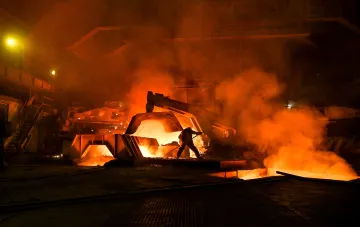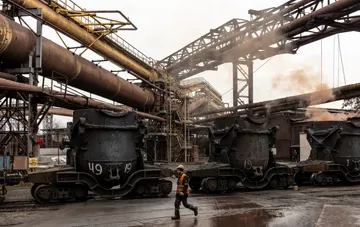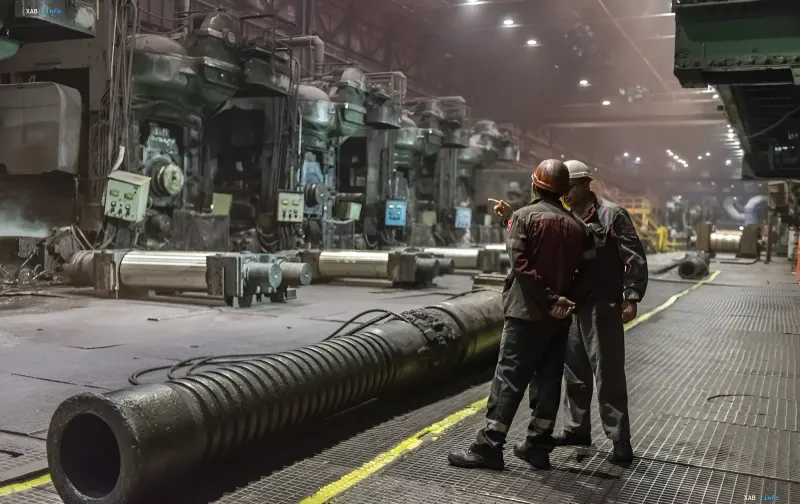
The Ukrainian metallurgical industry is experiencing its deepest crisis since the full-scale war began. This is evidenced by a report from the French newspaper Le Monde, published in November 2026 and summarized by Ukrainian media outlets. According to the article, industry enterprises are coming to a halt following a series of Russian missile strikes, exports through the Black Sea are effectively blocked, and tens of thousands of jobs are under direct threat. The sector, which for decades served as one of the pillars of the economy and the country's export potential, is, according to French journalists, currently 'fighting for sheer survival.'
Kryvyi Rih: A City Where Metallurgy is the Budget and Social Fabric
The most vivid example of the crisis is Kryvyi Rih and the ArcelorMittal Kryvyi Rih plant located there, which employs about 16,000 people. Following Russian strikes in September 2026, the enterprise stated it could no longer continue normal operations, and the company, according to Le Monde reports, is already discussing conditions for a possible plant closure with the government. For the city, this means more than just the loss of a major employer: local authorities estimate that metallurgical enterprises account for about 40% of the city budget, excluding ancillary companies. 'For the city, this is an economic catastrophe,' stated Oleksandr Vilkul, head of the Kryvyi Rih military administration. According to Le Monde, three major industrial enterprises in the city are already completely halted, and two others are operating at only 20–25% capacity.
From Mariupol to Zaporizhzhia: Cumulative Loss of Capacity
The 2026 crisis did not arise out of nowhere. Since the start of the full-scale war, Ukraine has lost about 40% of its steelmaking capacity due to the seizure and destruction of Mariupol plants. In 2026, the situation deteriorated sharply: following a new wave of Russian strikes, Zaporizhstal, Kametstal, and Interpipe Steel came to a halt, and in September ArcelorMittal Kryvyi Rih also ceased production. Metinvest Chief Executive Officer's Office Head Oleksandr Vodoviz commented to Le Monde, stating: 'Right now, steel production cannot be guaranteed anywhere in Ukraine. All our plants have been subjected to missile strikes.' According to him, the scale of the attacks forced the company to stop all blast furnaces, and repairing each enterprise could cost several million dollars.
Export Blockade: Ports Closed, Quarries Idle
Alongside the destruction of production facilities, the industry is losing its sales channels. Since mid-July 2026, Black Sea ports, through which the metallurgical sector traditionally shipped a significant portion of its products to world markets, have been effectively blocked. This has triggered a cascading effect: mining enterprises are cutting production. One of the quarries in Kryvyi Rih is already closed, and Metinvest's Pervomaiskyi quarry is operating at about 50% capacity. The sector is simultaneously pressured by high electricity prices, a shortage of skilled workers, logistics problems, and new EU export restrictions. As a result, the share of metallurgy in Ukraine's GDP dropped from 12% in 2018 to 5.5% in 2025.
Blow to Related Sectors: An Eightfold Multiplier Effect
The consequences of a potential metallurgical collapse extend far beyond the industry itself. According to Oleksandr Vodoviz, every single job in metallurgy supports up to eight jobs in related sectors—transport, energy, service companies, and contractors. The shutdown of major plants delivers a blow not only to factory workers but to the entire regional industrial economy. According to the Trade Union of Metalworkers and Miners of Ukraine, about 80,000 people are employed in the sector, and around 35,000 jobs have already been lost since 2022. If enterprises cannot resume production and exports, the consequences will include mass job losses, falling municipal revenues, and a further contraction of the country's industrial potential.
Macroeconomic Context: NBU Notes Direct Impact on GDP
In October 2026, the National Bank of Ukraine stated in its inflation report that Russian infrastructure shelling and the blockade of sea ports in the second half of 2026 will reduce the country's real GDP growth rate by 1.9 percentage points. Losses to the foreign trade balance, according to the regulator's calculations, will reach $6.6 billion. The metallurgical crisis recorded by Le Monde is becoming one of the key transmission channels of military pressure into economic indicators: from closed workshops and idle quarries to a reduction in local budget tax revenues and a drop in export earnings nationwide.