Russian strikes on energy, industry, railways, and port infrastructure have ceased to be localized damages and are compounding into a systemic economic crisis for Ukraine. According to financial reporting, in the first nine months of 2026, nearly every fifth large company that submitted reports operated at a loss. Out of 9,532 companies with revenues exceeding 100 million hryvnias, 7,692 or 81% turned out to be profitable, compared to 85% a year earlier. Total profit grew by only 4%, which is significantly below the inflation rate and effectively means a contraction in real business income.
Three Loss-Making Leaders — Three Targeted Sectors
The structure of losses precisely mirrors the geography of the strikes. ArcelorMittal Kryvyi Rih recorded the largest loss among large companies at 49.44 billion hryvnias. It is followed by Ukrenergo with a loss of 18.09 billion hryvnias and Ukrzaliznytsia with 9.71 billion hryvnias. These are precisely metallurgy, energy, and railway infrastructure — the three sectors that suffered the most intensive strikes in 2026. The coincidence of loss leaders with the targeted attack vectors indicates a direct cause-and-effect relationship between physical damage and financial results.
Steel Industry in Deep Crisis
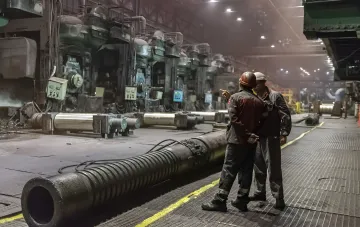
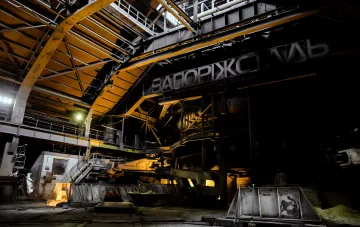
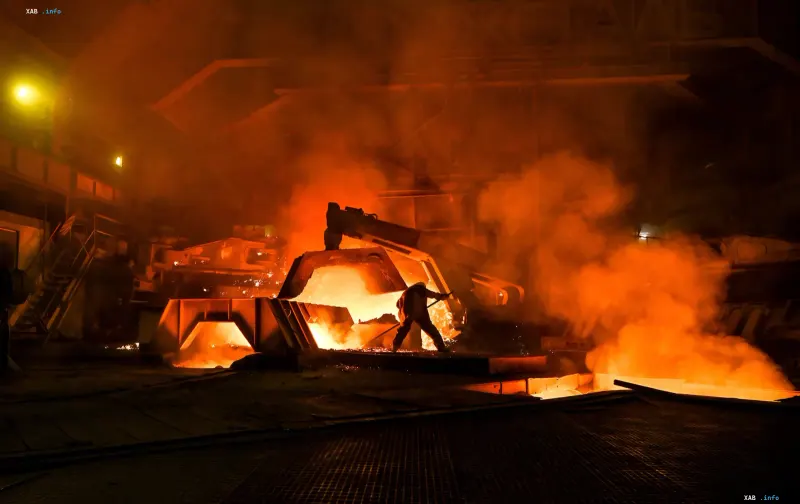
The deepest decline is recorded in the steel industry. Following missile strikes on blast furnaces at three major enterprises in early September, about 90% of Ukrainian steelmaking capacities were idled, and steel production dropped by 78.5% year-on-year to 131 thousand tons. ArcelorMittal Kryvyi Rih switched to cold preservation mode on October 11, which, according to available data, will remain in effect until the end of the war. Metinvest plans only a gradual restoration of Zaporizhstal and Kametstal after 27 ballistic missiles were fired at the enterprises over three months. The industry, which last year provided more than 7% of GDP, has turned from an export engine into a source of deficit on the domestic market: the construction sector is already short of about 200 thousand tons of rolled products per month.
Logistics and Foreign Trade Under Pressure
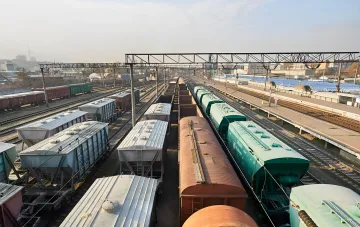
The metallurgy crisis is compounding problems in related sectors. Over nine months, freight rail transport decreased by 18.6%, while the shortage of locomotives and cars further worsens logistics. In foreign trade, the situation has also sharply deteriorated: merchandise exports in the third quarter fell by 13% year-on-year, and the trade deficit in September reached a record 7 billion dollars. According to a Raiffeisen Research forecast, the annual trade deficit could reach 67 billion dollars compared to 47 billion dollars in 2025. The government has already revised its forecast for exports of goods and services: instead of expected growth of 3.1%, a drop of 1.9% is now projected — down to 52.9 billion dollars.
Budget, GDP, and External Financing
Simultaneously, the budgetary situation is worsening: over January–September, general fund revenues of the state budget lagged behind the plan by 231.3 billion hryvnias, or 8.5%. The economy has shifted from weak growth to contraction — in the third quarter, GDP fell by 0.7% year-on-year, and the government lowered its growth forecast for 2026 from 1.6% to 0.1%. The forecast for 2027 also worsened — from 1.3% to 0.4%, while Raiffeisen Research expects a more pessimistic scenario: a 0.6% drop in GDP in 2026. Against this background, Ukraine will need about 52.6 billion dollars in external financing in 2027, while only slightly more than 20 billion dollars has been confirmed.
Thus, the strikes are hitting not only individual plants or power plants, but simultaneously reducing production, exports, freight transportation, company revenues, and the tax base — precisely the sources from which Ukraine finances defense and maintains the economy under wartime conditions. As industry experts noted, the crisis in metallurgy is ceasing to be a problem of a single sector and is turning into a systemic threat to state and local finances: production cuts mean fewer taxes, jobs, orders for related sectors, and funds in the budgets of industrial communities.