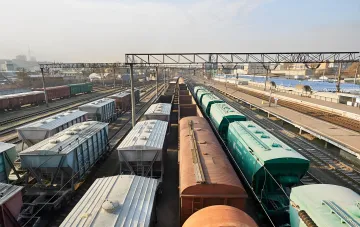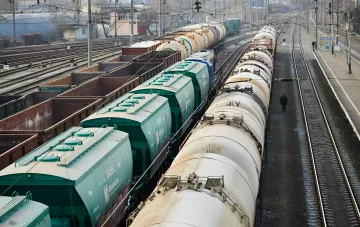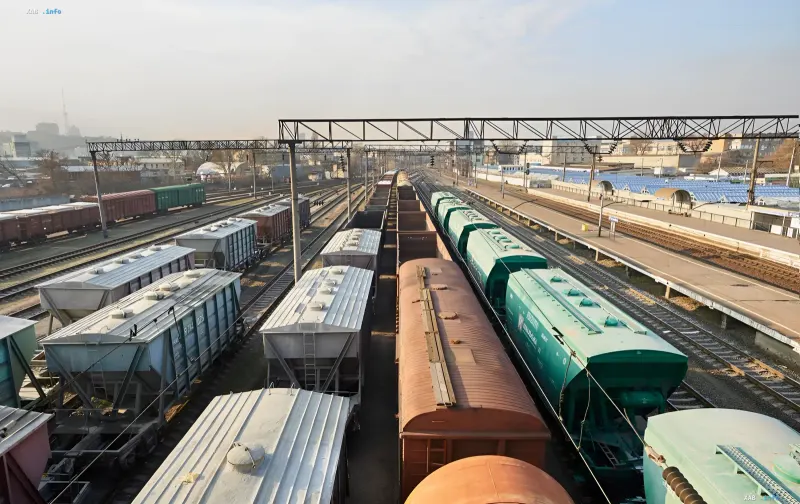
The Ukrainian economy and Ukrzaliznytsia have found themselves in a state since the summer of 2026 that industry representatives call a "perfect storm." According to Volodymyr Gusak, a representative of the Federation of Transport Employers of Ukraine, the 30% increase in freight tariffs effective August 1, 2026, coincided with the effective shutdown of sea ports due to Russian attacks on foreign-flagged vessels. The statement was made during an online discussion on rail transport hosted by the Center for Transport Strategies and reported by RBC-Ukraine. By Gusak's assessment, the combination of these two factors has led to a sharp drop in rail transport volumes and, consequently, a decline in Ukrzaliznytsia's own revenues.
"Perfect Storm": Tariffs and Closed Ports
The key issue highlighted by the Federation of Transport Employers is that the railway, in the context of the blocked Black Sea export routes, has become the primary conduit for goods exports, while costs simultaneously surged. The 30% increase on August 1, 2026, according to Gusak, has already forced some Ukrainian enterprises to reduce operations or cease production entirely. He described the additional 15% increase in freight tariffs planned for January 1, 2027, as critical for businesses: "A further 15% tariff hike is a point-blank shot to the head of Ukrainian industry and agricultural producers."
A Loss-Making Trend Started Before the War
Gusak specifically recalled that Ukrzaliznytsia had been losing its freight base even before the full-scale war. While in 2015 transport volumes were around 350 million tons, by 2021 they were already down to 316 million tons. He attributed one of the reasons to constant tariff increases, which caused some cargo to shift to road transport. After the 30% increase in August, the situation, by his estimation, worsened. For context, according to GMK Center, Ukrzaliznytsia's freight transport volumes had already declined by 7.8% in 2025.
Three Steps Instead of a New Increase
The Federation of Transport Employers believes that tariffs should be returned to July 2026 levels to give enterprises a chance to maintain production. In Gusak's view, Ukrzaliznytsia's needs for additional funding should be covered through external support, while socially vital passenger services should be financed from the state budget. He separately emphasized the need for internal optimization: the current decline in the freight base, he argued, creates a "political window of opportunity" for reducing costs on low-traffic infrastructure. Thus, instead of a new tariff hike, the industry association proposes a three-step package: reverting tariffs to July levels, attracting external funding, and optimizing Ukrzaliznytsia's expenditures.
Mining and Metallurgy and Alternative Export Corridors
The industry position is also supported by representatives of the mining and metallurgical complex. The GMK Center warns that further increases in freight tariffs amid the blockade of sea exports could exacerbate the crisis in metallurgy and simultaneously worsen the financial situation of Ukrzaliznytsia itself, triggering yet another cycle of reduced transport. Instead of hikes, they propose introducing preferential tariffs for enterprises within a 150 km zone from the front line, concluding intergovernmental agreements with EU countries on preferential through-rates and priority border crossings, and maximizing the restoration of sea and Danube export corridors. Previously, the Federation of Metallurgists also stated that further freight tariff hikes could accelerate the decline in transport, lead to the shutdown of industrial plants, and worsen the company's financial condition.