Ukraine's metallurgical industry is under simultaneous pressure from several factors: Russian strikes on key enterprises, the effective blockade of maritime logistics, rising railway tariffs, new EU quotas and the CBAM mechanism. According to GMK Center estimates, the country is already losing around $150–200 million in export revenue every month simply due to the reduction in maritime exports of mining and metallurgical products. If the combined set of these restrictions persists, steel output in Ukraine could fall by roughly 30–40%, while iron ore production could drop by 40%.
Strikes on the Flagships: "Metinvest Zaporizhstal" and "ArcelorMittal Kryvyi Rih"
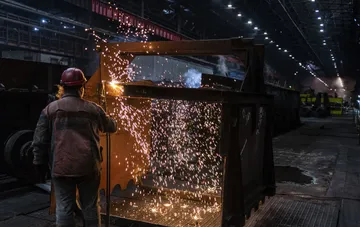
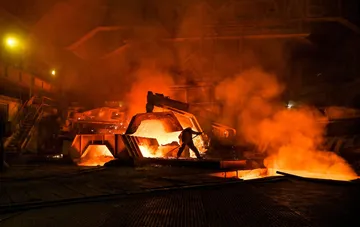
The industry's position deteriorated sharply following the August attacks on the two largest metallurgical plants. According to the data cited in the source material, an strike was carried out on "Metinvest Zaporizhstal" on August 11, after which the plant shut down; in 2025 this enterprise alone accounted for more than 43% of Ukraine's steel production. Five days later, missiles hit "ArcelorMittal Kryvyi Rih," where the power and blast-furnace operations were damaged and certain processes were partially halted. Losses are also occurring at enterprises that did not suffer direct destruction: due to problems with maritime exports, Yuzhny GOK (Southern Mining and Processing Company) suspended mining, while other Kryvyi Rih GOKs of "Metinvest" may cut production by around 30% in August compared to the 2025 average level.
The Sea as the Industry's Artery
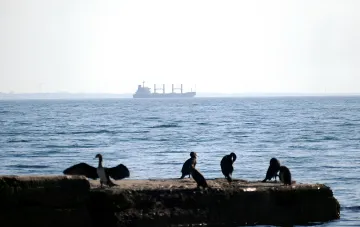
Maritime transport is critical for metallurgy because of the very structure of exports. According to GMK Center estimates, about 50% of iron ore exports, around 95% of pig iron and roughly half of steel products were shipped through the Black Sea ports. These routes cannot be fully replaced by rail and European ports: the alternative corridors have lower throughput capacity and significantly higher logistics costs. For bulk cargoes such as ore, the additional transport costs can completely negate the economic rationale of exporting. The ports are also important for imports: after the loss of the Pokrovsk coal base, about 80% of coking coal was arriving by sea, and rerouting these supplies through European ports and rail could roughly double logistics costs and raise the final price of coal by around 15%.
Railway and Tariff Pressure
The situation is compounded by rising railway transport costs. From August, "Ukrzaliznytsia" freight tariffs were raised by 30%, and according to "Metinvest" estimates, the shift to overland routes has already increased the share of railway costs in the cost of metallurgical products by 2–3 times. Thus, the industry is simultaneously losing production capacity due to strikes, cheap maritime logistics due to the port blockade, and a portion of external markets due to quotas and CBAM.
EU Quotas and CBAM: A Shrinking Market
Access to the European market has narrowed against the backdrop of new EU quotas, which have cut the export potential for Ukrainian steel by roughly 60% compared to the actual volumes of 2025. An additional barrier has become the CBAM mechanism, the potential payment under which is estimated at €50–100 per tonne of steel. Industry companies consider the resumption of safe operations at the Black Sea ports to be the top priority, along with a review of railway tariffs, easing of CBAM's impact on Ukraine, expansion of EU quotas, compensation for part of the alternative logistics, and support for the recovery of major industrial enterprises.
Budget Risk and Macro Effect
The industry crisis has direct budgetary consequences. Over five years, the largest metallurgical enterprises paid taxes and fees totaling more than 200 billion hryvnia, or about $6.2 billion; for 2024, the tax and fee payments of four metallurgical companies amounted to 1.6% of revenues into budgets of all levels. With the constant growth of tariffs of state monopolies, above all the "Ukrzaliznytsia" freight tariff, and the continued blockade of the ports, the budget risks losing a significant source of income. At the macro level, a similar scenario has already manifested in agriculture: Russian strikes on the ports of Odesa nearly halted Ukrainian grain exports in the middle of the harvest, and analysts forecast that the country's GDP could shrink by 2% this year.