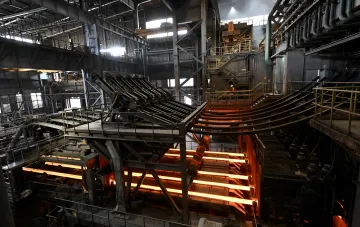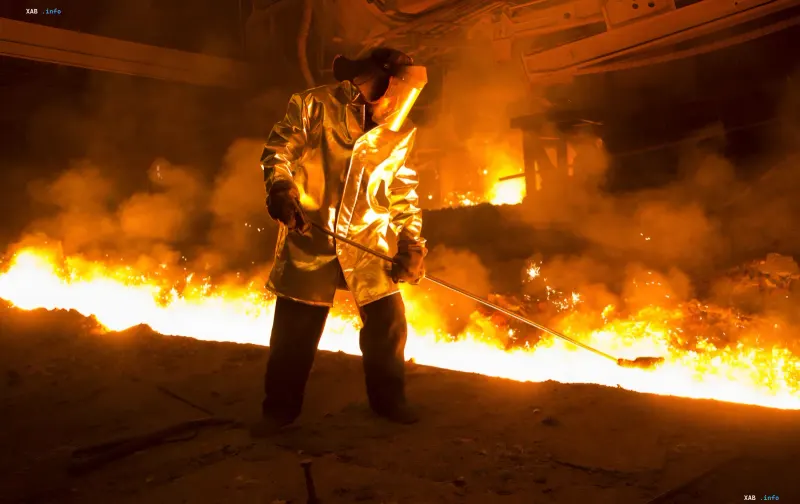
Ukrainian metallurgical enterprises have found themselves in an extremely unfavorable competitive position in the European market. According to RBC-Ukraine, domestic plants are forced to buy electricity at prices that often exceed the cost of this energy carrier in the EU, while their competitors receive large-scale state support. Serhiy Povazhnuk, Deputy Director for Development at "Ukrpromvneshekspertyza," notes that in some Chinese provinces the price of electricity for metallurgists can drop to 30 euros per megawatt-hour — four times lower than the Ukrainian figure. For comparison: over the first 25 days of August 2026, the average base-load price on Ukraine's Resource-Spot Market stood at 126 euros per MWh, according to data from the state company "Operator of the Market."
Chinese Dumping and Turkish "Grey" Rolled Products
Beijing, the largest supplier of ferrous and non-ferrous metallurgy products to the European market, has partially or fully removed taxation on electricity supplied to metallurgical enterprises. This allows Chinese plants to significantly reduce the cost of their products and aggressively capture niches in the EU. Turkey, for its part, continues to purchase raw feedstock in Russia at substantial discounts: local producers buy Russian slabs $100 per tonne below the market price, process them into rolled products, and sell them on the European market. "Europe is trying to fight this, but unfortunately there is no mechanism to verify what steel a given rolled product was made from," Povazhnuk admits. Thus, Ukraine's competitors enjoy both cheaper electricity and cheaper raw materials.
European Support Programs: From CBAM to the Clean Industrial Deal
The EU operates a program for the compensation of indirect carbon costs (CBAM), provided to enterprises with high energy consumption and significant CO₂ emissions. According to Andrii Hlushchenko, an analyst at GMK Center and candidate of economic sciences, 3.2 billion euros was allocated in 2024 to pay out such compensation. In June 2025, European countries launched another initiative — the Clean Industrial Deal — which provides financing for energy-intensive enterprises with the aim of reducing their energy costs by 2030. In Italy, the Energy Release 2.0 program has been in operation since 2024, fixing the price of electricity for energy-intensive industries at 65 euros per MWh; the difference between the actual and the fixed price is covered from state funds.
"A Thought-Through Industrial Policy": Kyiv's Position
People's Deputy and Deputy Chair of the Parliamentary Committee on Economic Development, Dmytro Kysylevskyi, believes that such policy in EU countries is no accident. "This is the result of a thought-through industrial policy," he stated. In his words, metallurgical enterprises on their own will not be able to compete with rivals that enjoy such powerful support from their governments. This means that without systematic state intervention — direct contracts between industry and generation, subsidies, or tariff preferences — Ukrainian metallurgy risks losing the remnants of its export potential.
Blockade of the Sea Route and a Logistical Dead End
The competitive pressure is compounded by a logistical crisis. At the end of July 2026, due to Russian shelling and attacks on merchant vessels, Ukraine was forced to halt exports of agricultural and metallurgical products through the ports of Greater Odesa — the main sales channel to the world market. The blockade of the sea route has effectively stopped metallurgy exports, while alternative routes remain too expensive. "Enterprises have no margin that would allow them to cover such logistical costs; exports through the western border crossings have become unprofitable," commented Oleksandr Kalenkov, President of the industry association "Ukrmetallurgprom." According to estimates by the International Chamber of Commerce, if the sea route is not restored within a year, Ukraine could lose more than 10% of its GDP, and export revenue would shrink by roughly $17 billion.
Shutting Down Capacity and Rising Costs
Against the backdrop of the blockade of sea routes, a 30% increase in railway freight tariffs since the start of August, the introduction of a carbon tax on exports to the EU, and constant shelling, the largest plants are already scaling back or halting production. "ArcelorMittal Kryvyi Rih" is reducing output volumes, while the "Zaporizhstal" plant, part of the "Metinvest" group, has been fully shut down. The combination of factors — inflated electricity costs, the absence of state support at the level of competitors, a logistical dead end, and military risks — creates a situation in which, without radical decisions at the level of industrial policy, the industry faces a systemic loss of competitiveness in the key European market.